
Last updated November 16, 2026
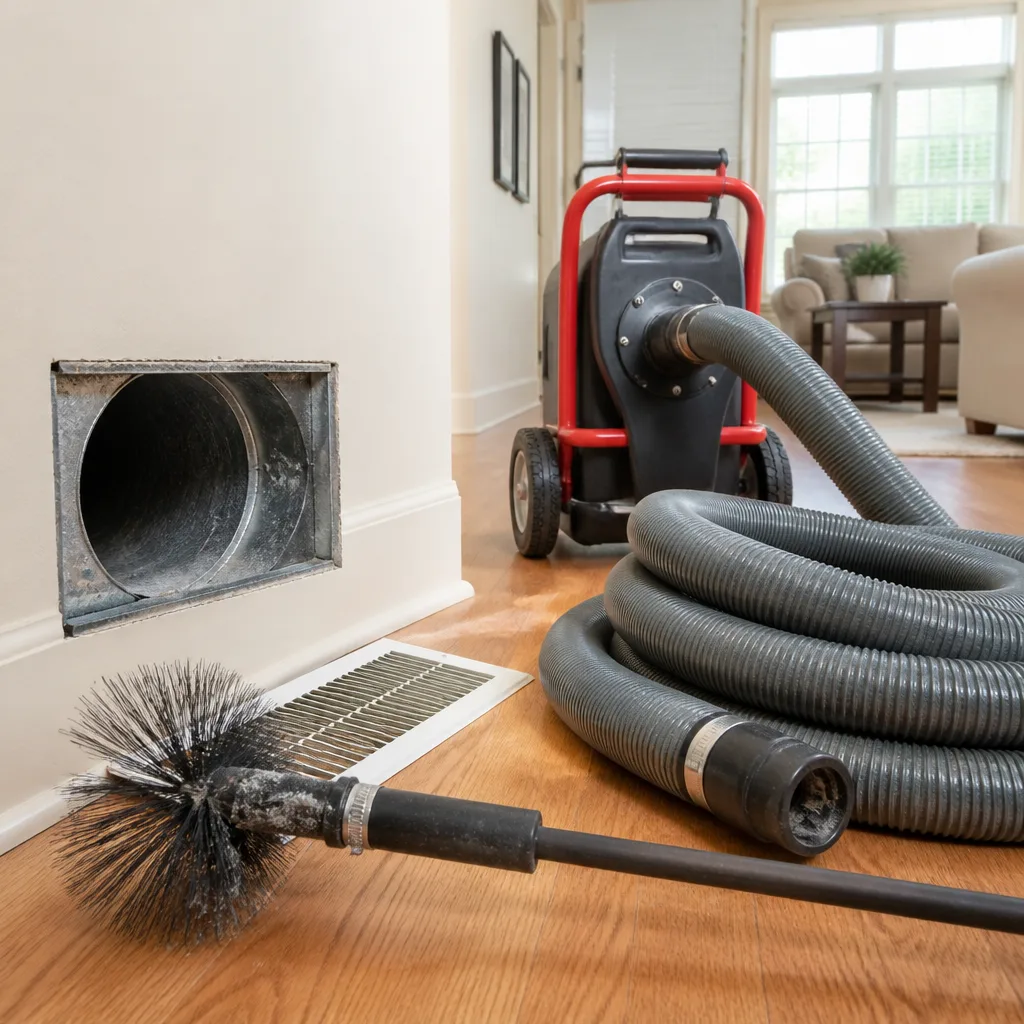 Whole-home duct cleaning
 Dryer vent cleaning
 Camera inspection
 Sanitizing & deodorizing
Whole-system duct and dryer vent check with before-and-after photos - you see exactly what came out of your vents
That "$99 whole-house special" is a bait ad - the real number appears once they are in your hallway, or the "clean" is a shop-vac at the register. We photograph the inside of your ducts before and after instead.
Air Duct Cleaning Maintenance Checklist for Greensboro Homeowners
Changing your filter on schedule feels responsible. But a filter that’s the wrong match for your system can collapse inward, let debris past, and coat the blower wheel in a felt-like layer that no cleaning schedule prevents. We’ve pulled apart Greensboro systems where the homeowner did everything right on paper and the blower was still loaded. The problem wasn’t effort. It was that a filter calendar isn’t the same thing as a monitoring protocol. This guide gives you the checkpoints that actually tell you something: what to look at, what the debris patterns mean, how Greensboro’s humid summers affect duct runs in crawlspaces, and when to stop watching and call.
Quick Answer
A real air duct maintenance checklist for Greensboro homeowners is a set of visual and filter checks you run a few times a year, not a cleaning schedule. You’re watching four things: filter fit and loading, register debris patterns, moisture at crawlspace and slab duct runs, and airflow changes at the vents. Those observations tell you whether the system is trending toward a problem, and they tell a technician what to expect before anyone arrives.
Styles & brands we work with
- Whole-home duct cleaning
- Dryer vent cleaning
- Camera inspection
- Sanitizing & deodorizing
Table of Contents
- How duct maintenance actually works in Greensboro homes
- Reading your supply and return registers
- The filter MERV rating trap
- Moisture checkpoints for Greensboro’s humid season
- What to document with a flashlight and phone camera
- Maintenance intervals by home type
- Airflow and the blower wheel
- Dryer vent: the checklist most homeowners skip
How duct maintenance actually works in Greensboro homes
Duct maintenance isn’t a schedule you follow. It’s a set of observations you repeat and compare. The distinction matters because a calendar tells you when someone last cleaned the system; it says nothing about what the system has done since.
In Greensboro, duct systems run hard through a long cooling season. That means the return side pulls more air, more hours, than most homeowners assume, and the filter is doing more work than the manufacturer’s “change every 90 days” label suggests. A monitoring protocol catches that early. A schedule catches it only when the system starts underperforming.
Here’s the basic cycle we work through when we look at a Greensboro home:
- Check the filter for fit, loading pattern, and whether it’s bowing or collapsing.
- Look at each supply register for the debris pattern. Even, light dusting is normal. Concentrated streaks or debris at the seams point to leakage.
- Check the return grille for debris collected on the face versus the frame.
- Look at duct runs visible in the crawlspace or basement for condensation, sagging, or disconnected joints.
- Note any change in airflow at specific registers compared to a previous check.
You don’t need tools for most of this. You need to do it the same way each time so the comparison means something. Properties vary more than people expect: a 1960s ranch near Lindley Park and a newer build off Bryan Boulevard can have very different duct construction, and the checklist adjusts to what’s actually installed.
When the observations start pointing at real debris load, damage, or leakage, that’s when you move from monitoring to a professional air duct cleaning scope. Before that point, you’re just collecting information.
Reading your supply and return registers
The dust on a register isn’t decoration. It’s a sample of what the system is moving, and the pattern tells you something specific. A uniform, light gray film that builds slowly is normal accumulation. Anything else is a signal.
What the patterns mean:
- Heavy streaks radiating from a seam or corner usually mean air is escaping through a leak at that joint and drawing dust with it. Leaks pull from wherever the pressure differential is strongest, which is often an unconditioned space.
- A dark ring around the register boot where it meets the drywall or floor points to a gap that should have been sealed. That gap is also an entry point for whatever’s in the cavity behind it.
- Fuzzy, fibrous debris on the return grille face more often means the filter is bypassing than that the filter is dirty. Air is going around the filter instead of through it.
- Black or very dark speckling near a single register only can indicate that run is carrying debris from a specific source: a disconnected joint right behind it, or return air being pulled from a crawlspace.
- Clean registers everywhere except one or two narrows the problem to those branches. That’s useful information for scoping the job.
We see this pattern a lot in Greensboro homes built through the 1970s and 1980s, where the original duct board and flex runs have been through a lot of cooling seasons. The registers themselves don’t lie. If the supply side in a bedroom looks different from the supply side in the living room, that’s a per-branch issue, not a whole-system issue, and the maintenance response is different.
Take a photo of each register the first time you check. Compare three months later. If the accumulation is faster than it was before, that’s the trigger to look deeper, not necessarily a reason to book a cleaning.
The filter MERV rating trap
Higher MERV is not automatically better, and this is where a lot of good intentions go wrong in Greensboro. A high-MERV filter is denser. Denser filters resist airflow. Systems that can’t tolerate the added static pressure respond by moving less air, letting condensate sit longer on the coil, and pulling harder at every leak in the duct system.
The variables that actually matter for your filter:
- What your system was designed for. Older furnaces and air handlers were often specified with a filter that’s roughly MERV 8. Pushing to MERV 13 in the same slot can strain the blower.
- Filter slot depth. A one-inch filter has very little surface area compared to a four- or five-inch media cabinet. A one-inch MERV 11 clogs faster than a four-inch MERV 11 and forces more frequent changes.
- Static pressure tolerance. Some older systems have very little room before airflow drops noticeably. Honeywell and Aprilaire media cabinets exist specifically to give you higher filtration without the pressure penalty of a thin, dense filter.
- Filter bypass. A filter that doesn’t seal at the edges lets air around it regardless of MERV. This is one of the most common issues we find in Greensboro systems that were retrofitted with a filter cabinet at some point.
The practical rule: match the filter to the system, not to the number on the box. If you want better filtration than your current slot supports, the answer is usually a media cabinet rated for the pressure your system can handle. Abatement Technologies filtration products exist in that space for good reason.
If the filter is bowing or collapsing inward on itself before the change interval comes up, don’t wait. That’s the system telling you the resistance is too high or the filter is undersized for the load.
Moisture checkpoints for Greensboro’s humid season
Greensboro summers are humid, and that’s the single biggest factor in duct problems we see here. Condensation on duct runs in a crawlspace or unconditioned basement isn’t a small thing. It’s the starting point for insulation failure, mold growth on duct board, and rusted joints that eventually fail.
Check these points during the cooling season:
- Crawlspace duct runs. Look for beads of water on the outside of flexible duct insulation. If the insulation jacket is wet, it’s not doing its job. Look at the wrap at joints and at any runs passing under the vapor barrier.
- Insulation jacket integrity. A torn or compressed jacket loses R-value and creates a cold spot where condensation forms. Check especially at bends and where runs cross floor joists.
- Register boots and air handlers. Sweating at a boot usually means the boot isn’t insulated to meet the temperature difference.
- Drain pan and drain line. A slow drain keeps moisture in the system. A clog keeps water in the pan and eventually on the ceiling.
- Return plenum. If return air is drawn through a humid crawlspace, the entire system is handling more moisture than it should. This is often hidden and worth having checked if the house has a panned return in the floor system.
Slab homes on the Greensboro side of town behave differently from crawlspace homes. With the duct run in the slab or in a low attic, the moisture checkpoints shift. Ask what’s accessible. Ask what isn’t. A technician who tells you what can’t be seen is giving you more information than one who says everything is fine.
If you find moisture at any one of these spots, that’s the call point. Moisture that isn’t addressed turns into duct board damage and repair far more often than it turns into nothing.
What to document with a flashlight and phone camera
Homeowners can collect genuinely useful information before a technician arrives. It’s not a substitute for scoping, but it narrows the job and lets an estimate be more accurate than one built on assumptions.
- A wide photo of each register face. One shot per vent. Label them if you can.
- A photo of the filter with a ruler or coin for scale. This tells a technician how heavily loaded the filter is and how the slot is configured.
- A photo inside the return grille, if you can safely remove it. Look for what’s visible just behind the filter.
- A wide shot of the air handler. Brand, model, and general condition. Note the filter slot and any humidifier or media cabinet.
- Crawlspace or basement runs, if accessible. Photos of the duct runs, joints, insulation, and any moisture you spotted. Flashlight at a low angle, not straight down. The angle shows the surface of the duct.
- A note on airflow changes. Which registers feel weaker than before? Which rooms feel stuffier? A short written note is more useful than a fuzzy memory.
- Any known history. Last HVAC service, any filter changes since then, and whether the home has had recent work done that disturbed the ducts.
What you’re not doing is trying to scope the job yourself. You’re giving the technician a starting point. Many of the Greensboro homes we look at have ducts that need repair as well as cleaning, and knowing where the problem registers are before arrival means we’re not guessing. Our technicians have up to 12 years of experience with the systems common in this area, and that experience reads photos efficiently.
Maintenance intervals by home type
The single biggest variable in how often a system actually needs deeper attention is where the ducts run. Slab, crawlspace, and basement homes in Greensboro diverge more than their owners expect.
Slab foundation homes
Ducts typically run in the slab or overhead, with far fewer accessible sections. That means less visible to the homeowner but also less exposed to crawlspace humidity. The tradeoff: slab ducts can be harder to clean out fully if debris has built up over many years, and moisture intrusion from the slab side isn’t visible. Slab homes usually need a professional look only when a concrete symptom appears (airflow change at a specific room, dust load at a specific register, or a sense the system runs shorter cycles than it should).
Crawlspace homes
These are the most common build in older Greensboro neighborhoods, and they need more attention than any other type. Duct runs are exposed to outside humidity, insulation jackets take wear, and panned returns in the floor system can draw humid air from the crawlspace into the system. Moisture checks during warm, humid months matter most here. If the crawlspace doesn’t have a vapor barrier working correctly, everything above it pays attention to that.
Basement homes
Basement duct runs are usually easier to inspect and often easier to clean, but they’re exposed to basement moisture, which tends to be a spring and early-summer issue. Condensation on cold supply ducts in a humid basement is real. Basement homes typically need less frequent cleaning than crawlspace homes but the same moisture checks during humid stretches.
Newer construction
Newer homes in Greensboro often use tighter duct systems with better-sealed boots and media cabinets already installed. Cleaning intervals tend to stretch out, but construction debris from the build itself is the first thing worth checking. Debris from drywall and framing is one of the most common issues in a system in its first few years.
Airflow and the blower wheel
A blower wheel that’s loaded with debris is a specific, quiet failure. The system still runs. The air still moves. But the wheel pulls less air and the motor works harder doing it, and the whole house feels slightly underpowered in a way homeowners write off to weather.
What to notice:
- Longer runtimes than the same time last year, without a change in weather.
- One room noticeably weaker than the others, especially if the room was previously fine.
- A slight change in the sound of the system. A loaded blower sounds different: less rush, more hum.
- Filter loading faster than before. That’s often the first signal.
The blower wheel is where a filter problem becomes a duct problem becomes an airflow problem. If the filter is failing, the debris ends up somewhere. A professional-grade clean with Rotobrush or Nikro equipment is designed for this exact problem: powered agitation on the duct walls plus negative-pressure extraction, so the debris that’s loosened is actually removed rather than redistributed into the home. That’s the difference equipment makes, and it’s why repurposed shop vacuums and consumer tools don’t produce the same result on a loaded system.
This is also where the whole-system view matters. When ducts are cleaned, patched, or resealed, finishing products applied at the end extend the result. Guardsman-backed protection in the service toolkit exists for exactly that reason: clean is a starting point, protecting the surface is what keeps the result working.
Dryer vent: the checklist most homeowners skip
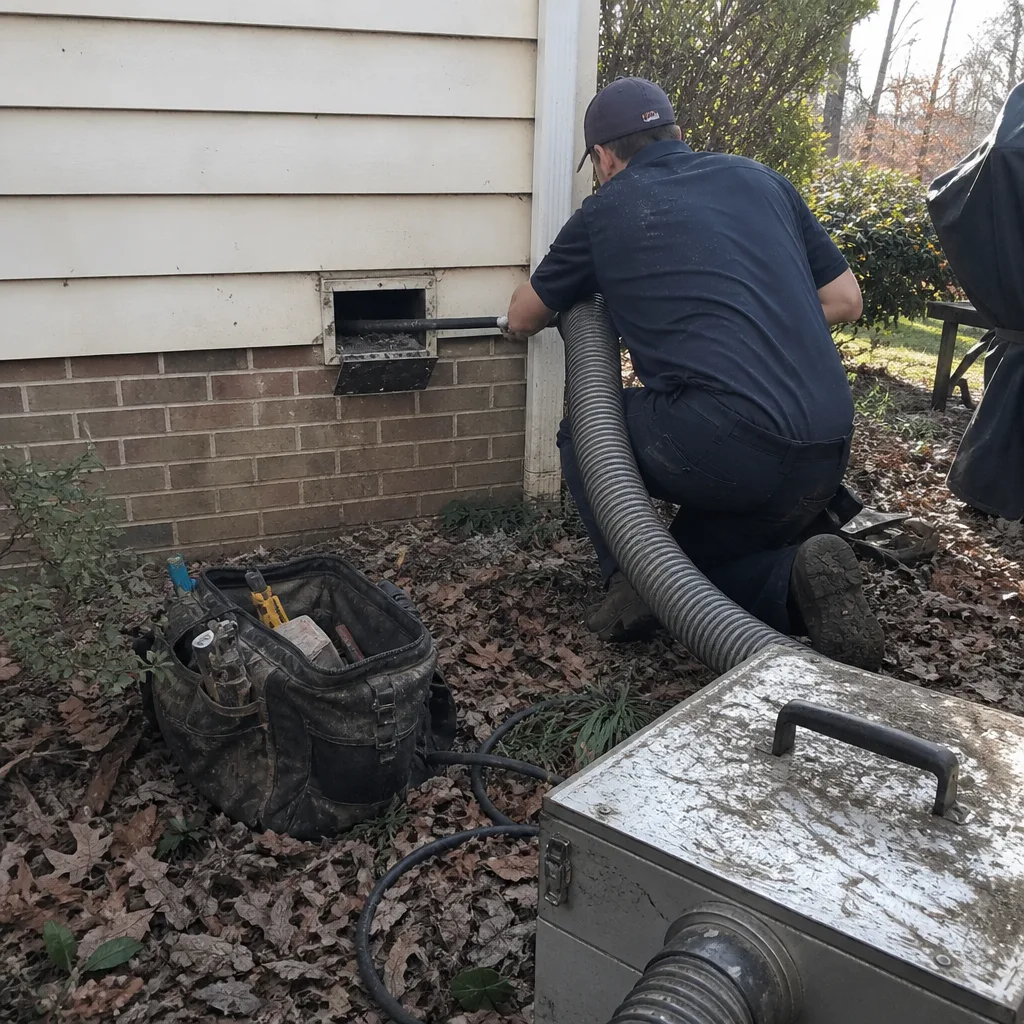
Dryer vent cleaning isn’t an upsell. It’s a fire-safety issue, and it’s a service many duct cleaners ignore or handle as an add-on. We treat it as a dedicated service for that reason. A vent that’s restricted does two things: it lengthens dry time noticeably, and it holds heat where it shouldn’t. If your dryer takes two cycles to finish a load that used to take one, that’s a specific signal worth acting on.
What to check:
- Dry time compared to a year ago. Longer cycles, same loads.
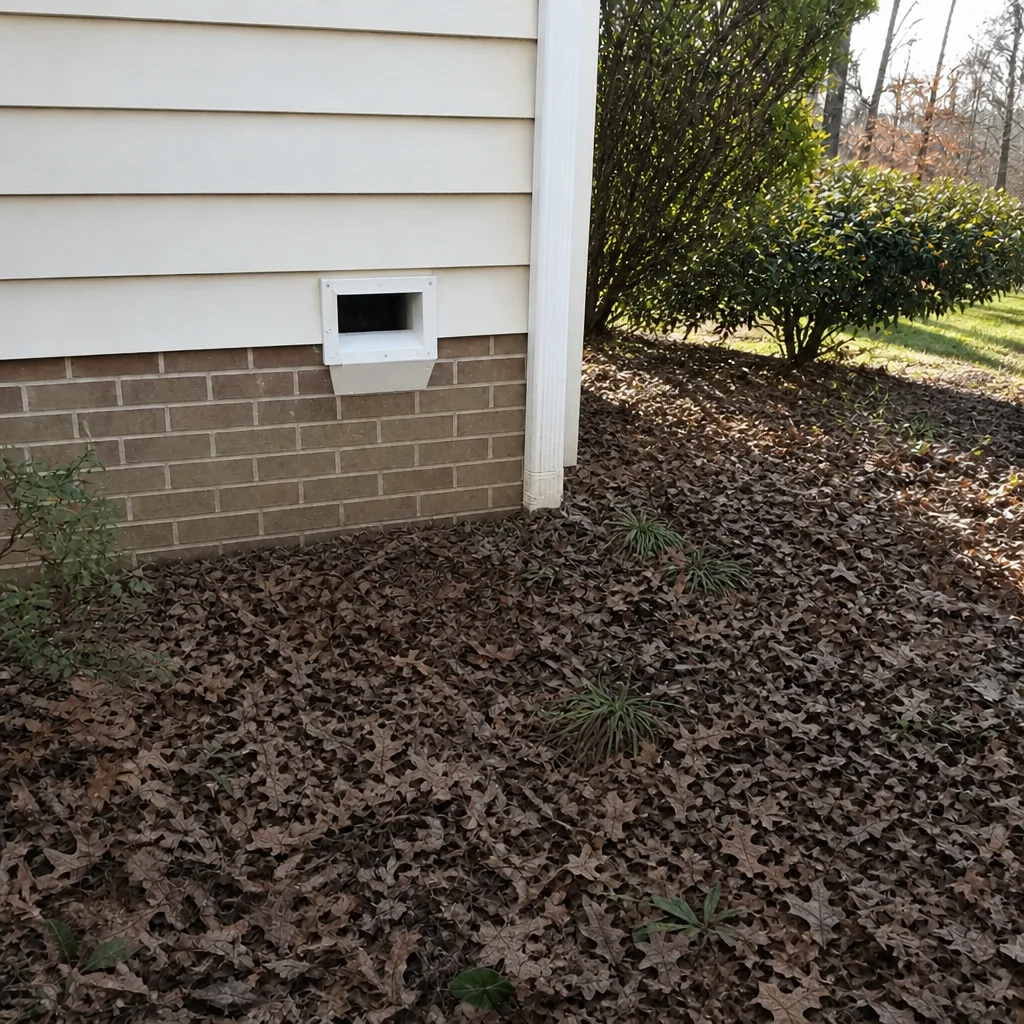
- The exterior vent flap. Does it open fully during a cycle? If it barely moves, the run is restricted.
- Lint accumulation at the back of the dryer and near the connection to the vent. This is the visible part of a larger problem.
- The vent run itself. Crushed flex behind the dryer is common and restricts airflow in ways that no amount of normal cleaning fixes.
Any of these is a call point, not a watch-and-wait item. Duct Cleaning Greensboro provides dryer vent cleaning as a distinct service because the safety stakes are different. It’s also worth doing alongside duct cleaning if both are due; scoping both at once is more efficient than scheduling separately.
Common Mistakes to Avoid
- Buying the highest-MERV filter available. It’s the most common mistake we see. Match the filter to your system’s static pressure tolerance, not to the highest number on the shelf.
- Treating the filter-change sticker as a schedule. Greensboro’s long cooling season and heavy pollen load mean the real change interval depends on the home, the filter, and the system. Check monthly, change when loaded, don’t wait for the sticker.
- Ignoring one weak register. A single underperforming register is more likely a branch-level leak or a collapsed section than anything else. Waiting until the whole system is weak means a bigger job.
- Skipping the crawlspace moisture check. A crawlspace duct run that’s wet in July turns into torn insulation and a repair by fall. A visual check takes five minutes.
- Hiring on coupon price alone. A low upfront figure frequently turns into per-vent pricing, and the total arrives after the technician is already in the home. Ask for the whole-system price in writing before anyone starts.
- Assuming duct tape is a proper seal. Fabric-backed duct tape degrades. Actual mastic and foil tape rated for HVAC use are what hold under humidity and temperature swings.
- Treating dryer vent lint like a nuisance. It’s the reason dryer vent cleaning exists as a service. Shortening the interval because the dryer takes longer is the response, not adding to it.
See the difference
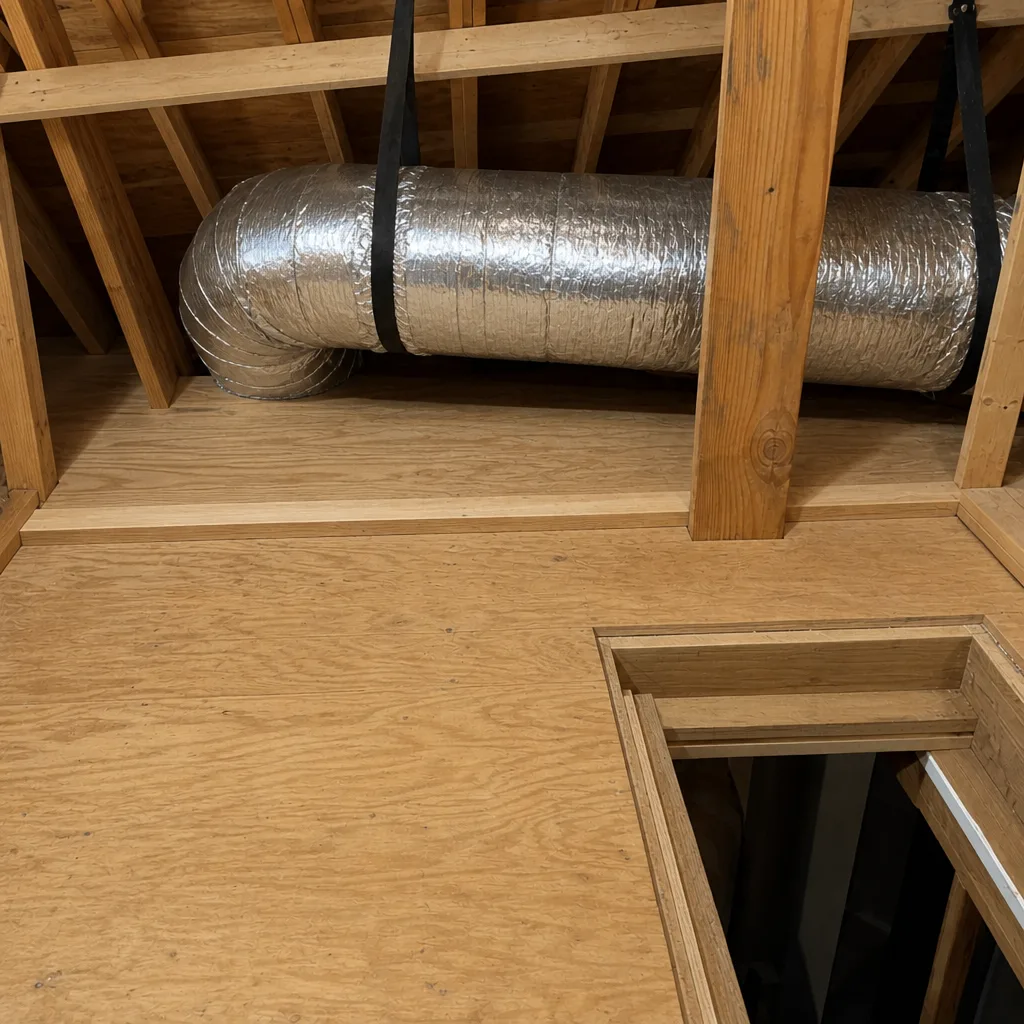
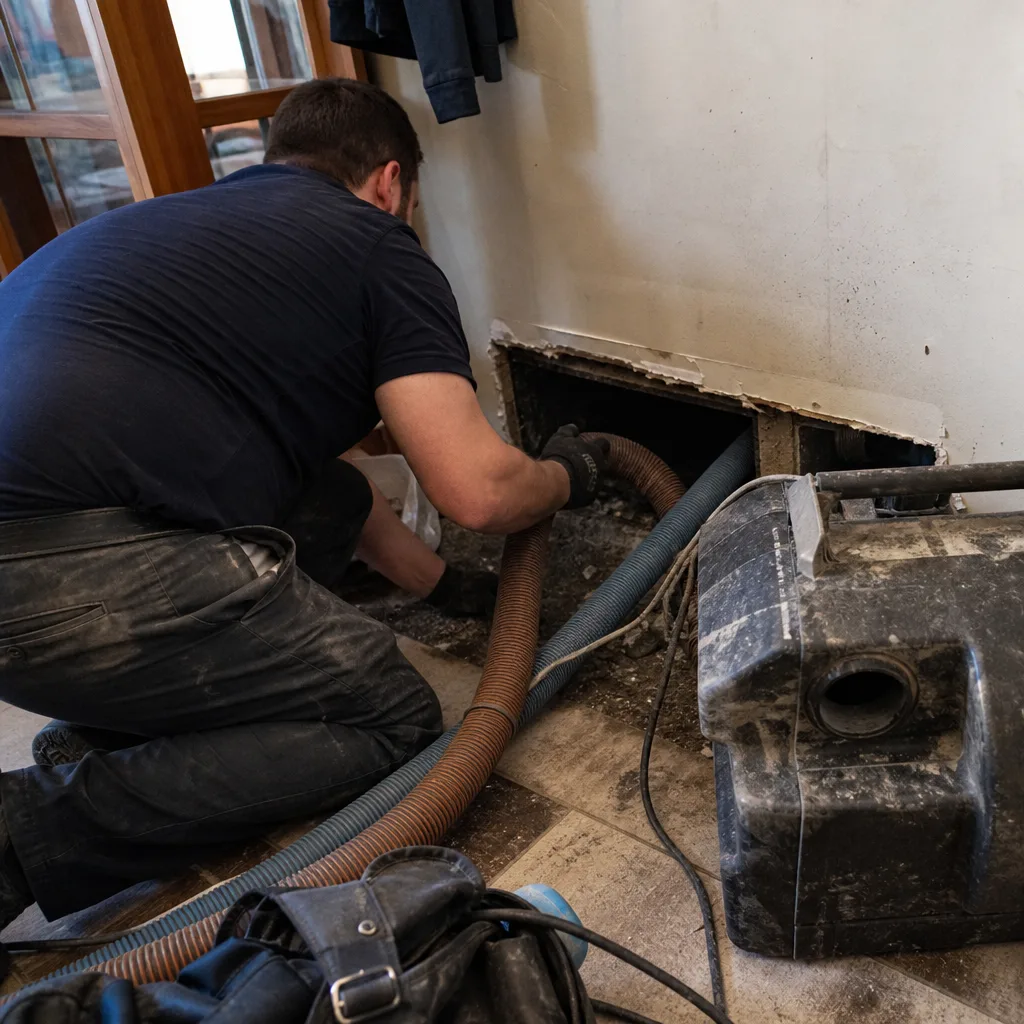 Before
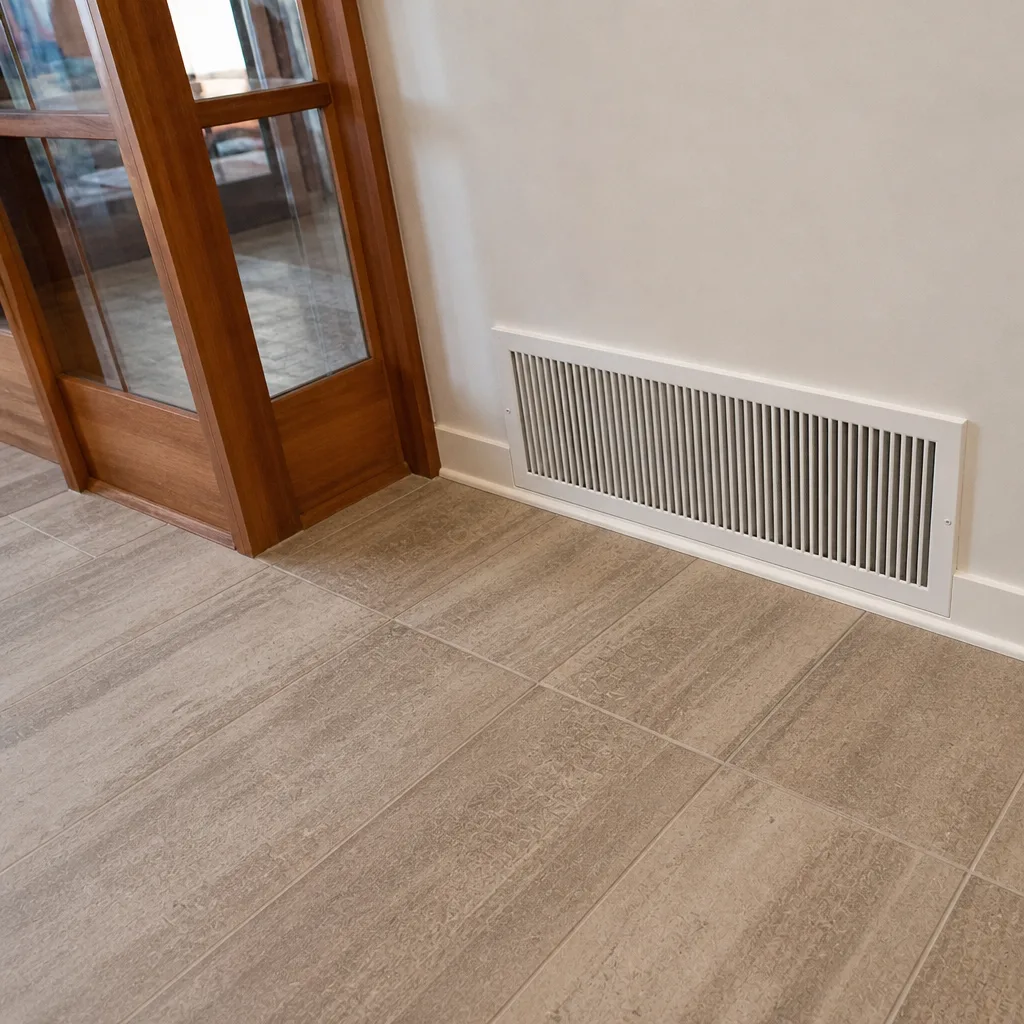 After
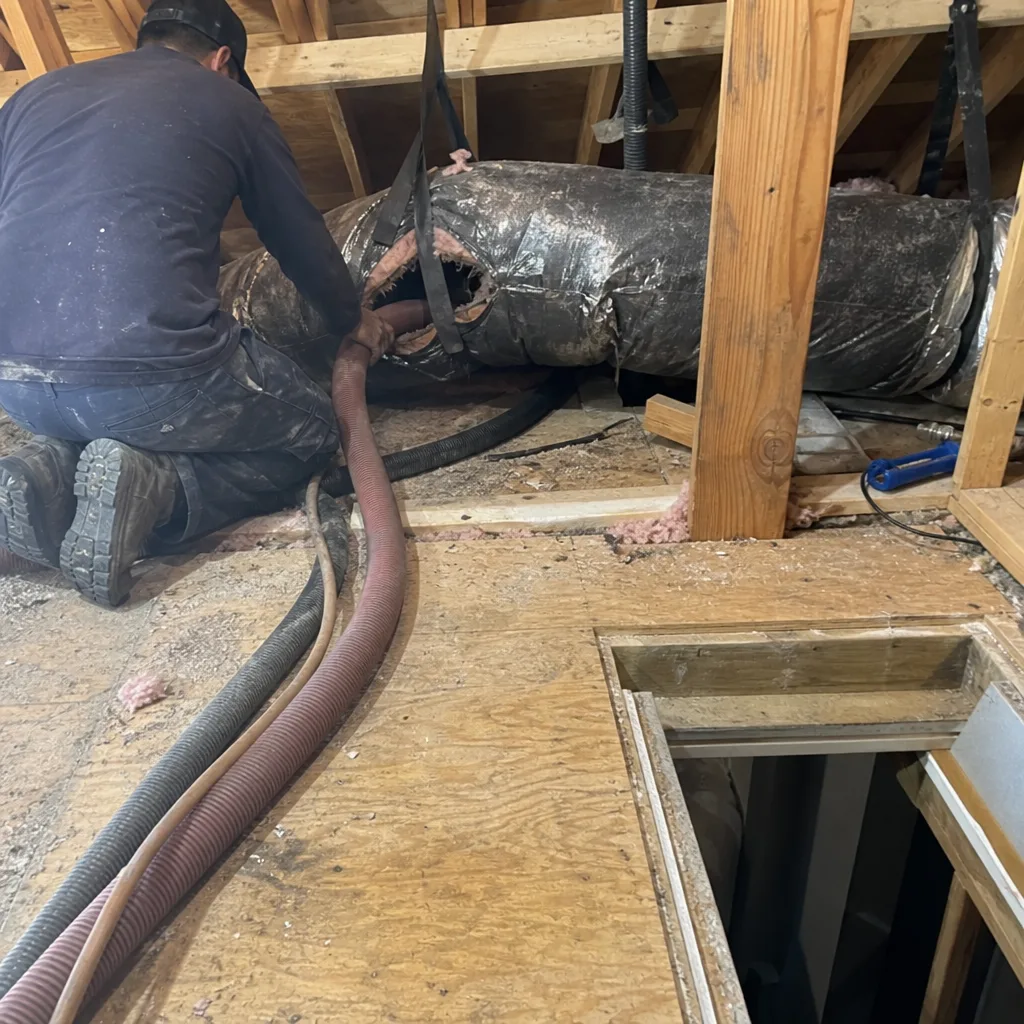 Before
 After
 Before
 After
When to Call a Professional
Monitoring stops being useful when the observations turn into a pattern that needs a scope. Specific calls: any moisture found on a crawlspace or basement duct run; a filter that collapses or bows before its interval; heavy debris on the return grille face with a clean filter installed; one register noticeably weaker than the rest; longer dryer cycles with a visibly clogged exterior flap; and visible damage to duct insulation, joints, or boots. If you’ve documented these checkpoints and something looks off, that’s the point to get a professional look rather than keep watching.
Duct Cleaning Greensboro offers free estimates in Greensboro. Call (833) 968-4577. We answer 24/7. Fast dispatch from 7am to 7pm, Sunday through Friday. Our technicians have up to 12 years of experience on the systems common to this area, and the estimate is a written price per system, agreed before work starts.
Frequently Asked Questions
Most Greensboro homes benefit from a professional cleaning every three to five years, though crawlspace homes with older duct systems often need a shorter interval. Slab and basement homes usually need less frequent cleaning. The right interval depends on the home, the system, and what the observational checkpoints show. A written scope after a check is more useful than a fixed number.
Cheap quotes are usually built on a low headline number that becomes a much larger invoice through per-vent pricing once the technician is on site. A legitimate quote for whole-system cleaning starts with a scope, states the price for the system, and doesn’t move. Ask for the price in writing before anyone starts work, and expect a professional scope before the price.
You should see before-and-after photos of the duct interiors from the service that performed the work. Equipment matters here too: a repurposed shop vacuum can’t create the negative pressure or agitation that Rotobrush and Nikro systems use. Ask what equipment is being used and what documentation you’ll receive. Duct Cleaning Greensboro provides before-and-after photos as part of the work.
It depends on the system. Older air handlers with low static pressure tolerance are usually best matched with a filter around MERV 8. Newer systems or those with a media cabinet (Honeywell and Aprilaire cabinets are common) can handle higher ratings without the pressure penalty. Match the filter to the system, not to the highest number on the box.
Yes. Condensation on duct insulation and joints in a crawlspace or basement creates a cold spot that accelerates wear on the insulation and, over time, can damage duct board and seals. Greensboro’s humid summers make crawlspace duct runs the most exposed. A visual moisture check during warm months catches it early.
Often, yes. Duct cleaning frequently uncovers damage that wasn’t visible from inside the house: disconnected joints, damaged insulation, crushed flex runs, and boot gaps. A company that only cleans will point out the damage and leave it for another contractor. Duct Cleaning Greensboro handles cleaning, duct cleaning and repair together, so damage caught during the job gets fixed in the same scope. Call (833) 968-4577 to book an estimate.
The Bottom Line
Duct maintenance in Greensboro is a monitoring protocol, not a schedule. Focus on what actually tells you something: filter fit and loading, register debris patterns, moisture at crawlspace and basement runs, and airflow changes at the registers. Document with photos and compare over time. The right filter is the one matched to your system, not the highest MERV on the shelf. Dryer vents belong on the checklist, not on the side. When observations stop being observations and become a pattern, that’s the moment for a professional scope. Our technicians have up to 12 years of experience, and we approach each Greensboro home as a system to be read before it’s cleaned. Call (833) 968-4577 for a free written estimate.
Written by the team at Duct Cleaning Greensboro.