
Last updated November 16, 2026
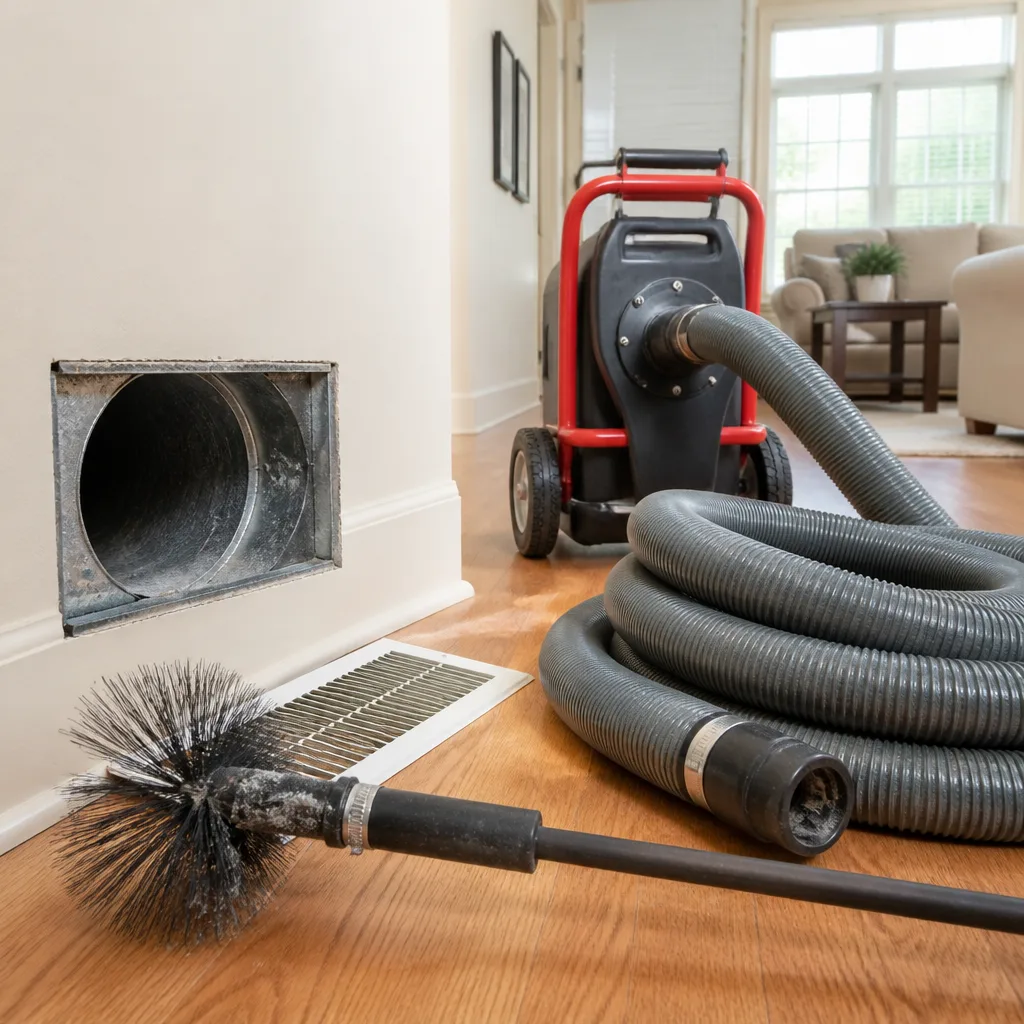 Whole-home duct cleaning
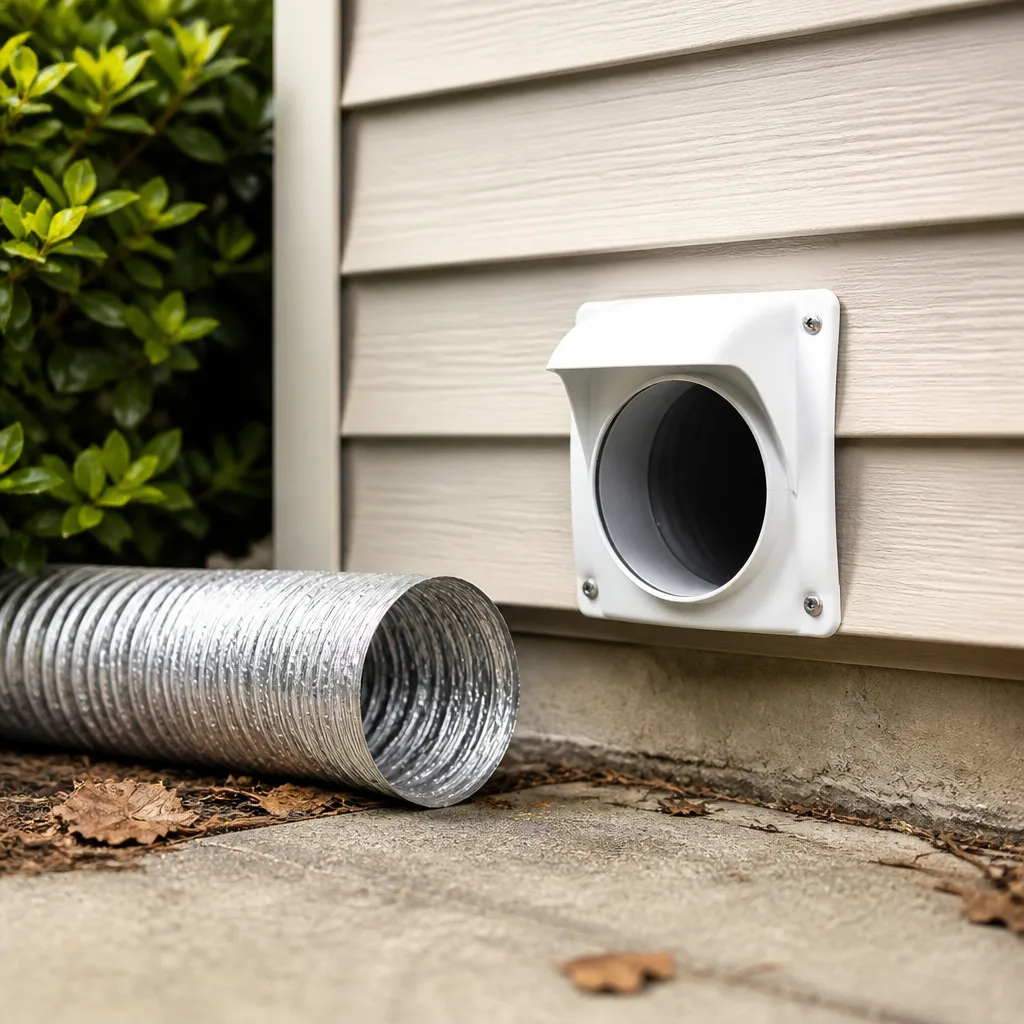 Dryer vent cleaning
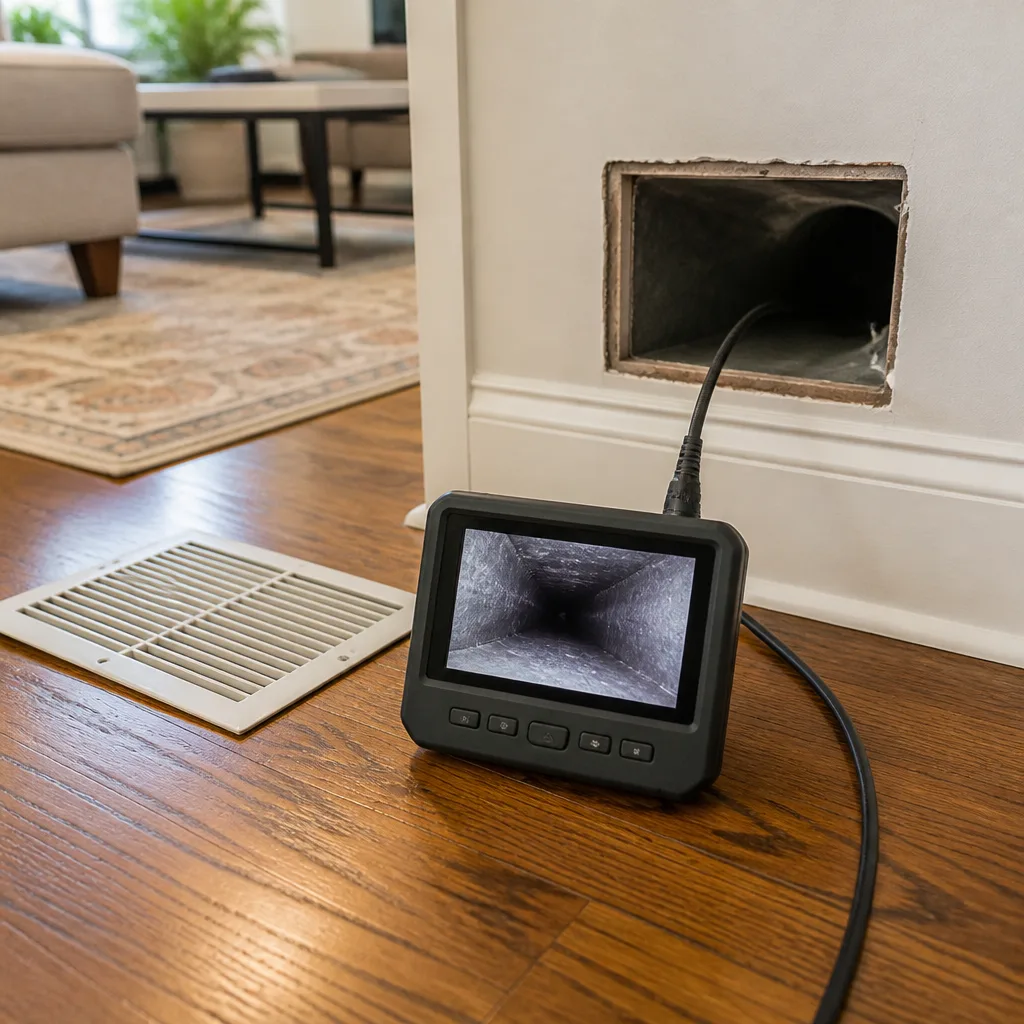 Camera inspection
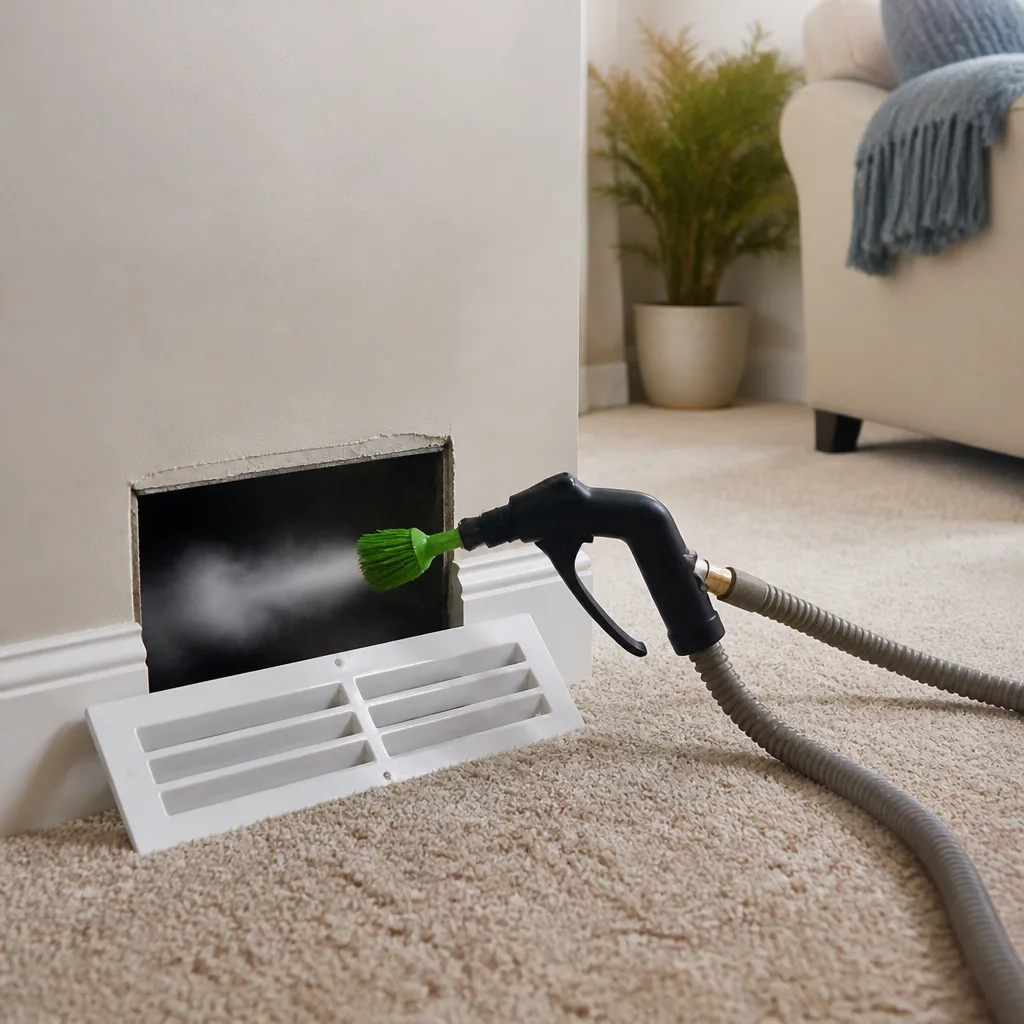 Sanitizing & deodorizing
Whole-system duct and dryer vent check with before-and-after photos - you see exactly what came out of your vents
That "$99 whole-house special" is a bait ad - the real number appears once they are in your hallway, or the "clean" is a shop-vac at the register. We photograph the inside of your ducts before and after instead.
Air Duct Cleaning Cost Breakdown: The Greensboro Homeowner’s Reference for 2026
Most Greensboro homeowners don’t pick the cheapest duct cleaning quote. They pick the second-cheapest one. It feels like a compromise: not the risky bargain, not the premium option, somewhere sensible in the middle. But when the low end of a market is crowded with operators whose real business model is the upsell, the second-lowest quote is often just the second-most aggressive version of the same play. This guide maps what a legitimate duct cleaning quote in Greensboro actually funds, line by line, so you can read any estimate you receive and know exactly what you’re comparing.
Quick Answer
Air duct cleaning in Greensboro typically costs $350 to $700 for a standard single-system home, and $700 to $1,200 or more for larger homes, multiple HVAC systems, or systems with heavy debris and poor access. A $99 quote isn’t a discount on that range. It’s a different scope of work, usually a surface sweep of the accessible vents with no negative air machine, no HEPA collection, and no camera verification of the trunk lines. The number on the invoice tells you the price; the equipment on the property tells you what you actually bought.
Styles & brands we work with
- Whole-home duct cleaning
- Dryer vent cleaning
- Camera inspection
- Sanitizing & deodorizing
Table of Contents
- What Drives Legitimate Base Pricing in Greensboro
- What Professional Equipment Actually Costs to Run
- Line-Item Price Ranges for Greensboro Homes
- Which Add-Ons Are Warranted and Which Are Upsells
- Duct Repair and Sealing Costs Alongside Cleaning
- How to Compare Three Quotes Fairly
- Why Greensboro’s Climate and Housing Stock Affect the Job
- Common Mistakes to Avoid
What Drives Legitimate Base Pricing in Greensboro
Duct cleaning isn’t priced by the hour, and it isn’t priced by the vent, even though plenty of companies advertise it that way. Legitimate pricing in Greensboro is built from four variables that change how long the job takes and how much equipment and consumables it consumes. Understanding them lets you sanity-check any quote before it turns into a negotiation on your driveway.
Square footage and system count. A 1,400-square-foot ranch with one air handler is a fundamentally different job than a 3,200-square-foot two-story with two systems running separate trunk lines. Each system needs its own negative air setup, its own collection, and its own set of access points. A quote that doesn’t ask how many HVAC systems you have hasn’t priced your job yet.
Supply and return vent count. Register count affects both the reach of the cleaning and the time spent removing and reinstalling grilles and resealing them. A house with 18 supplies and 4 returns takes meaningfully longer than one with 10 and 2. This is why flat “all vents included” pricing either overprices small homes or underprices large ones, and why the underpriced version usually comes back as an upsell once the technician counts your registers.
Duct material: flex versus rigid sheet metal. Greensboro’s housing stock splits roughly along decade lines. Older neighborhoods near the center of town lean toward rigid sheet metal trunk and branch systems, which hold up well to mechanical brushing and are straightforward to camera-inspect. Subdivisions built from the 1990s onward are predominantly flex duct, which is more fragile, sags over time, and demands lower-pressure brushing so the inner liner isn’t torn. Flex also hides problems better: a collapsed or disconnected run inside a flex duct can be invisible without a camera.
Access conditions. Attic-mounted air handlers, low-clearance crawlspaces, and chases with no existing access panel all add labor. In Greensboro’s humid summers, attic spaces reach temperatures that limit how long a technician can work in them safely, which is a real scheduling constraint rather than a sales tactic. Homes with sealed or finished chases sometimes need an access panel cut before cleaning can even begin.
What Professional Equipment Actually Costs to Run
Here’s the part the $99 quote never explains. The equipment that actually cleans a duct system rather than stirring it up is expensive to buy and expensive to operate, and the consumables alone don’t fit inside a $99 invoice. When we talk about seeing the difference equipment makes, this is what we mean: not a brand logo, but the physical reality of what a proper job requires.
Negative air machine and HEPA collection. The core of the job is putting the whole duct system under negative pressure so loosened debris travels toward the collection unit instead of into your living room. Truck-mounted units and high-capacity portables both work; what matters is that the vacuum is connected to the system at a sealed access point and that it’s moving enough air to keep the ducts under negative pressure throughout. The HEPA filtration stage is what traps fine particulate instead of exhausting it. Filters, gaskets, and collection bags are consumables, and they’re replaced per job.
Rotary brush and air tools. We use Rotobrush and Nikro systems because they’re purpose-built for duct interiors: rotary brushes with whip lines that reach around bends in flex duct, and forward-air tools that drive debris back toward the collection point. A shop vac with a length of hose does neither. Consumer-grade tools can’t generate the agitation or the air volume, and repurposed equipment is one of the telltale signs of a low-entry-price operation.
Camera inspection. A camera pushed into the trunk line shows what’s actually in there before and after cleaning, and it’s how a technician finds disconnected joints, rodent evidence, or standing moisture. It’s also how you, the homeowner, get verification that the work happened. Before-and-after photos of your own ducts are the least a professional job should leave behind.
Finishing products. A proper job ends with protection, not just removal. Guardsman-backed protection products are part of our toolkit because they extend the cleanliness of a treated system rather than letting it re-soil at the same rate. That’s a line item a surface-sweep operator doesn’t carry, because a surface sweep is finished the moment the technician walks out the door.
None of this is exotic. It’s the baseline. But it’s a baseline that costs real money per job, which is precisely why a $99 invoice can’t fund it, and why that invoice rarely stays at $99.
Line-Item Price Ranges for Greensboro Homes
These are typical estimated ranges for the Greensboro market, not quotes. Every home is different, the written estimate sets the final price, and any company that won’t put a firm number in writing before starting isn’t giving you a price at all.
- Standard single-system home, clean and inspect: $350 to $550. Includes negative air setup, rotary brush cleaning of trunk and branch lines, all supply and return registers, and before-and-after photos.
- Larger single-system or heavy-debris system: $550 to $700. More vent runs, longer trunk lines, or visible accumulation requiring additional passes.
- Two-system home: $700 to $1,100. Each air handler and its duct network cleaned and inspected separately.
- Two systems with significant access challenges (finished chases, attic units in tight spaces, crawlspace runs): $1,100 to $1,200+. Labor for access is real labor.
- Sanitizing application, when warranted: $150 to $400 depending on system size. See the add-ons section for when this is legitimate.
- Dryer vent cleaning, dedicated service: $125 to $250 depending on vent length, number of elbows, and roof or wall termination.
- Coil cleaning, add-on to duct work: $150 to $350. Warranted when the evaporator coil is visibly fouled and airflow is measurably restricted.
- Minor duct repair or reconnection: $150 to $450 per run, depending on material and access.
That $1,200 ceiling on full-system work is where the thesis of this guide lives. The top of the legitimate range isn’t a premium tier. It’s what a large, complex Greensboro home with two systems and difficult access genuinely costs to clean properly with professional equipment. If a quote lands far below $350 for a single-system home, the honest question isn’t “how did they get so cheap” but “what isn’t included.”
Which Add-Ons Are Warranted and Which Are Upsells
Add-ons are where the low-entry-price model makes its money, and also where legitimate scope sometimes expands. The difference is evidence. A warranted add-on follows a finding the technician can show you. An upsell follows a script.
Usually warranted
- Sanitizing after confirmed mold or microbial growth. If the camera shows visible growth on duct surfaces or there’s a persistent musty odor with an identified source, an antimicrobial application is a reasonable step after cleaning. In Greensboro’s humid summers, condensation inside poorly insulated flex runs in unconditioned attic space is a real mold pathway. If nobody showed you the growth, you’re buying a smell, not a treatment.
- Dryer vent cleaning. This is a distinct service with a distinct safety rationale, and we treat it that way rather than as a tack-on to a duct invoice. Lint accumulation in a dryer vent is a leading cause of residential fires, and the vent run has nothing to do with your HVAC ducts. If a company quotes you duct cleaning and dryer vent work as one bundled number without inspecting the vent run separately, ask why.
- Evaporator coil cleaning. Legitimate when the coil is fouled enough to restrict airflow. A dirty coil downstream of dirty ducts is a common pairing, and cleaning one without the other leaves the source of the fouling in place.
- Duct repair discovered during cleaning. Disconnected joints, torn flex, or crushed runs found mid-job are worth fixing while the system is already open and under access. We offer air duct repair as one of our three core services precisely because cleaning often turns up damage, and leaving it for a second contractor means paying for access twice.
Almost always upsells
- Sanitizing offered before any inspection. If the pitch comes before the camera goes in, it’s a product sale.
- Enzyme treatments, “duct sealing fog,” or deodorizing mists with no identified odor source and no visible growth.
- Filter upgrades pitched mid-job when your existing filter isn’t the problem. Air quality systems from Honeywell and Aprilaire work when they’re matched to the system and maintained; a filter sold under pressure at the end of a cleaning is rarely either.
- “UV purification” added to every invoice. Sometimes appropriate, never automatic.
A good rule for Greensboro homeowners: a legitimate add-on comes with a photo and a reason tied to your system. Ask for both. A company doing genuine diagnostic work will have them ready.
Duct Repair and Sealing Costs Alongside Cleaning
Duct repair is the cost category most homeowners don’t budget for and most low-price operators can’t offer, because repair requires a different skill set than cleaning and a willingness to find the problem. In Greensboro, the damage we most often see during cleaning breaks down into a few predictable types.
- Disconnected flex runs at joints and boots. Flex duct connected with a single zip tie and no mastic will eventually slip off the boot, dumping conditioned air into the attic or crawlspace. This is one of the most common energy-wasting defects in Greensboro homes built in the last 30 years, and it’s invisible from inside the house.
- Torn or crushed flex duct. Sagging runs, kinked sections behind chases, and liner tears from improper prior cleaning all restrict airflow and collect debris at the damage point.
- Failed seams and joints in rigid sheet metal. Older trunk lines leak at seams, especially where the original sealant has dried and separated.
- Missing or damaged access panels, which allow attic and crawlspace air to enter the system directly.
Typical estimated repair ranges in Greensboro run $150 to $450 per affected run for reconnection, rerouting, or section replacement, with sealing work on rigid trunk lines falling in the $200 to $600 range depending on the linear footage involved. Sealing a trunk line and reconnecting a half-dozen disconnected boots is usually a same-visit job when the system is already open for cleaning. The return is straightforward: every disconnected run you reseal is conditioned air that stays in the house instead of leaking into an attic that’s already hot enough.
If a company quotes cleaning but can’t quote repair, ask what happens when they find a disconnected run. The answer tells you whether they inspect at all.
How to Compare Three Quotes Fairly
Three quotes that don’t describe the same scope aren’t three quotes. They’re three different products with similar-sounding names. The goal of a fair comparison is to normalize scope first, then compare dollars. Here’s the sequence that works.
- State your home’s facts up front. Square footage, number of HVAC systems, rough supply and return count, and where the air handler sits. Any company that doesn’t ask is pricing a generic job.
- Ask what equipment will be on site. Specifically: negative air machine, HEPA collection, rotary brush or air tools, and camera. Write down the answers. “Professional equipment” as a phrase means nothing; a named machine type does.
- Ask whether cleaning includes all supply and return trunks and branches, or only the branches reachable from registers. Some low quotes clean only what’s visible from the vent opening.
- Ask what the access plan is. Will they cut or reuse access panels? Is that included or extra?
- Ask how you’ll know the work was done. Before-and-after photos of your own duct interiors are the standard to hold. If a company can’t commit to that, the rest of the comparison doesn’t matter.
- Ask about findings during the job. What happens if they discover a disconnected run or mold growth? Is repair available, and how is additional work priced and approved?
- Get the scope in writing with a single flat price for the work described, agreed before anyone starts.
Once all three quotes describe the same scope, the comparison gets honest. That’s when a $1,200 full-system quote for a two-system Greensboro home starts looking reasonable next to three $300 “specials” that each exclude something essential.
Why Greensboro’s Climate and Housing Stock Affect the Job
Greensboro sits in the Piedmont, which means humid summers and a shoulder season where the system runs intermittently. That combination matters for duct work in ways that flat pricing ignores. When air conditioning runs hard in July, condensation forms on cold duct surfaces in unconditioned attics; if the insulation on a flex run is compromised, that moisture has somewhere to sit. That’s a mold pathway, and it’s why camera inspection in Greensboro homes isn’t a luxury add-on. It’s how you find out whether you’re cleaning a dry system or a damp one.
The housing stock compounds it. Greensboro’s older neighborhoods have rigid metal systems, which are durable but prone to seam leaks as the original sealant ages. Neighborhoods and subdivisions built from the 1990s forward are flex-dominant, and flex fails in specific, predictable ways: sagging, boot disconnection, liner tears. A company that works in Greensboro regularly sees both patterns and prices the job for the system that’s actually in the house.
The shoulder season matters too. In spring and fall, the system cycles less, dust settles rather than circulates, and homeowners often schedule cleaning after noticing visible dust at the registers. Register dust is a reasonable trigger, but it isn’t a diagnosis. The only way to know what’s in the trunk line is to look.
Frequently Asked Questions
Air duct cleaning in Greensboro typically costs $350 to $700 for a single-system home and $700 to $1,200 or more for larger homes or multiple systems. Heavy debris, attic air handlers, and finished chases push toward the higher end. Call (833) 968-4577 for an exact quote, with a free estimate and one flat price per system agreed before work starts.
Because they describe a different, smaller job. A $99 or $150 quote usually covers a surface sweep of accessible vents with consumer-grade equipment, no negative air machine, no HEPA collection, and no camera inspection of the trunk lines. What often follows is an on-site upsell once the technician arrives and “discovers” problems. The only defense is scope in writing before anyone starts.
Ask for before-and-after photos of your own duct interiors, taken with the inspection camera as part of the job. A company running cameras and documenting the system will have no trouble providing them. A company that can’t commit to photos up front is telling you something about its process.
For most homes, every three to five years is reasonable, and many go longer without a problem. Circumstances that justify sooner: recent renovation or construction dust, a new HVAC install, water intrusion or visible mold, rodent activity in the ductwork, or a household member with significant respiratory sensitivity. Frequent cleaning isn’t a health requirement; it’s a scope question, so ask what the inspection actually shows.
No. The dryer vent is a separate run with a separate purpose, and it’s a leading cause of residential fires when lint accumulates. We treat it as a dedicated service rather than an add-on, priced typically $125 to $250 depending on vent length, elbows, and where the vent terminates. If a quote bundles it into a duct cleaning price without inspecting the run, ask why.
It can reduce one source of airborne particulate, but it isn’t a treatment for allergies. In our experience, homeowners see the most noticeable difference when cleaning is paired with fixing what’s fouling the system: disconnected runs, damaged flex, and a dirty evaporator coil. Cleaning a system that still has a torn duct pulling attic air into the supply side won’t change much. That’s why we offer repair alongside cleaning and work with filtration systems from brands like Aprilaire and Honeywell.
See the difference
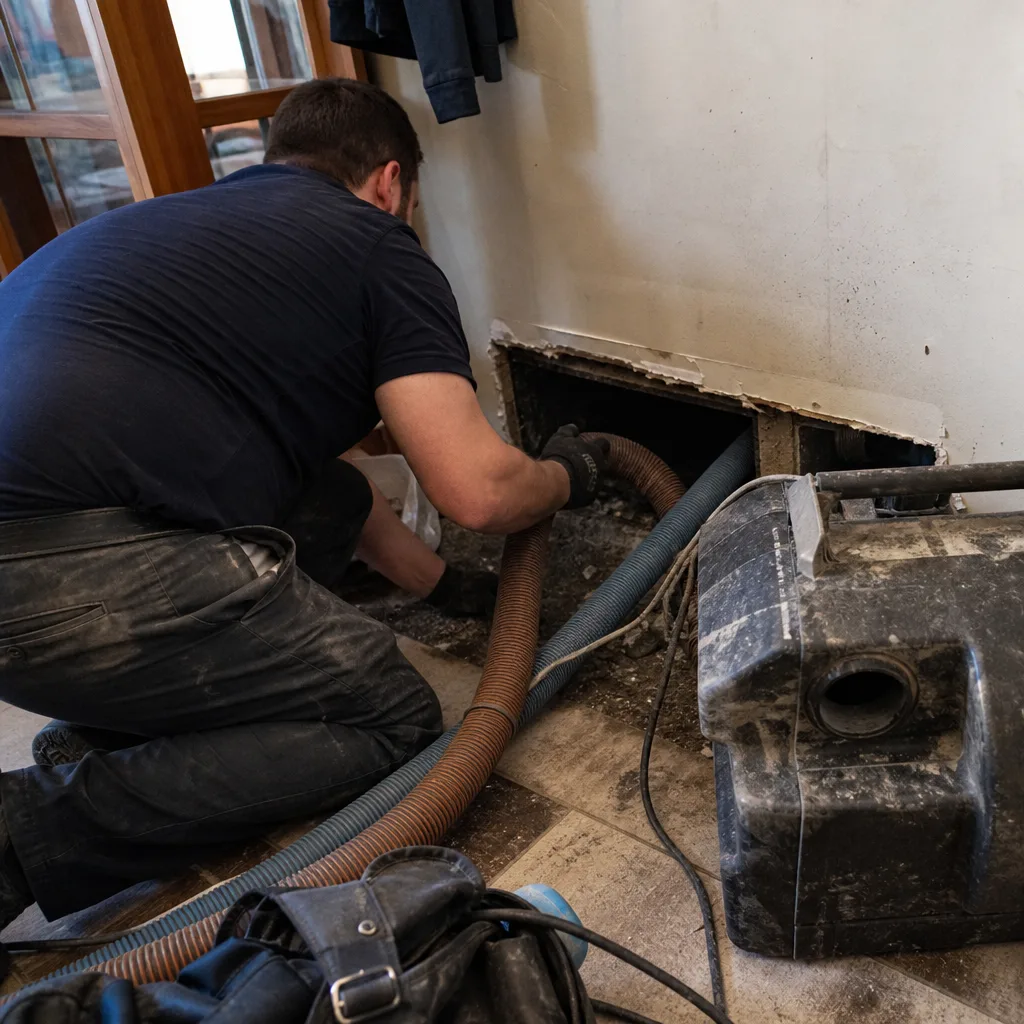 Before
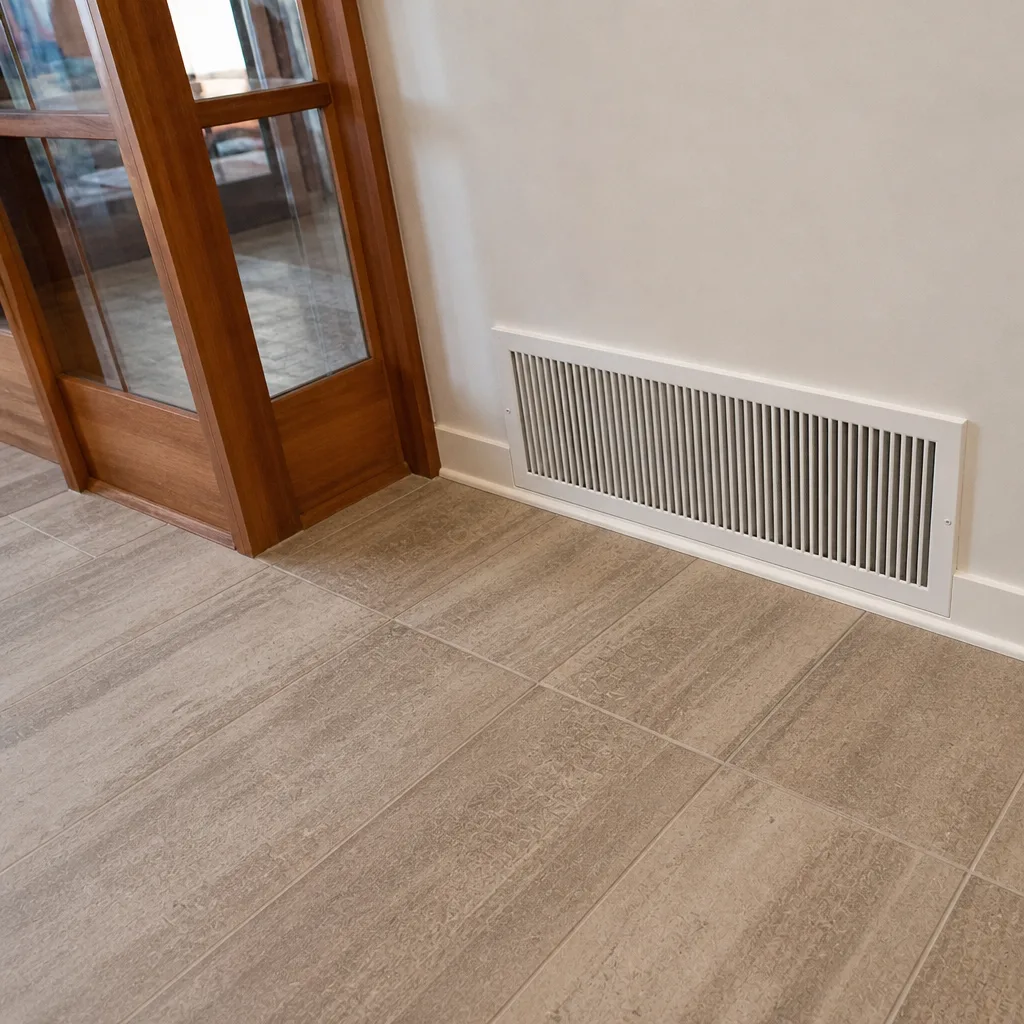 After
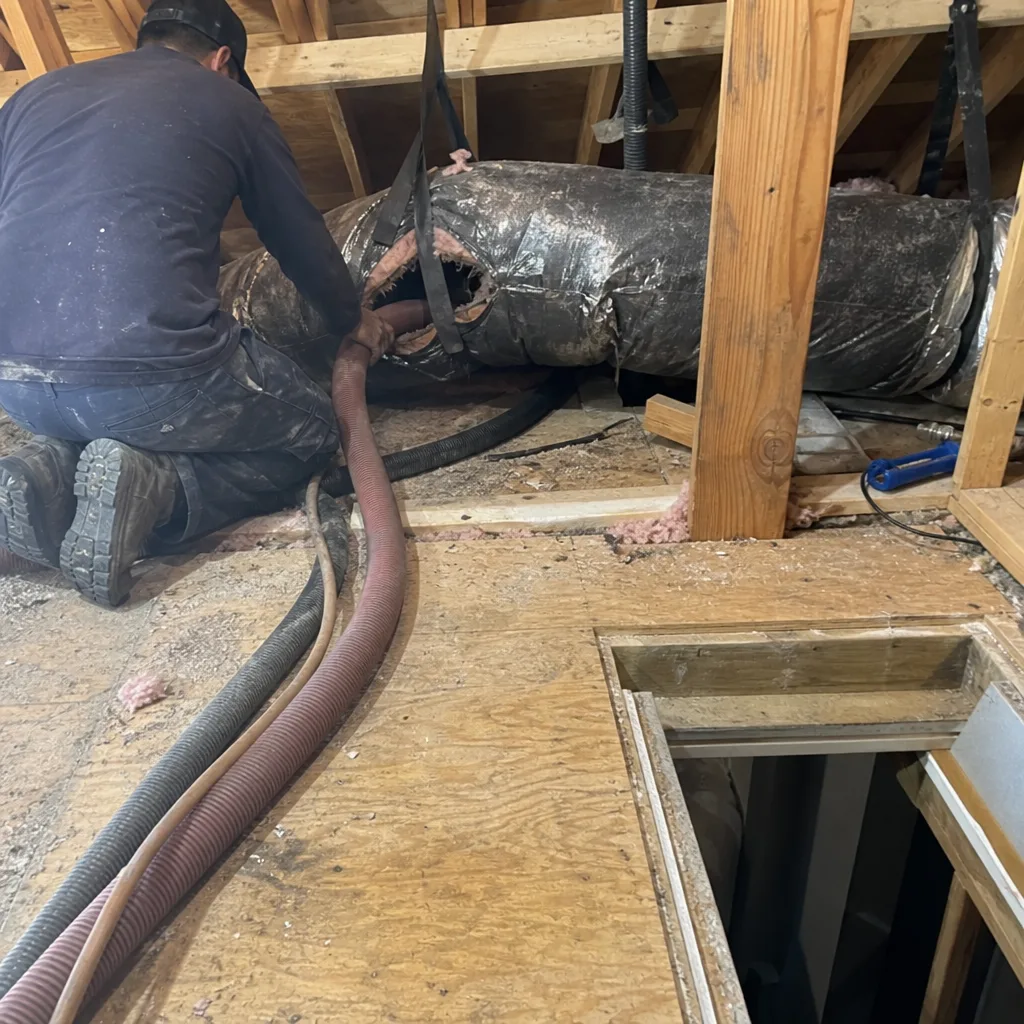 Before
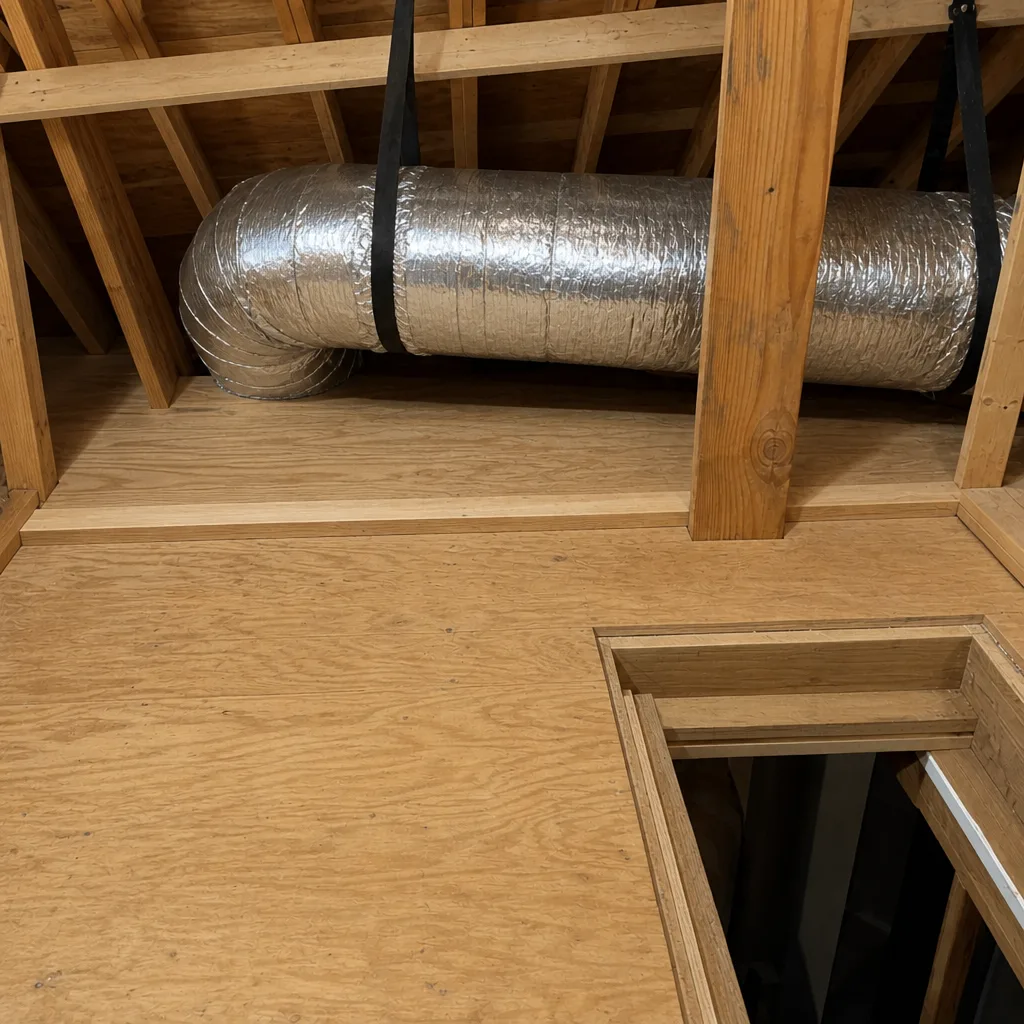 After
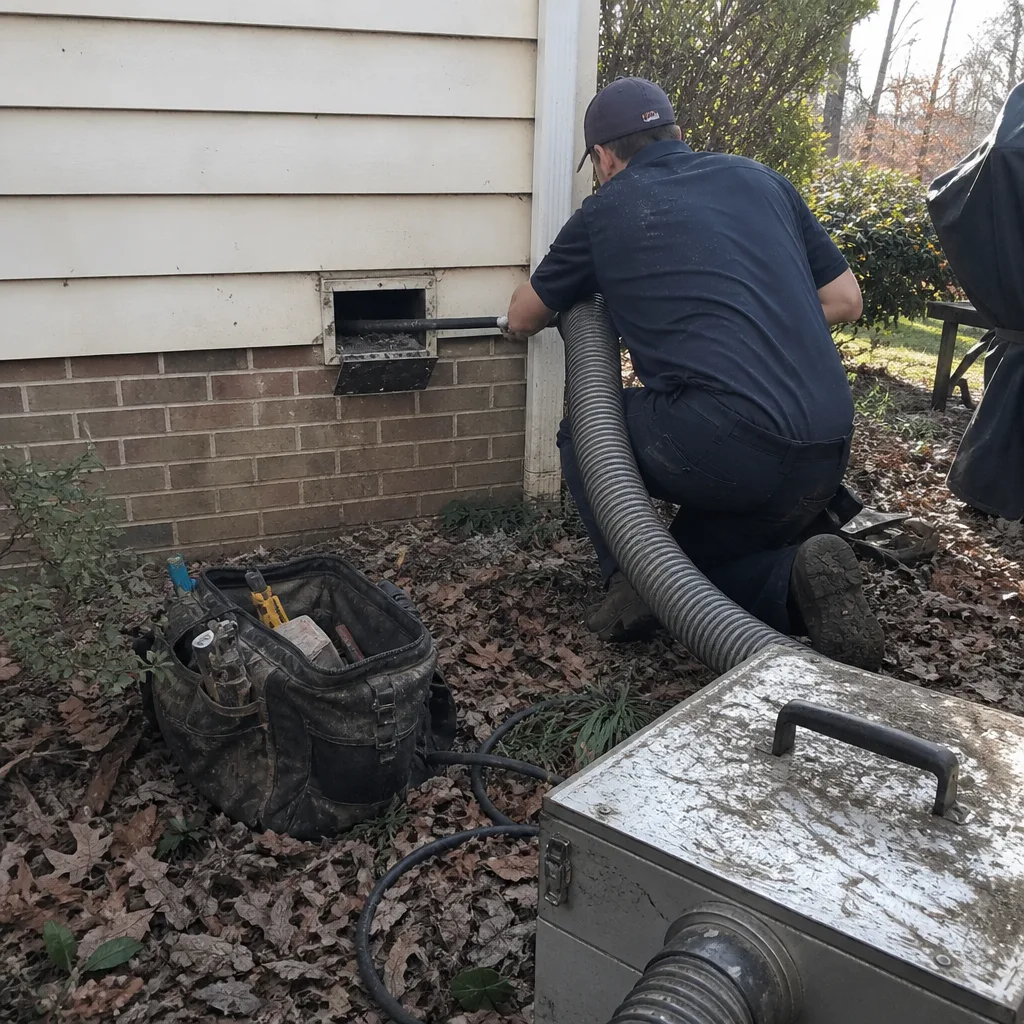 Before
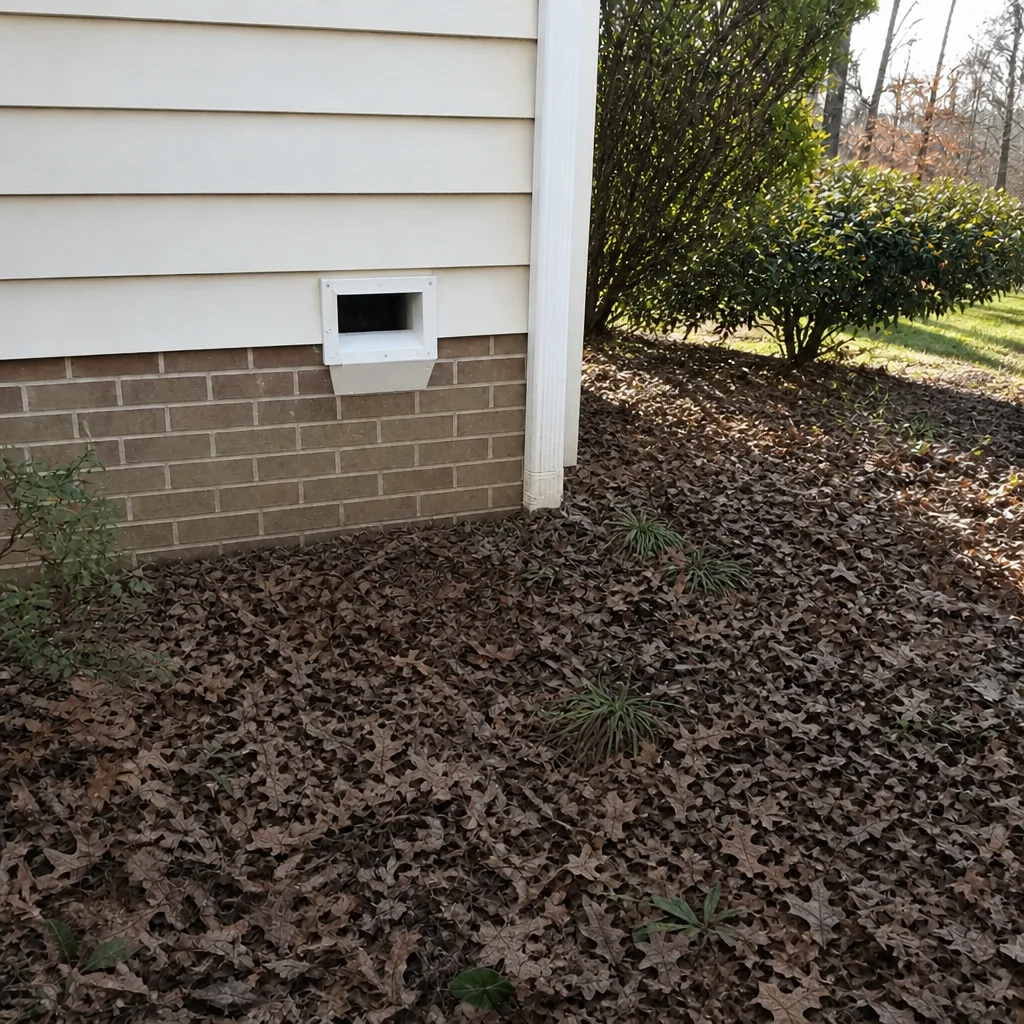 After
Common Mistakes to Avoid
- Choosing by invoice number alone. A $300 quote and a $700 quote for a home with two systems aren’t competing products. Compare the scope, the equipment list, and the photo documentation promise before you compare the totals.
- Accepting a vent count as a scope. “Up to 10 vents” sounds like a boundary; it’s a trigger for a mid-job upcharge. A whole-system price is the only number that holds.
- Letting sanitizing be sold before anyone inspects. Without a camera look at the duct surfaces, an antimicrobial application is a product sale. Ask to see the growth, or decline the treatment.
- Ignoring the dryer vent because the ducts got cleaned. The two systems are unrelated, and lint accumulation behind the dryer is a fire risk independent of HVAC maintenance. Have the run inspected on its own schedule.
- Skipping the repair conversation. If the company doesn’t inspect for disconnected runs and torn flex while the system is open, you’ll pay for the access twice. Ask what happens when damage is found.
- Paying before you’ve seen the photos. A brief review of the before-and-after images, side by side, takes two minutes and tells you whether the trunk lines were touched at all.
- Assuming heavy duct cleaning is a health requirement. It’s a system maintenance decision with an energy and indoor-air rationale. Price it like maintenance, not like a medical treatment.
When to Call a Professional
Some situations call for a professional on the property rather than a filter change. Visible dust streaking out of the supply registers after the system runs. A musty smell that returns after the filter is replaced. A recent remodel that filled the returns with drywall dust. A new HVAC system going in, where the ducts should be cleaned before the new equipment moves air through them. A dryer taking two cycles to finish a load, which signals a lint-clogged vent run rather than a failing dryer. Or simply a system you’ve never had inspected and want to understand before deciding anything.
Duct Cleaning Greensboro offers free estimates in Greensboro. Call (833) 968-4577. We answer 24/7, with fast dispatch from 7am to 7pm, Sunday through Friday. One flat price per system, agreed before work starts, and before-and-after photos of your own ducts when we’re done.
The Bottom Line
The gap between a $99 quote and a $1,200 one isn’t margin. It’s scope, equipment, and whether the company is cleaning the system or performing a service call that ends in an upsell. Legitimate pricing in Greensboro funds real equipment: a negative air machine, HEPA collection, rotary brush tools, and camera verification. It funds access labor, a documented scope, and the ability to repair what the inspection finds. Read every quote against the line items in this guide, ask the seven comparison questions, and hold any company to photos of your own ducts. Then the price on the page is the price you’ll actually pay.
To schedule a free estimate and see the difference equipment makes, call Duct Cleaning Greensboro at (833) 968-4577. Professional-grade Rotobrush and Nikro equipment, one flat price per system, and before-and-after photos every time.
Written by the team at Duct Cleaning Greensboro.