
Emergency Air Duct Cleaning Near Me: What Greensboro Homeowners Should Do First
If raw sewage backed up into your HVAC return or your house filled with smoke from an electrical fire, the instinct to call a duct cleaner immediately is understandable, and potentially the wrong first move. The first thing to do is shut the system down, not book a cleaning. In a real contamination event, running the blower pushes sewage particles, soot, or mold spores through every branch of the ductwork in your Greensboro home. Getting the sequence right saves you money and makes the eventual cleanup far more effective.
What Actually Counts as an Emergency Duct Problem in Greensboro?
The short answer: a true duct emergency involves contamination that’s actively spreading or poses a health hazard, not just a dirty system. Most calls we get about “emergency” duct cleaning in Greensboro turn out to be urgent-but-routine. Knowing the difference helps you avoid paying remediation prices for a cleaning job, or worse, getting a cleaning when you actually needed remediation.
Here’s how we break it down:
- True emergency: sewage backup that reached a return or supply vent, fire or smoke infiltration into the ductwork, confirmed or strongly suspected mold growth inside the system, or a rodent infestation with droppings in the ducts. These involve biohazards or combustion byproducts that standard cleaning equipment isn’t designed to contain.
- Urgent but not an emergency: heavy visible debris blowing from vents, a persistent musty smell, a recent HVAC replacement that left construction dust in the system, or a dryer vent that’s taking two cycles to dry a load. These deserve prompt attention but don’t carry the same contamination risk.
Greensboro’s humid summers push moisture into unconditioned spaces like attics and crawlspaces, which is where mold problems in ductwork usually start. A musty smell that shows up every July is worth investigating, even if it isn’t a same-day crisis.
Why Shutting Down the HVAC Is Step One
Turn the system off at the thermostat before you do anything else. This is the single most important step in a genuine contamination event, and it’s the one homeowners skip most often. A running air handler is a distribution engine: whatever is in the ducts gets pushed into every room the system serves, within minutes.
After you shut it down:
- Turn off the thermostat and, if you can safely reach it, the breaker that feeds the air handler. Don’t open the air handler cabinet itself.
- Close the registers in affected rooms if the contamination is localized, and keep people and pets out of those spaces.
- Take photos of everything before touching anything. We’ll cover that below.
- Call your insurer if the trigger was a covered event like a fire or water backup, and call a duct professional who handles remediation, not just cleaning.
If you’re in Greensboro and unsure whether your situation is a cleaning or a remediation, that’s a fair question to ask on the phone before anyone comes out. A quick conversation about what happened and what you’re seeing will usually sort it out.
Duct Cleaning vs. Duct Remediation: They’re Not the Same Job
Duct cleaning removes accumulated dust, debris, and light buildup from a functioning system. Duct remediation addresses contamination from a specific event, and it requires containment, negative air pressure, and documentation that a standard cleaning doesn’t include. Calling a cleaning-only company after sewage or smoke exposure can make things worse: disturbed contaminants get spread without being contained, and you’ve now got a bigger remediation bill.
What a proper remediation response should include:
- Containment: plastic barriers and negative air machines that keep contaminants from migrating into living space while work happens. Abatement Technologies equipment is built for exactly this.
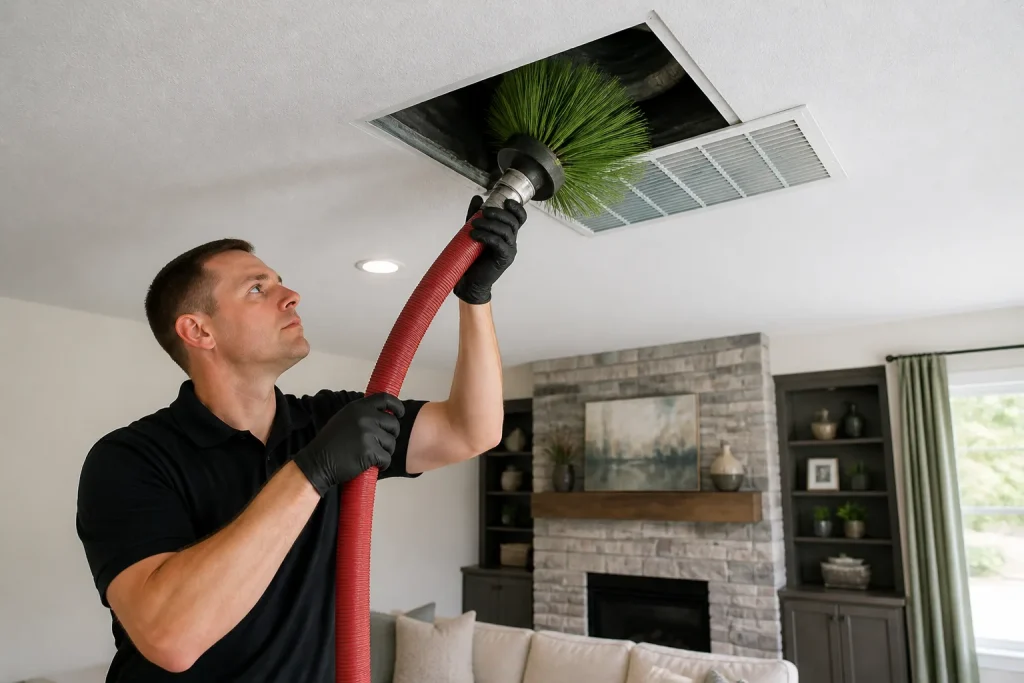
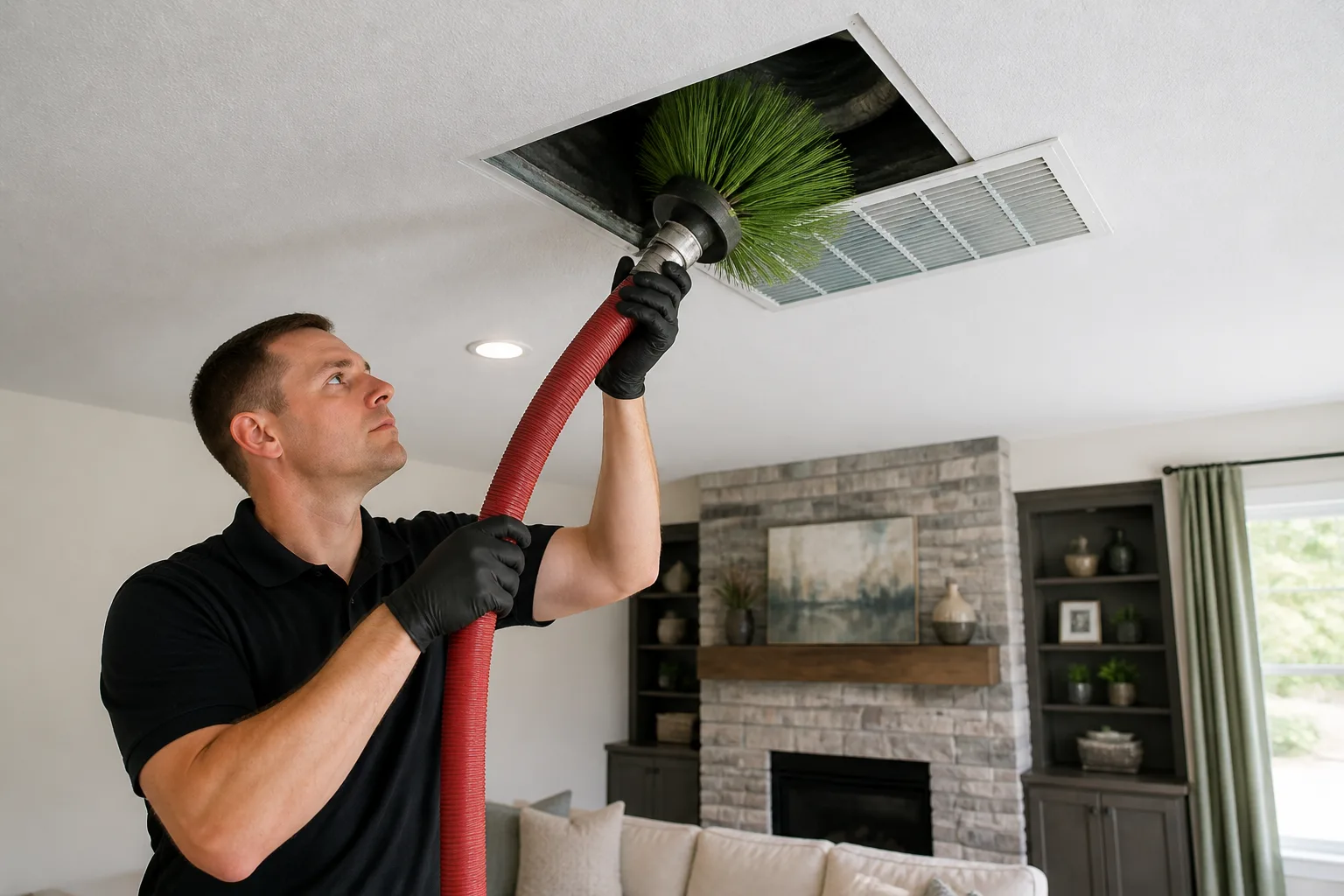
- HEPA filtration: true HEPA units, not shop vacs with a filter slapped on. This is where professional-grade gear matters, and it’s why a Rotobrush or Nikro setup behaves differently from consumer tools.
- Documentation: before-and-after photos, moisture readings, and a written scope of what was removed and what was treated. Your insurer will want this.
- Post-remediation verification: a check that contamination is actually gone, not just visually cleaner.
Standard air duct cleaning still has real value, and a system that’s simply overdue benefits from it. But after a contamination event, you want the remediation sequence first. Cleaning comes after.
Document Everything Before Anyone Arrives
Photos and a short written timeline are the most valuable things you can prepare, and they cost you nothing but a few minutes. Insurers, remediation assessors, and honest contractors all work better with good documentation. Memory fades fast once the cleanup starts.
Before the first technician pulls into your driveway in Greensboro, capture:
- Wide shots of each affected room, then close-ups of vents, stains, and debris. Use your phone’s flash.
- The event itself: what happened, roughly when, and what you did in response. Sewage backup, fire, water intrusion, rodent activity: write it down in plain language.
- Your HVAC run history: was the system running when the event happened, and for how long afterward? This matters for how far contamination likely traveled.
- Any receipts: the plumber who stopped the backup, the fire department report, the water mitigation invoice.
Don’t scrub anything before photographing it. A stained ceiling around a return vent looks ugly, but it’s evidence. Take the picture first.
How to Vet an Emergency Duct Service Call in Greensboro
Pressure is exactly when opportunists thrive, so ask three questions before you book anyone. A legitimate responder answers all three without hesitation. If they don’t, thank them and call the next number.
- “What equipment will you bring, and is it HEPA?” If the answer is vague, or involves a shop vac, that’s a cleaning company, not a remediation responder. Professional-grade equipment from Rotobrush, Nikro, or Abatement Technologies is a fair thing to ask about by name.
- “Will you contain the work area and document before-and-after?” Containment and photos aren’t extras in a contamination job. They’re the job.
- “What’s the written scope and price before work starts?” The price is set per job by a written estimate, agreed before anyone touches your ductwork. A number quoted over the phone without seeing the system isn’t a real estimate.
One more thing worth knowing: a company that also handles dryer vent cleaning as a dedicated service, and can repair duct damage discovered mid-job rather than handing you off to another contractor, tends to be the one that treats the whole system seriously. We keep Guardsman finishing products in the toolkit for the same reason: the job isn’t done until the system is cleaned, protected, and verified. See the difference equipment makes before you commit.
If you’d rather not sort through all this on your own, call (833) 968-4577. We answer 24/7. Fast dispatch from 7am to 7pm, Sunday through Friday.
When to Call a Pro (and When to Wait Until Morning)
Call now if contamination is active or the system can’t be safely shut down: sewage in the ducts, smoke odor that won’t clear, visible mold, or rodent activity inside the system. Those situations get worse while you wait, and shutting the system down buys time but doesn’t fix anything.
A heavy dust load, a musty smell, or a dryer vent that’s underperforming can wait for a scheduled appointment. Neither of those is spreading contamination through your house at this moment. Call, get an estimate, and book it on a normal schedule. Our technicians have up to 12 years of experience and can usually tell you over the phone which category your situation falls into.
Related services in Greensboro: air duct cleaning, dryer vent cleaning, and air duct repair.
The Bottom Line
- For a true contamination event (sewage, fire, mold, rodents), shut off the HVAC first, then call a remediation-capable company, not a cleaning-only outfit.
- Document everything with photos and a short timeline before anyone arrives. Your insurer and your remediation assessor both need it.
- Ask about equipment, containment, and a written scope before booking. Vague answers mean keep looking.
- Routine heavy debris or a musty smell can wait for a scheduled cleaning. It’s urgent, not an emergency.
If you’re in Greensboro and need help, Duct Cleaning Greensboro offers free estimates: call (833) 968-4577. We answer 24/7. Fast dispatch from 7am to 7pm, Sunday through Friday, with a written price agreed before work starts.
Frequently Asked Questions
The exact price depends on the scope of the contamination and the size of the system, and it’s set per job by a written estimate agreed before work starts. A routine whole-system cleaning and a full remediation after sewage or smoke exposure are different jobs with different equipment requirements, so a phone number quoted before an inspection isn’t reliable. Call (833) 968-4577 for an accurate estimate: it’s free.
No. A standard filter catches a small fraction of fine particles and does nothing for sewage, soot, or mold spores already inside the ductwork. Running the system spreads contamination through every branch and into living space. Shut it off at the thermostat and leave it off until a professional has assessed the system.
Usually because containment, HEPA equipment, and documentation are missing, or because the quote covers a surface cleaning rather than remediation. A low number on a contamination job often means the work won’t actually solve the problem. Ask what equipment comes out and whether containment is included; the answer separates the two.
You should get before-and-after photos of your own ducts, a written scope of what was removed and treated, and a walkthrough when the job is finished. Reputable crews expect you to look. If someone won’t show you photos or explain what was done, that’s your answer.
Written by the team at Duct Cleaning Greensboro.
Need Air Duct Cleaning Help?
Call Duct Cleaning Greensboro - licensed & insured, with free written estimates in Greensboro.
(833) 968-4577