
Nikro Air Duct Cleaning in Greensboro: A Homeowner’s Guide
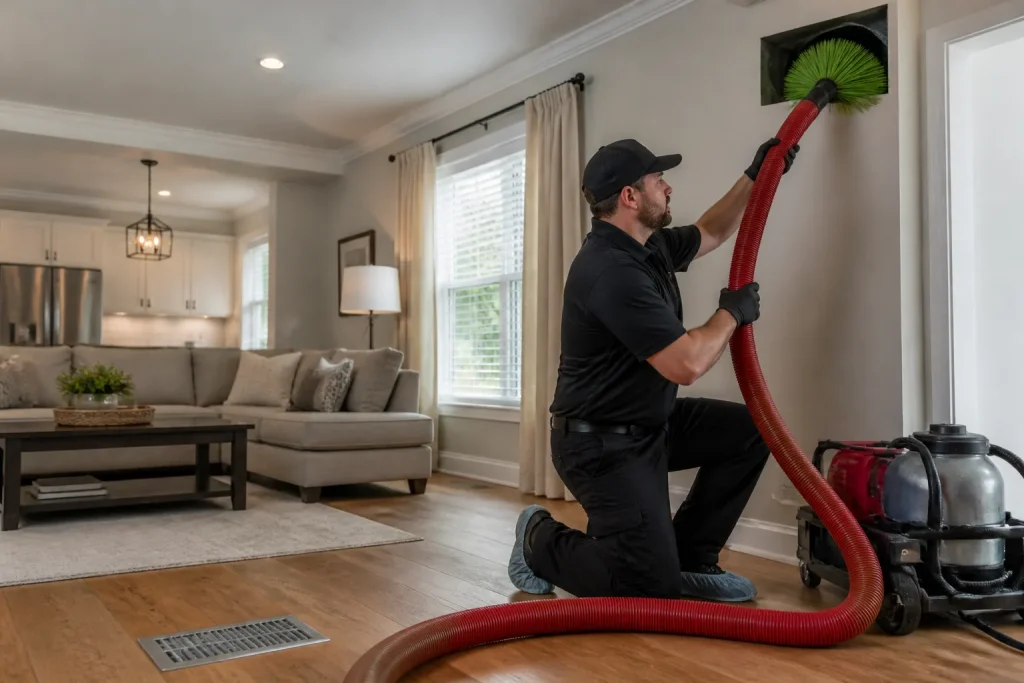
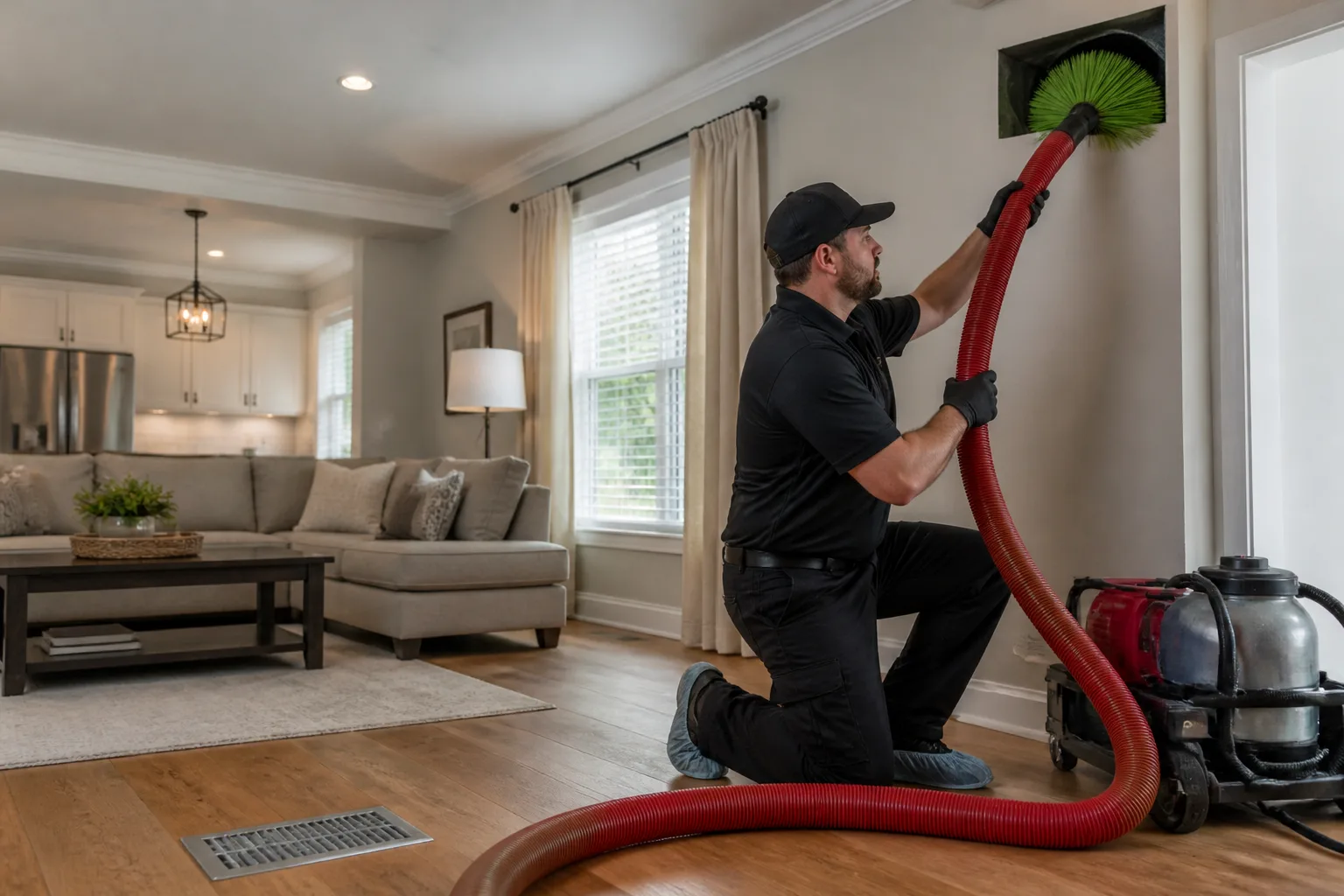
When a duct cleaning company lists their equipment brand, most homeowners skip right past it. That’s the exact moment the price-cutters are counting on. A Nikro industrial vacuum is not a logo to decorate a website – it’s the machine that decides whether the dust in your ducts gets captured or blown back into your living room. Here’s what Nikro equipment actually does, how it handles Greensboro homes, and the exact questions to ask before anyone touches your system.
If you’d rather have a trained eye answer those questions in person, call (833) 968-4577 for a free estimate.
What Is a Nikro Duct Cleaning System, Exactly?
A Nikro system is a purpose-built industrial vacuum designed to pull a high volume of air through a home’s ductwork while filtering what it captures. It is not a shop vac with a longer hose. The difference is measurable in three areas: airflow capacity, filtration staging, and the ability to hold your ducts under negative pressure for the length of the job.
Standard consumer vacuums move a comparatively small volume of air and filter coarsely. A Nikro unit is engineered for far higher cubic feet per minute (CFM) so the debris loosened by rotary agitation actually travels out of the system instead of settling a few feet downstream. The filtration stack runs in stages – a primary collection stage followed by progressively finer filters, often including HEPA-grade final filtration on the equipment we use – so the air exhausted back into your home is cleaned, not just relocated.
Here’s the part most homeowners never hear explained: the machine only works if it runs continuously and maintains airflow. A cleaner who fires up a vacuum for a few minutes per room is doing theater. The equipment has to be running, and holding pressure, from the first register to the last.
Why Negative Air Pressure Is the Whole Ballgame
Negative air pressure means the vacuum is pulling more air out of your duct system than leaks back in, so the ducts stay under suction for the duration of the cleaning. That single condition determines whether the job cleans your home or contaminates it.
Without it, every rotary brush stroke dislodges dust that has to go somewhere. With no sustained pull, that dust finds the nearest open register and drifts into the room where your family is sitting. This is why a budget “blowout” – compressed air pushed through the ducts with a weak vacuum attached – can leave a home dustier after the visit than before it. We’ve seen the aftermath more than once: a fine film on the furniture and a homeowner wondering what they paid for.
Maintaining negative pressure through a real job requires a few things working together:
- A vacuum with enough CFM capacity to overcome the resistance of long duct runs.
- A sealed connection at the main trunk or a register, so air isn’t drawn from the room instead of the ducts.
- Registers capped or isolated as the technician moves through the system, so the suction stays concentrated.
- Written or photo documentation of the CFM reading and pressure check, if the company is serious about proving the work.
In Greensboro, where many homes run long horizontal trunk lines through crawlspaces and attics, that resistance adds up. A vacuum sized for a small apartment won’t hold negative pressure on a sprawling ranch system.
How Nikro Equipment Handles Greensboro Home Layouts
Greensboro’s housing stock is a mix of older single-story ranches, split-levels, and two-story homes with multiple return trunks, and each configuration tests a vacuum differently. The equipment you want depends on how the ductwork is laid out, not just on square footage.
On a single-story ranch, the supply trunk typically runs horizontally under the floor or through the attic, with relatively short branch runs to each register. This is the friendlier layout for a portable unit – the runs are accessible and resistance is moderate. A Nikro portable handles these efficiently, and the technician can work methodically room by room without fighting airflow loss.
Two-story homes are a different problem. Returns on an upper floor, long vertical chases above the mechanical closet, and supply branches feeding distant bedrooms all add distance and turns. That’s where airflow capacity and a properly sized vacuum matter most, because a weak unit simply can’t pull through a long vertical run. On these systems, a truck-mount vacuum has a real advantage: it delivers higher sustained CFM and can be connected at the main trunk to hold the entire system under pressure while the technician works the interior branches with rotary tools like the Rotobrush line.
If your home has zoned HVAC, multiple air handlers, or a finished basement with its own returns, expect the technician to isolate sections and clean them one at a time. That process takes longer and requires more equipment swaps – which is normal, not a red flag.
Truck-Mount vs. Portable Nikro Units: What’s the Real Difference?
A truck-mount vacuum lives in a van and connects to your duct system through a hose run from the vehicle; a portable Nikro unit is rolled into the home and connected at a register or trunk. The trade-off is airflow versus flexibility.
| Factor | Truck-Mount Vacuum | Portable Nikro Unit |
|---|---|---|
| Airflow capacity | Highest sustained CFM | Good, sized to the job |
| Setup | Requires hose access to the home | Rolls in and connects at the duct |
| Best for | Large two-story homes, long runs, multiple returns | Single-story ranches, condos, tight access |
| Filtration | Multi-stage, typically HEPA-final | Multi-stage HEPA-final |
| Interior access needed | Works from outside the living space | Technician works inside the home |
Neither is automatically “better.” A company that shows up with a properly maintained truck-mount for a modest ranch home may be over-equipped; a company that brings a portable unit to a two-story home with four returns may be under-equipped. The honest answer is that the equipment has to match the system in front of it, and a good technician will tell you which setup your home calls for. That whole-system thinking also extends to air quality components – we’re authorized to work with and around Honeywell and Aprilaire filtration systems, and that matters when the equipment needs to interface with what’s already installed.
Five Questions to Ask Any Duct Cleaner About Their Vacuum
Ask these before you book, and listen for specifics rather than reassurances. A company that can answer them concretely is a company that knows its equipment.
- “What’s the CFM rating of the vacuum you’ll bring?” Higher is better for long runs. If they can’t tell you, they don’t know their machine.
- “Does it have HEPA filtration, and how many stages?” Multi-stage filtration ending in HEPA is the standard for anything that’s going to exhaust inside your home.
- “How do you confirm you’re holding negative pressure during the job?” They should describe sealing the system and capping registers, not just running a hose.
- “Will you show me the before-and-after condition of my ducts?” Photos of your own system are the proof that the work happened.
- “What happens if you find damage while cleaning?” Ducts get crushed, torn, or disconnected over time. A company with repair capability, like our air duct cleaning team, can fix what they find instead of leaving you to call someone else.
We’ve seen enough cut-rate jobs to know the answers that sound confident but say nothing. It’s not hard to spot them once you know what to listen for.
When to Call a Pro (and One Thing You Can Check Yourself)
Most homeowners don’t need to diagnose duct problems alone. But there’s one check you can do in thirty seconds: pull a register cover and look inside with a flashlight. Loose debris, visible dust buildup on the duct walls, or a musty smell are all reasons to call. So is a recent HVAC replacement (installers often leave debris behind), a family member with new allergies, or a dryer that suddenly takes two cycles to finish a load.
That last one is worth its own line. A clogged dryer vent is a fire risk, not a footnote, and it deserves a dedicated service rather than a quick pass with the vacuum hose at the end of a duct job. Our dryer vent cleaning is handled as its own focused visit for exactly that reason.
At the other end, don’t call for duct cleaning if a medical condition, pest infestation, or asbestos is involved – those need a specialist first. And if a company quotes you over the phone without ever seeing your system, that’s not an estimate. That’s a guess.
Related services in Greensboro: Greensboro homeowners can combine duct cleaning, dryer vent work, and duct repair in one visit when it makes sense, and our Duct Cleaning Greensboro team is the place to start.
The Bottom Line
Nikro equipment is a signal, but it’s not a badge you can slap on a website and be done with. What matters is whether the technician running it knows how to size it to your home, maintain negative pressure for the full job, and prove the work with photos of your own ducts. We clean it, we repair it, we protect it – and Guardsman-grade finishing products extend the results of a cleaning so you’re not back to square one in a year.
Our technicians have up to 12 years of experience, every job uses professional-grade Rotobrush and Nikro equipment, and we set one flat price per system agreed in writing before work starts. No per-vent pricing, no surprise invoices after the truck pulls away. If you’re in Greensboro and need help, Duct Cleaning Greensboro offers free estimates – call (833) 968-4577. We answer 24/7. Fast dispatch from 7am to 7pm, Sunday through Friday.
Frequently Asked Questions
Yes, by a wide margin. A Nikro industrial vacuum is engineered for high CFM airflow and multi-stage HEPA filtration, while a shop vac is built for small-volume pickup and coarse filtering. The shop vac can’t hold a home’s duct system under sustained negative pressure, so dislodged dust recirculates into the living space instead of being captured. Call (833) 968-4577 for an exact quote – estimates are free.
Often yes, but it depends on the layout. Two-story homes with long vertical runs and multiple returns usually benefit from a truck-mount vacuum’s higher sustained airflow. A properly sized portable unit can still do the job when the technician isolates sections and works methodically. Ask the company which setup they plan to bring and why. Call (833) 968-4577 for an exact quote – estimates are free.
Because they’re not quoting the same job. A low figure often reflects a brief pass with a weak vacuum, no pressure testing, and no documentation – sometimes no real equipment at all. A full-system clean with a Nikro or truck-mount vacuum, proper sealing, and before-and-after photos takes real time and real equipment. We set one flat price per system agreed before work starts, so you know what you’re paying for and what you’re getting. Call (833) 968-4577 for an exact quote – estimates are free.
Ask for before-and-after photos of your own ducts, not a stock image. A serious company will document the condition of the system at the start and finish, along with any damage found. Ours does. Call (833) 968-4577 for an exact quote – estimates are free.
Written by the team at Duct Cleaning Greensboro.
Need Air Duct Cleaning Help?
Call Duct Cleaning Greensboro - licensed & insured, with free written estimates in Greensboro.
(833) 968-4577