
Last updated November 16, 2026
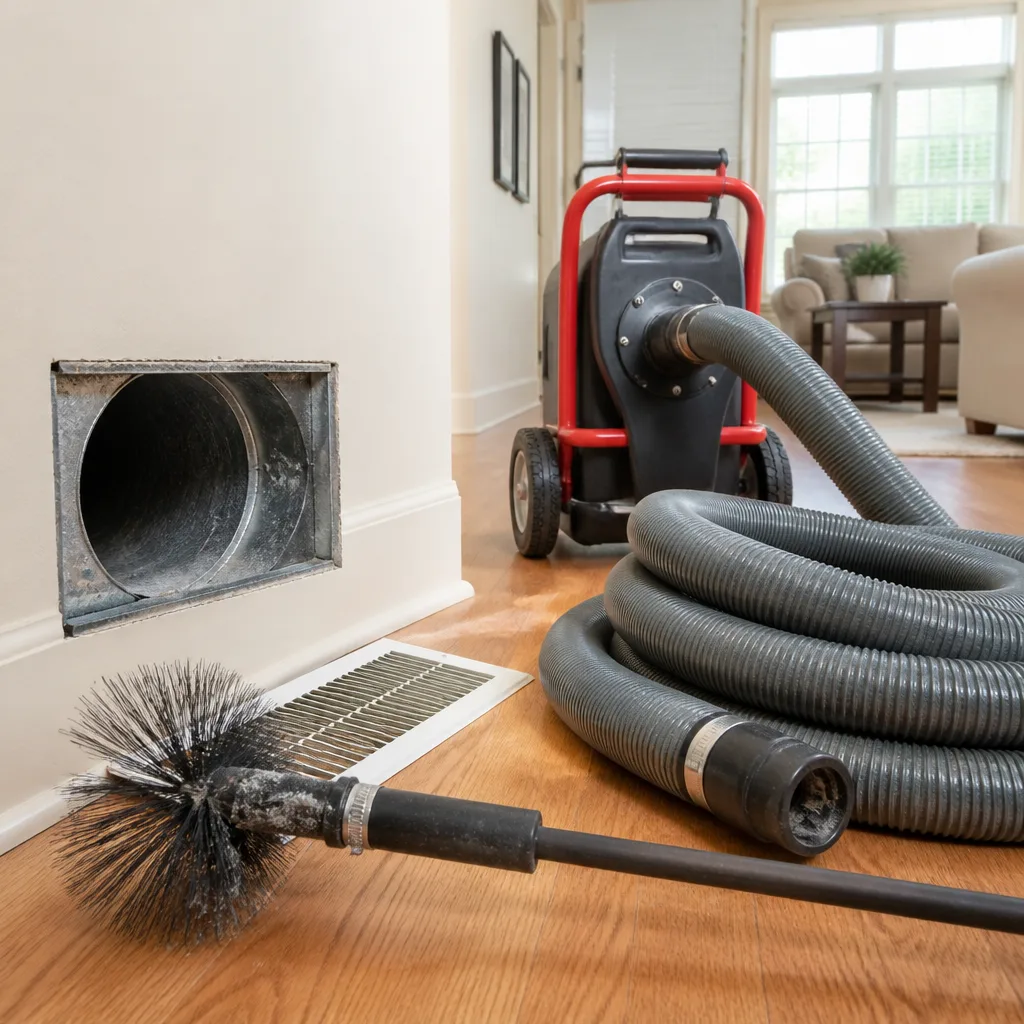 Whole-home duct cleaning
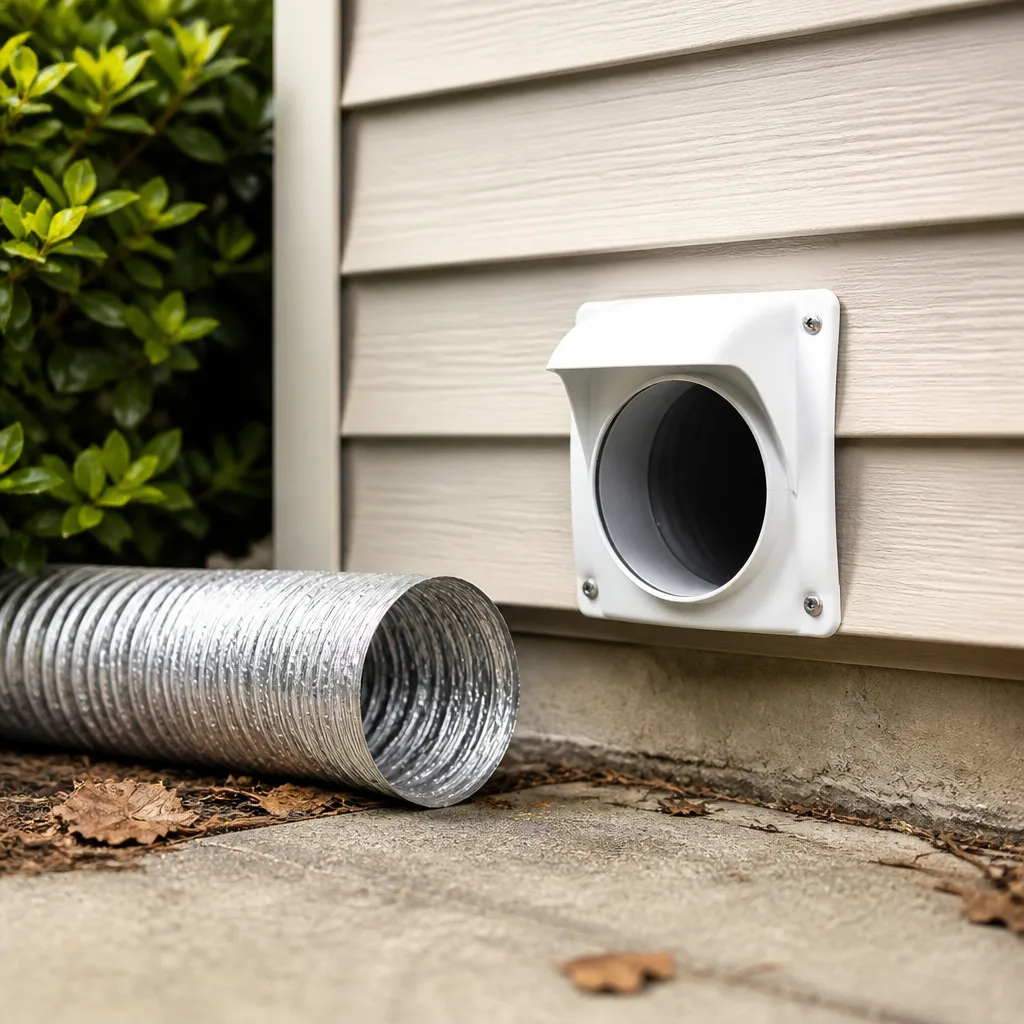 Dryer vent cleaning
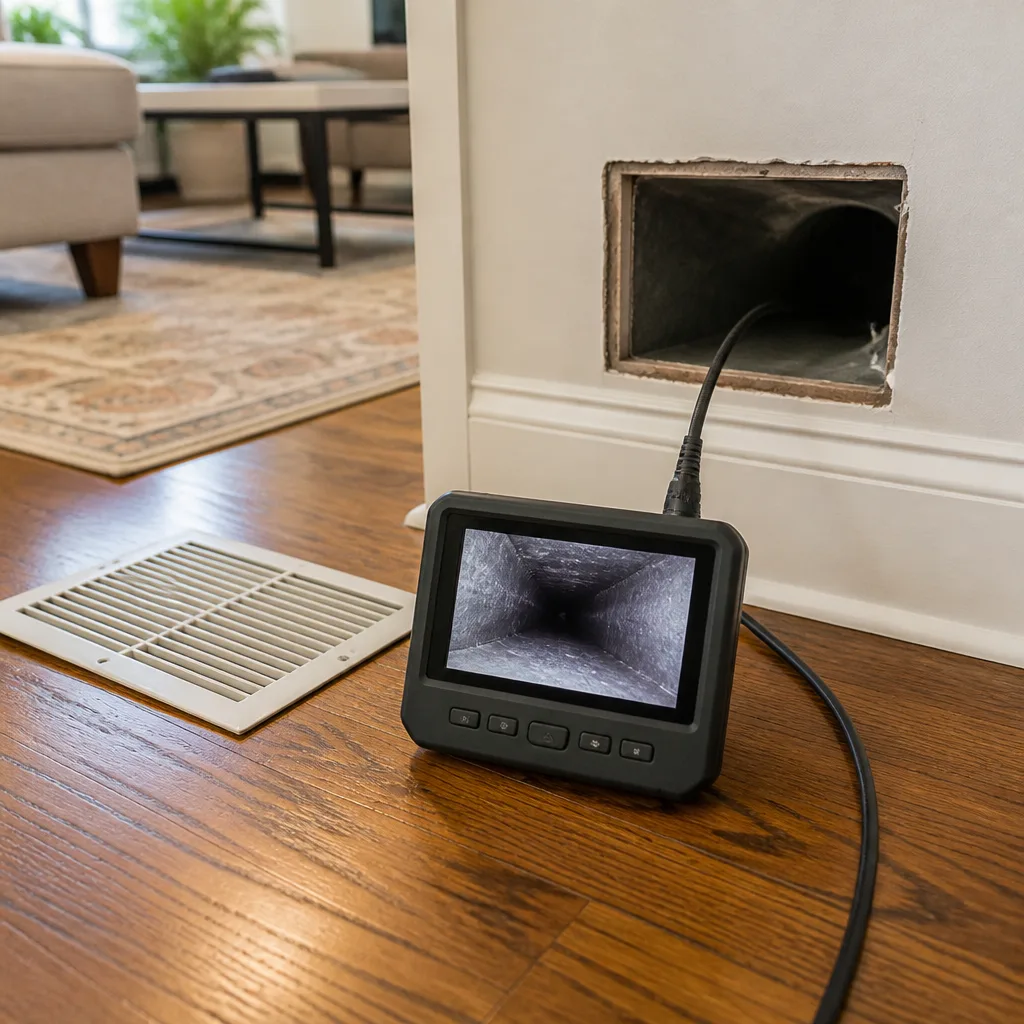 Camera inspection
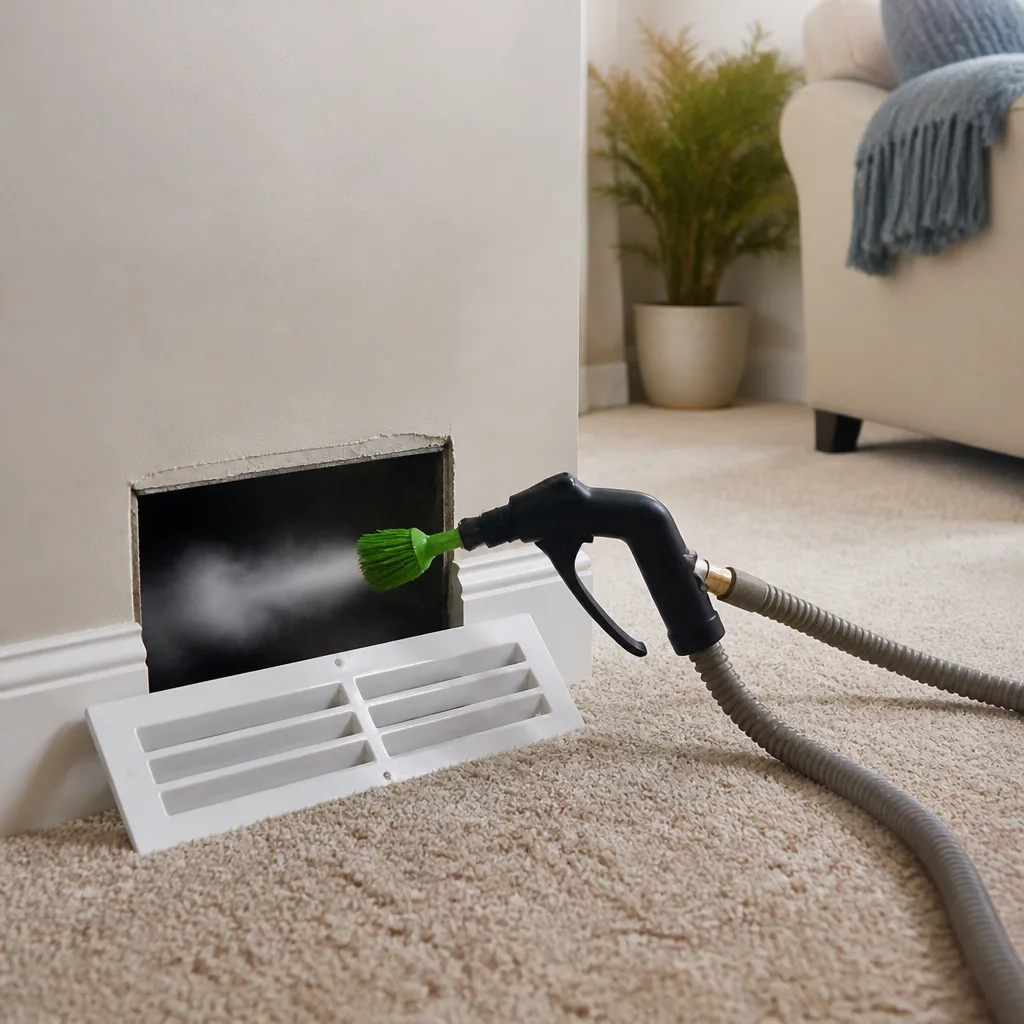 Sanitizing & deodorizing
Whole-system duct and dryer vent check with before-and-after photos - you see exactly what came out of your vents
That "$99 whole-house special" is a bait ad - the real number appears once they are in your hallway, or the "clean" is a shop-vac at the register. We photograph the inside of your ducts before and after instead.
Choosing the Right Air Duct Cleaning Brand: A Buyer’s Guide for Greensboro
Here’s a thing that surprises people: the duct cleaning company with the most glowing reviews in Greensboro may still show up with a 150 CFM portable unit and run it into a 3,000 square foot house. That’s the equipment equivalent of draining a swimming pool with a garden hose. The technician can be polite, on time, and well-reviewed, and the ducts can still come out barely touched. What actually decides whether the job gets done is not the logo on the van. It’s a set of operational choices made before anyone knocks on your door. This guide is about evaluating the operation behind the brand, so you know what to ask, what to listen for, and what a legitimate Greensboro duct cleaning company should be willing to show you before the job starts.
Quick Answer
The right air duct cleaning brand in Greensboro is the one that can explain its equipment in plain terms (source vacuum type, CFM rating, filtration level, camera capability), document the scope of work before starting, and price the whole system rather than each vent. Reviews and certifications help screen companies, but they don’t tell you whether the equipment can actually move the debris out of your ductwork. Ask about the process, get the scope in writing, and treat vague answers as the answer.
Styles & brands we work with
- Whole-home duct cleaning
- Dryer vent cleaning
- Camera inspection
- Sanitizing & deodorizing
Table of Contents
- The Equipment Questions That Separate Real Operators From Van-and-Vacuum Outfits
- Negative Air vs. Contact Vacuum: Why It Changes the Result
- What NADCA Certification Does and Doesn’t Guarantee
- How to Read Reviews With Technical Skepticism
- What a Legitimate Greensboro Company Should Show You Before the Job
- Red Flags in the Booking Experience Itself
- Cleaning, Repair, and Dryer Vents: Why the Full Scope Matters
- Greensboro-Specific Factors That Affect Duct Cleaning
The Equipment Questions That Separate Real Operators From Van-and-Vacuum Outfits
Duct cleaning is a negative-pressure problem. You’re trying to dislodge settled debris from the interior surfaces of the ductwork while keeping it from blowing back into the living space. That requires a vacuum strong enough to hold the whole system under negative pressure while an agitation tool works the surfaces loose. Consumer-grade shop vacs and repurposed carpet-cleaning machines can’t do that, which is why the equipment question is the first screening tool in this buyer’s guide.
Ask these four questions on the phone, before you book anything:
- What’s the CFM rating on your source vacuum? CFM (cubic feet per minute) is the airflow the vacuum can pull. Low-CFM portables are fine for a single small run, but they can’t hold negative pressure across a whole residential system. If the person on the phone doesn’t know the number, that’s meaningful.
- Do you use a negative air machine, and what type? A proper negative air setup pulls the entire duct system under vacuum at the air handler or a main trunk, so agitation happens with the debris moving toward the vacuum, not toward your living room.
- What level of filtration do you run? HEPA filtration on the vacuum exhaust is what keeps fine particulate from re-entering the home. Standard filtration is not the same thing, even if it sounds similar.
- Do you do camera inspection? A push camera lets the technician actually see the inside of the duct before and after, and find damage that isn’t visible from a register. Without it, “we cleaned it” is a claim you can’t verify.
Professional duct cleaning tools are purpose-built for this work. Rotobrush is designed specifically for duct interiors, using a rotating brush head on a flexible whip to agitate surfaces while the vacuum pulls. Nikro equipment covers the negative air and HEPA side of the operation. When a Greensboro company uses equipment like this, they can talk about CFM, pressure, and filtration because those numbers are part of the job. When a company can’t or won’t, the conversation usually shifts to price instead. That shift is your signal.
Negative Air vs. Contact Vacuum: Why It Changes the Result
Two duct cleaning approaches look similar in a sales pitch and behave very differently in a house. Understanding the difference is the single most useful piece of technical literacy you can bring to this decision.
Contact vacuum means a vacuum head is placed directly on each register and each accessible duct surface. It works, but only where the head reaches. Long trunk runs, elbows, and the interior of the plenum often get partial treatment at best because the tool physically can’t get there.
Negative air means the entire duct system is put under vacuum from one connection point, usually at the air handler. The whole system becomes the vacuum chamber. Then agitation tools (rotating brushes, whips, air jets) travel through each run, loosening debris that the system-wide negative pressure carries to the collection point.
Here’s why this matters in Greensboro specifically. Our climate runs humid through much of the year, and humid air is heavier with suspended particles and more prone to letting dust and biological growth settle on duct surfaces rather than stay airborne. That settled material needs to be physically dislodged, not just stirred. A negative air setup plus proper agitation does that. A contact vacuum on its own tends to redistribute as much as it removes.
Ask any company you’re considering which method they use and whether they combine the two. Most serious residential duct cleaning operations use negative air as the foundation and contact vacuum plus agitation for the runs and registers. If a company describes their process and it’s all contact vacuum with no negative air component, you’re comparing a surface wipe to a full-system clean. The pricing may look similar. The result isn’t.
What NADCA Certification Does and Doesn’t Guarantee
NADCA (the National Air Duct Cleaners Association) is the industry’s main standards body, and its certification is a legitimate credibility filter. It tells you a company has committed to a published standard of care and has at least some accountability to a trade organization. If you’re screening companies from a list and need a fast way to cut the field, NADCA membership is a reasonable first pass.
But here’s what the logo doesn’t tell you:
- It doesn’t specify equipment. A NADCA-certified company can still run underpowered portables on a large home. The standard sets expectations; it doesn’t inspect the truck.
- It doesn’t guarantee camera inspection. Verifying the clean requires seeing inside the ducts. Not every certified operator brings a camera.
- It doesn’t cover repair capability. Many certified cleaners clean and leave. If your cleaning turns up a crushed flex run or a separated joint, you want a company that can fix it before it becomes an air quality problem again.
- It doesn’t replace the equipment conversation. The certification is a floor, not a performance guarantee. You still have to ask the four questions above.
In our experience, the companies that are genuinely serious about the work treat NADCA as a starting point and lead with their process. They want to talk about negative air, filtration, and camera inspection because those are the parts of the job they control. Companies that lead with the logo and stop there are usually leaning on it as a proxy for details they’d rather not discuss.
How to Read Reviews With Technical Skepticism
Reviews are useful, but not in the way most people use them. A five-star average tells you people were satisfied. It doesn’t tell you what satisfied means. The reviewer who got a polite technician and a tidy visit may never have looked inside their ducts. The review language is where the signal lives, and it takes some reading between the lines.
Review language that usually signals real work
- Specific mentions of before-and-after photos, camera footage, or being shown the inside of the ducts
- Descriptions of the equipment or process (“they hooked up a big vacuum at the furnace and ran a brush through each vent”)
- Reports of repair work discovered during cleaning and addressed on the same visit
- Comments about a written scope or a price that matched the final invoice
- Mentions of dryer vent work done with care and attention to code clearances
Review language that should make you cautious
- Praise that’s mostly about price or a coupon, with no mention of what was done
- “In and out in an hour” on a large home with no detail about the process
- Reviews that describe a big jump from the quoted price to the final bill
- Complaints about a lack of documentation, no photos, or a vague answer to “what did you actually clean?”
- Reviews that read suspiciously similar to each other in phrasing or structure
The most useful pattern to look for is consistency across the whole review set, not just the stars. A company with a smaller number of detailed, technically specific reviews is often a better bet than one with a large number of short, generic ones. Read the two- and three-star reviews first. That’s where people describe what went sideways, and it tells you more than the five-stars do.
What a Legitimate Greensboro Company Should Show You Before the Job
You shouldn’t have to take a duct cleaning company’s word for how the job will go. A serious operator is comfortable showing you the operation before you commit, and the willingness to do that is itself a data point. Here’s what to expect from a company that’s confident in its process.
- Equipment photos or a description of the actual machines. Not a stock image. Ask what the source vacuum is, what the negative air machine is, and how the agitation tools work. A company that runs Rotobrush and Nikro equipment can show you what those look like and explain why they were chosen. A company running repurposed shop vacs will usually deflect.
- A walkthrough before any work starts. The technician should look at your registers, your air handler, your accessible duct runs, and any visible damage before quoting a scope. A pre-job walkthrough also protects you from surprise add-ons.
- A written scope of work. How many runs, which registers, what the cleaning includes, and what’s excluded. If the scope is verbal only, ask for it in writing. This is also where a whole-system price gets set, as opposed to a per-vent number that can balloon mid-job.
- Camera inspection capability, offered. You don’t have to demand it, but the technician should mention it as part of the process. If they can’t inspect, they can’t verify, and neither can you.
- Clarity on what happens if they find damage. Flexible duct runs crush, joints separate, and older ductwork develops leaks. A company that also does air duct repair can fix what it finds. A cleaning-only operation will hand you a photo and a business card for someone else.
None of this is unreasonable to ask for. Professional duct cleaning companies talk about process all day because it’s what they sell. If asking about equipment makes a company uncomfortable, that discomfort is information, and it’s worth more than the price difference you were hoping for.
Red Flags in the Booking Experience Itself
The booking call is where most problem jobs announce themselves. Before a technician ever arrives, the way a company handles the phone tells you a lot about how they’ll handle the work.
- Vague phone quotes with no scope. “It’s $99 for the whole house” tells you nothing about what’s actually included. If they can’t describe the process or the scope, the number is bait.
- Refusal to discuss equipment. “We use the best equipment in the industry” is not an answer. Ask for a name, a type, or a spec. If you get a slogan back, move on.
- Pressure to book on the first call. A legitimate company can give you a scope, a price range, and time to think. A pressure close is a tell that the price is more negotiable than the process.
- Reluctance to do a pre-job walkthrough. The walkthrough protects both sides. A company that wants to skip it is either rushing or planning to add on after arrival.
- Per-vent pricing with no system total. If the quote is “$X per vent” and the number of vents is determined after arrival, your invoice is a moving target.
- No answer on what happens with damage. If duct cleaning turns up a crushed run, you want to know in advance whether the company can repair it or will leave you to find someone else.
- No mention of dryer vent scope. Dryer vent cleaning is a separate, safety-focused service, not an add-on tossed into a bundle. Companies that treat it as an afterthought are the ones most likely to skip the important parts of the job.
Run the booking call as a screening interview. The company that passes it will feel different from the one that doesn’t, and the difference is usually obvious within five minutes.
Cleaning, Repair, and Dryer Vents: Why the Full Scope Matters
Most duct cleaning companies do one thing: clean. That’s a perfectly legitimate business model, but it leaves two common gaps that homeowners in Greensboro run into again and again. The first is discovered damage. The second is the dryer vent, which is often treated as a footnote to the duct job rather than a fire-safety service in its own right.
When duct cleaning is done properly, the technician is inside your duct system with tools and a camera. That’s the moment when crushed flex runs, separated joints, and disconnected returns get found. If the company can also do air duct cleaning and repair under the same roof, the fix happens before the ducts quietly repressurize your home with unfiltered attic or crawlspace air. If they can’t, the finding becomes your problem to schedule separately. That handoff is where a lot of damage gets left in place for months.
Dryer vents are the other gap. A clogged dryer vent restricts airflow, which reduces dryer performance and, at the extreme, creates a fire risk. Many duct cleaning companies will run a brush through the vent as a courtesy afterthought and call it done. That’s not the same as a dedicated dryer vent service, which includes checking the full run, verifying the exterior termination, and confirming the vent type and clearances match what your home needs. We treat dryer vent cleaning as its own job for exactly that reason.
The full-scope approach is what to look for in a brand. Cleaning alone leaves the system open to recontamination from damage. Repair without cleaning leaves debris in a newly sealed system. And dryer vent neglect is a separate hazard that doesn’t show up in your ducts at all. Ask any company which of these three they actually perform. If it’s only cleaning, that’s a valid answer, as long as you know what you’re getting.
Greensboro-Specific Factors That Affect Duct Cleaning
Duct cleaning isn’t identical everywhere, and the local conditions in Greensboro shape how the work should be approached.
The climate matters. Greensboro runs humid through much of the year, and the mix of warm, moist air and seasonal pollen loads the return side of residential systems more heavily than you’d see in a drier climate. Homes with older flex duct, which is common in some of the city’s established neighborhoods, tend to accumulate more debris in the low points of runs because the duct sags over time. Return ducts in particular benefit from camera inspection, since the interior of a sagging flex run isn’t visible from the register.
Housing stock matters too. Greensboro has a wide mix of construction eras, from mid-century homes where the original ductwork has been retrofitted more than once to newer builds where the sealed system is tighter but the duct layout can be complex. Older homes often have duct runs that were modified during past HVAC replacements, and those modifications are sometimes sloppy. Cleaning without inspection can miss the problem; inspection before cleaning is what catches it.
Seasonal triggers are worth knowing. Late spring and early summer, when pollen loads peak and the AC starts running hard, is a common time for homeowners to notice dust, musty smells, or allergy complaints indoors. Fall is another, with leaf debris and the first heating cycles pushing settled material back into the air. If you’re scheduling around those periods, book ahead. Our teams run fast dispatch from 7am to 7pm, Sunday through Friday, and we answer the phone 24/7 to get you on the calendar. You can also reach the main Duct Cleaning Greensboro page to see the full service lineup, or read more about the city and surrounding areas on our Greensboro page.
Common Mistakes to Avoid
- Choosing on price alone. The lowest quote in Greensboro is usually lowest because the equipment is cheap and the scope is thin. A lower price that leaves your ducts half-cleaned costs more than a proper job, because you’ll pay again to have it done right.
- Accepting a per-vent quote with no system total. Per-vent pricing turns your invoice into a moving target once the technician counts vents on site. Ask for a whole-system price, in writing, before work starts.
- Skipping the equipment conversation. If you don’t know what CFM rating, negative air setup, and filtration the company runs, you’re choosing on branding alone. The questions take five minutes and change the entire evaluation.
- Treating NADCA certification as the finish line. It’s a useful first filter, but it doesn’t tell you whether the equipment on the job can handle your home or whether the company can repair what it finds.
- Overlooking the dryer vent. Duct cleaning visits often leave the dryer vent untouched, and a clogged vent is a fire risk that has nothing to do with your HVAC ducts. If you’re booking one service, ask about the other.
- Not asking what happens with damage. Crushed flex runs and separated joints are common findings in Greensboro’s older housing stock. If your cleaning company can’t repair what they find, the discovery turns into a second project with a second contractor.
- Trusting star averages over review content. A high average with generic reviews is less informative than a smaller set of detailed reviews that mention process, photos, and outcomes. Read the middle reviews, not just the top ones.
See the difference
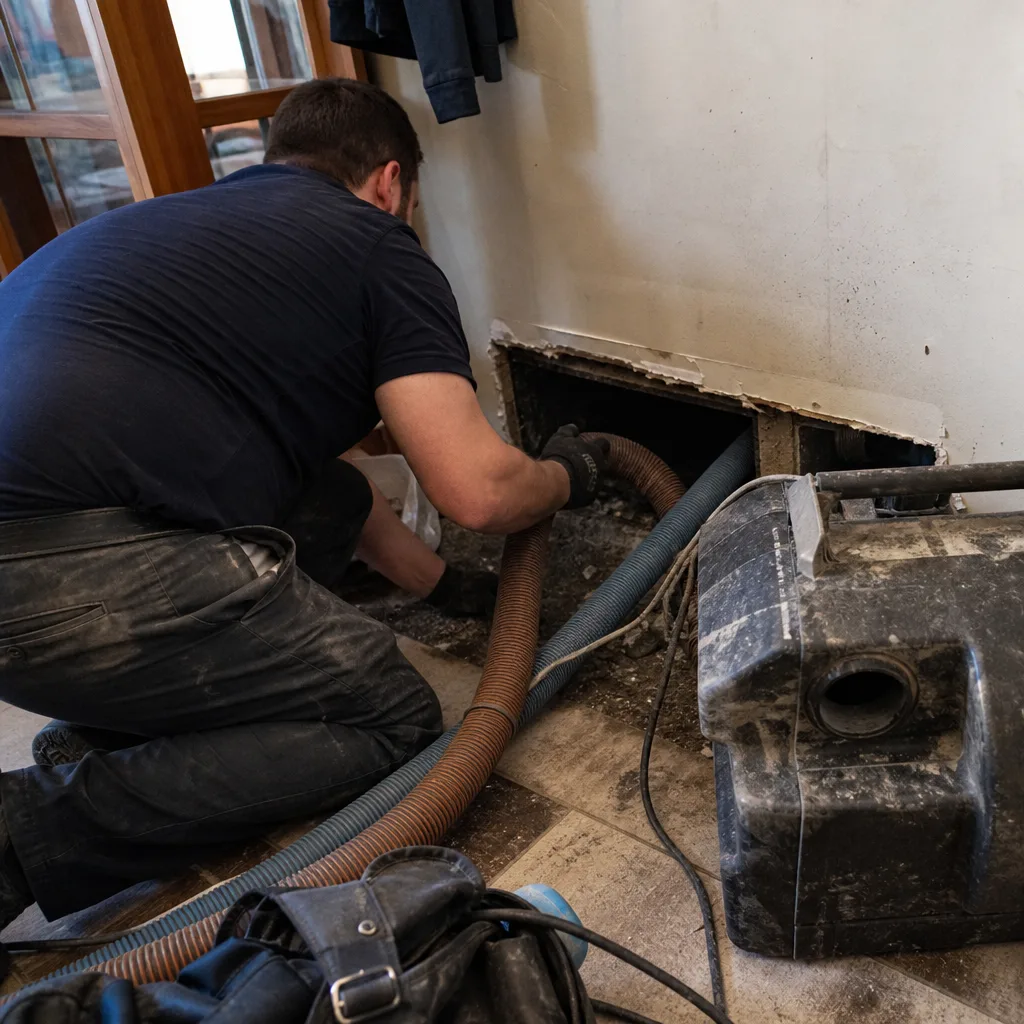 Before
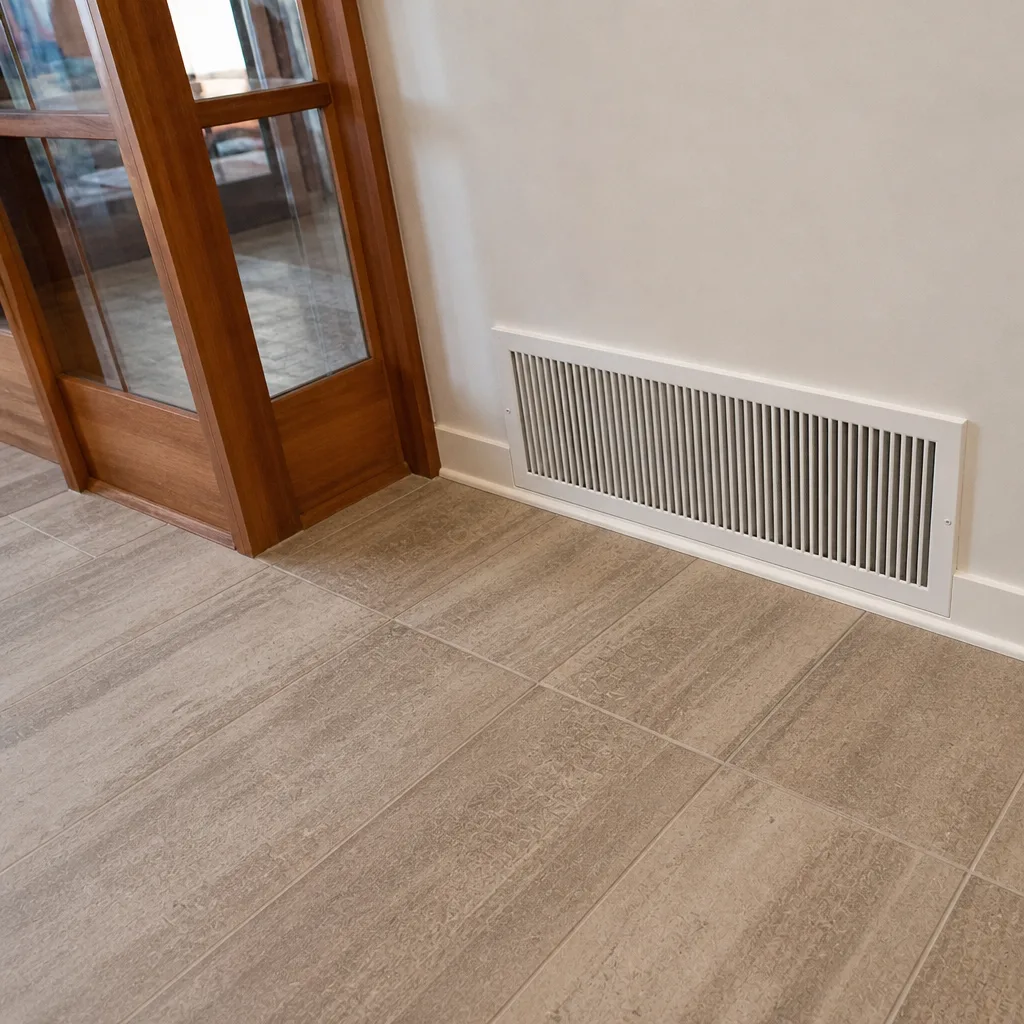 After
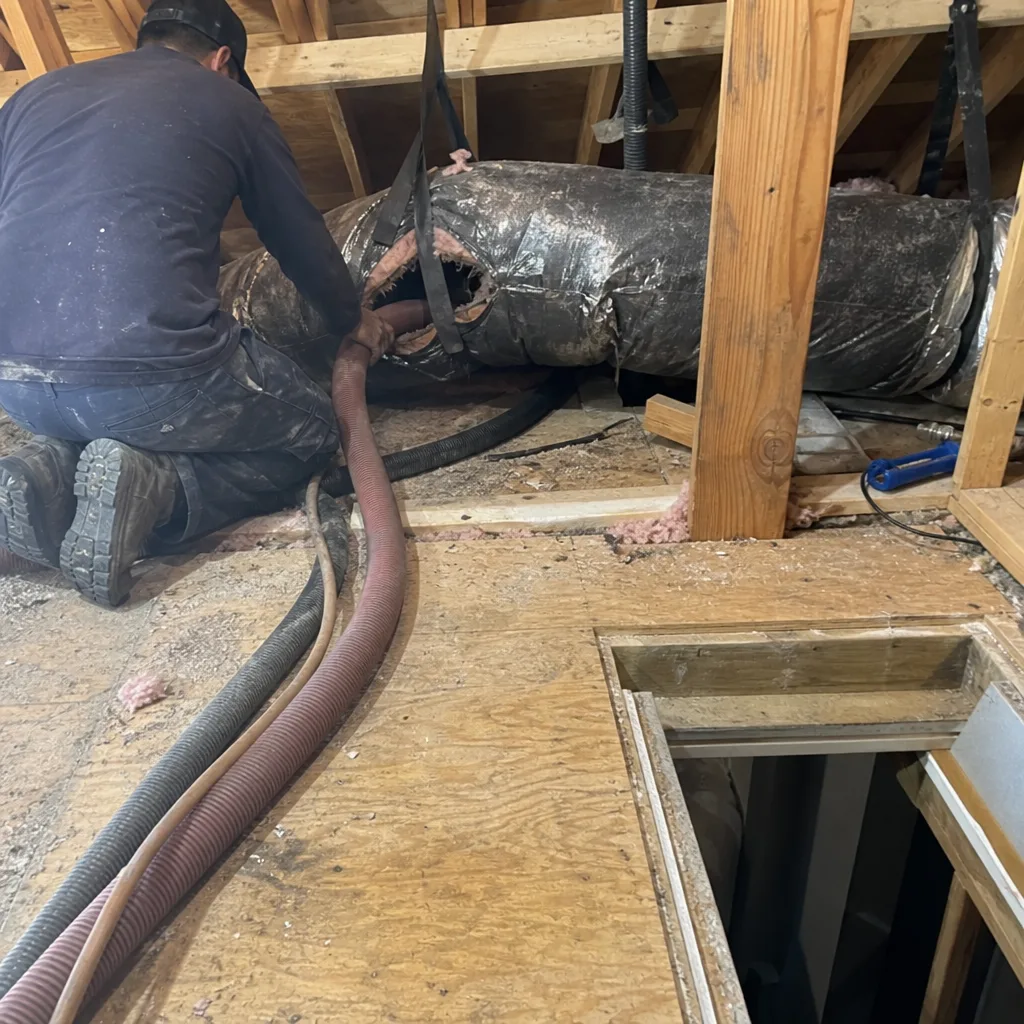 Before
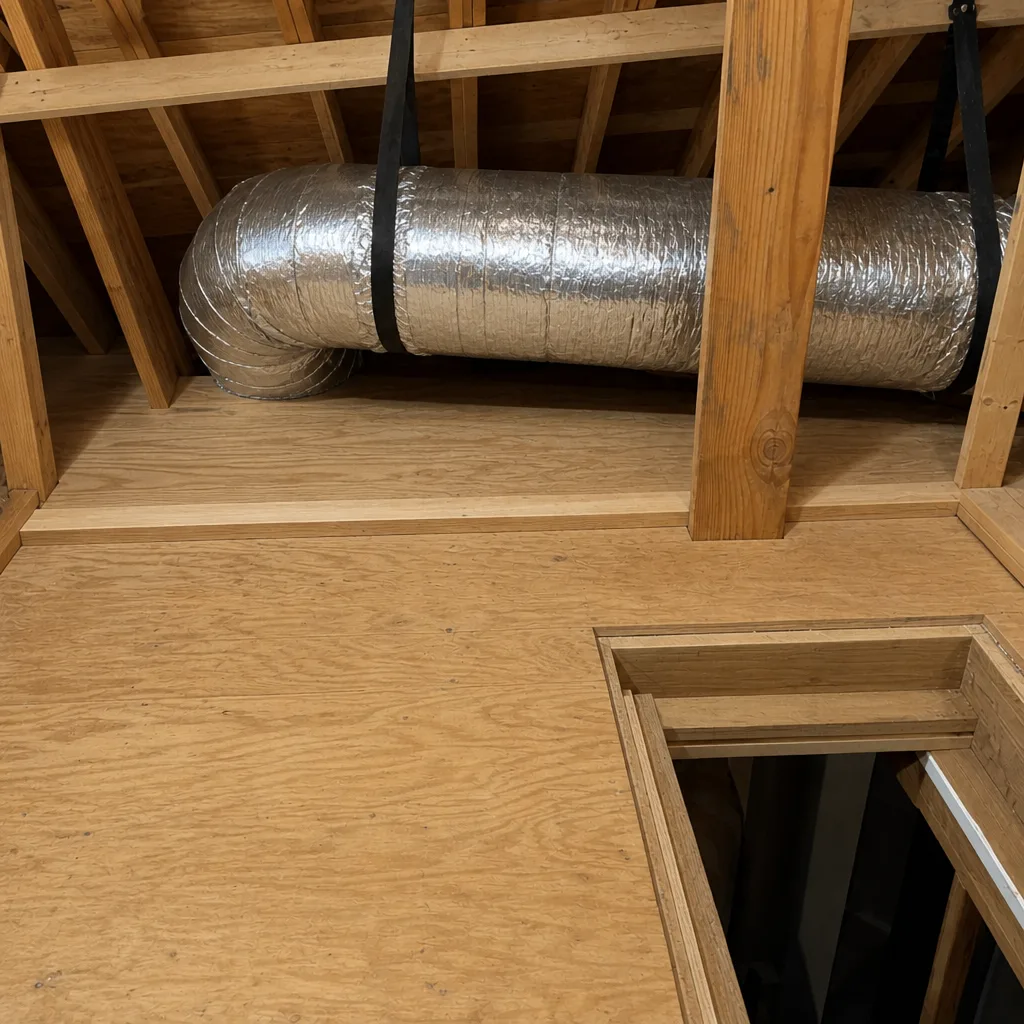 After
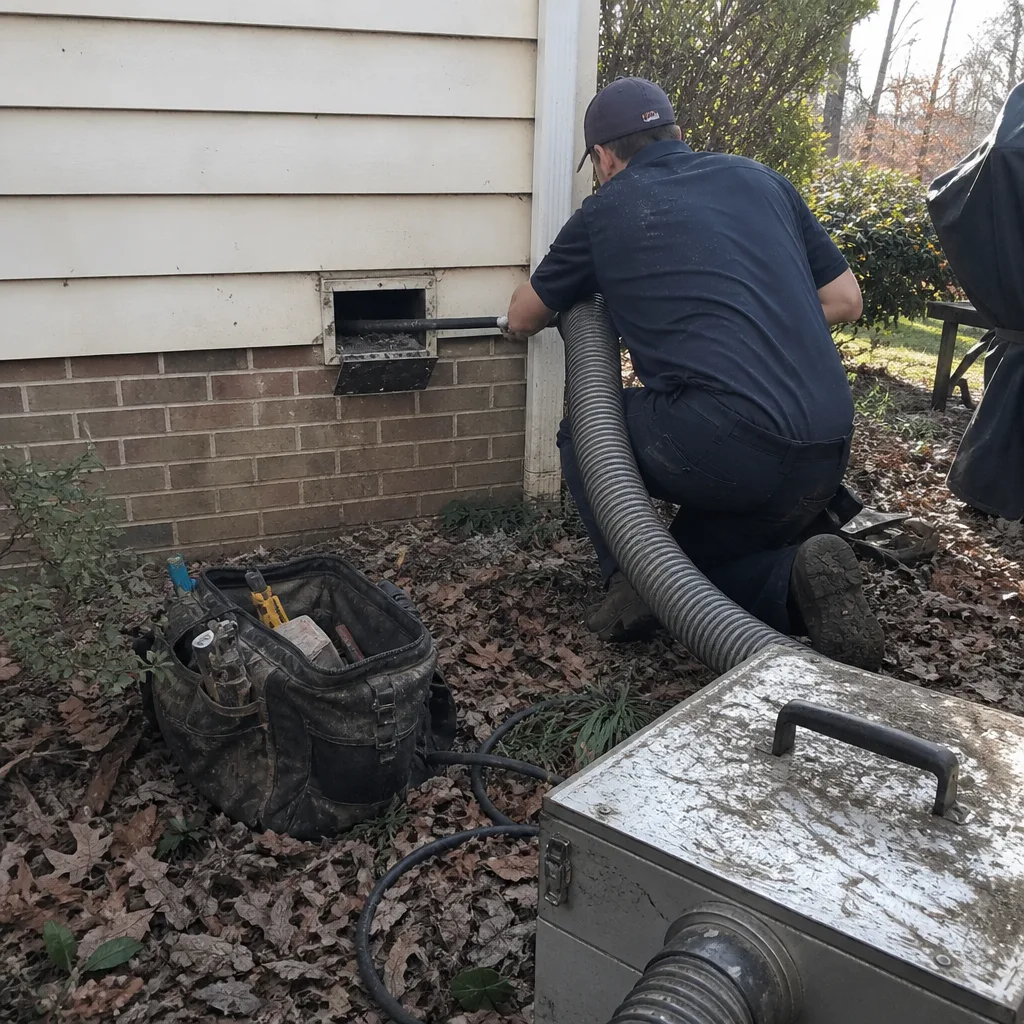 Before
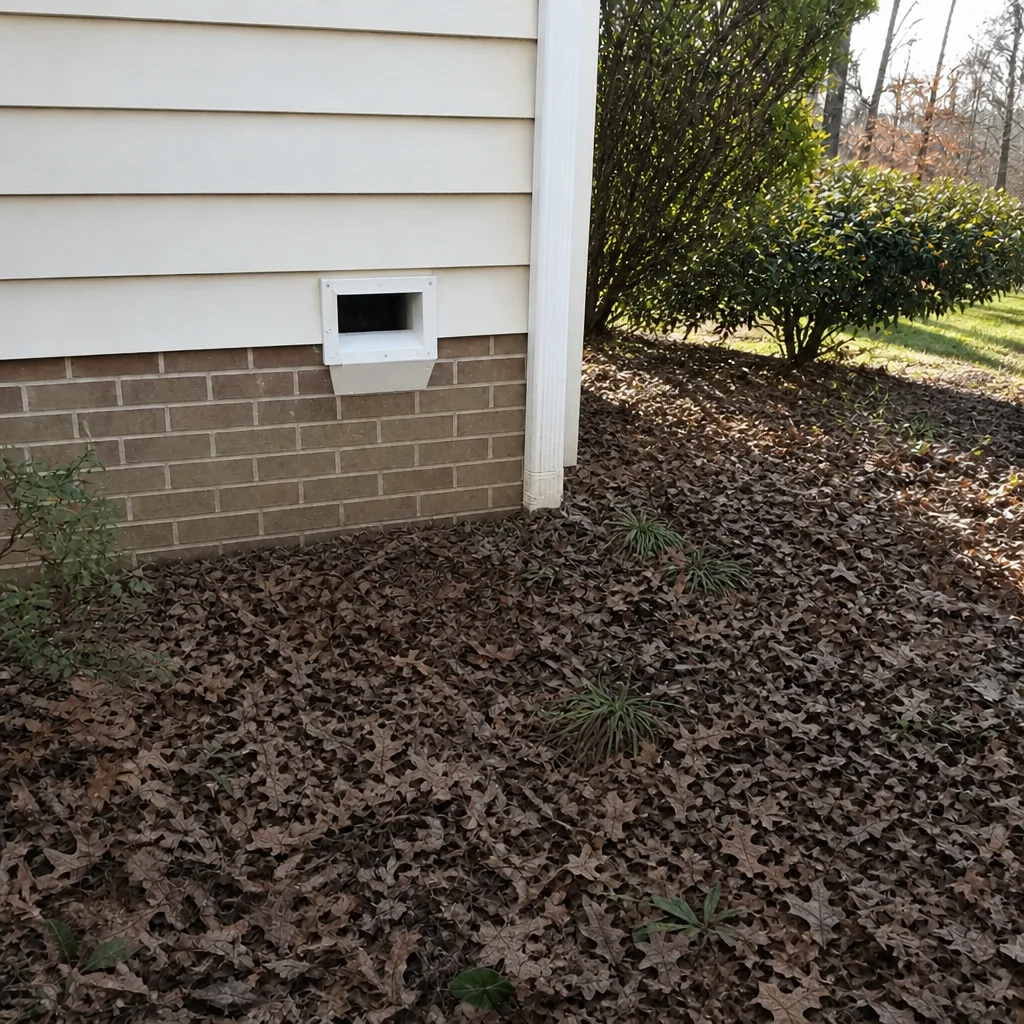 After
When to Call a Professional
Some things are worth a call rather than a wait. If anyone in the home has worsening allergy or respiratory symptoms that seem tied to indoor air, if you’ve recently had HVAC work done and the system hasn’t been cleaned since, or if you can see dust streaks around the registers or a visible dust plume when the system kicks on, that’s a reasonable time to book an inspection. If your dryer is taking noticeably longer to dry loads, or the exterior vent flap isn’t opening fully, that’s a dryer vent call, not a duct call, and worth doing soon. If you’ve bought an older Greensboro home and don’t know the condition of the ductwork, a camera inspection will tell you more than any amount of guessing. Duct Cleaning Greensboro offers free estimates in Greensboro – call (833) 968-4577. We answer 24/7. Fast dispatch from 7am to 7pm, Sunday through Friday.
Frequently Asked Questions
Duct cleaning in Greensboro is priced per system rather than per vent, and the written estimate sets the final price. We set the scope after a pre-job walkthrough so the number you agree to is the number you pay, and we don’t quote a teaser figure that grows once the technician is on site. Call (833) 968-4577 for a free estimate – we’ll walk the system with you first.
No, NADCA certification isn’t legally required to perform duct cleaning in Greensboro, but it’s a useful credibility filter when you’re comparing companies. What matters more is whether the company can explain its equipment and process: the source vacuum type, CFM, negative air setup, filtration level, and whether it offers camera inspection. A certified logo on a truck doesn’t guarantee any of those things. Ask the questions directly.
Cheap quotes usually reflect cheaper equipment and a thinner scope, not a better deal. A company running a low-CFM portable vacuum with no negative air setup can’t hold a whole house under vacuum, so the cleaning is partial by design. The lower price isn’t a discount on the same job; it’s a different job. Ask what equipment is used and whether the price is per system or per vent, and the gap usually explains itself.
Ask for before-and-after photos of your own ducts taken with a camera, not a stock image. A company using Rotobrush, Nikro, and camera inspection can show you the interior of your runs before and after, which is the only real evidence that the job happened. If a company can’t produce documentation of your specific ducts, treat the claim with caution. Call (833) 968-4577 if you want to see how we document the work.
There’s no fixed schedule that applies to every home in Greensboro. Homes with pets, recent renovations, heavy seasonal pollen exposure, or a history of visible dust at the registers tend to need it sooner than homes with light occupancy and clean filtration. A camera inspection is the honest way to know whether your system needs cleaning now or can wait. Skip the annual-plan pitch and get an inspection-based answer instead.
No, you don’t need separate companies if you choose an operator that performs all three services. Dryer vent cleaning is a dedicated service in its own right, not an add-on, and duct repair can be handled on the same visit when cleaning turns up crushed runs or separated joints. Choosing a full-scope operator means one booking and one point of accountability for the work. Call (833) 968-4577 to talk through what your system needs.
The Bottom Line
The brand you’re really choosing when you hire a duct cleaning company is its operational decisions: the source vacuum, the negative air setup, the filtration, the camera, the scope documentation, and the ability to repair what the cleaning uncovers. Reviews and certifications help you build a shortlist, but the equipment conversation and the pre-job walkthrough are what tell you whether the job will actually get done. Ask about CFM, negative air, HEPA filtration, and camera inspection. Ask for a written scope with a whole-system price. Ask what happens if damage turns up. The Greensboro company that answers all of those clearly and without pressure is the one to hire. The one that steers every question back to price is the one that just answered for you.
To schedule a walkthrough, a camera inspection, or a free estimate, call Duct Cleaning Greensboro at (833) 968-4577. We answer 24/7. Fast dispatch from 7am to 7pm, Sunday through Friday.
Written by the team at Duct Cleaning Greensboro.