
Last updated November 16, 2026
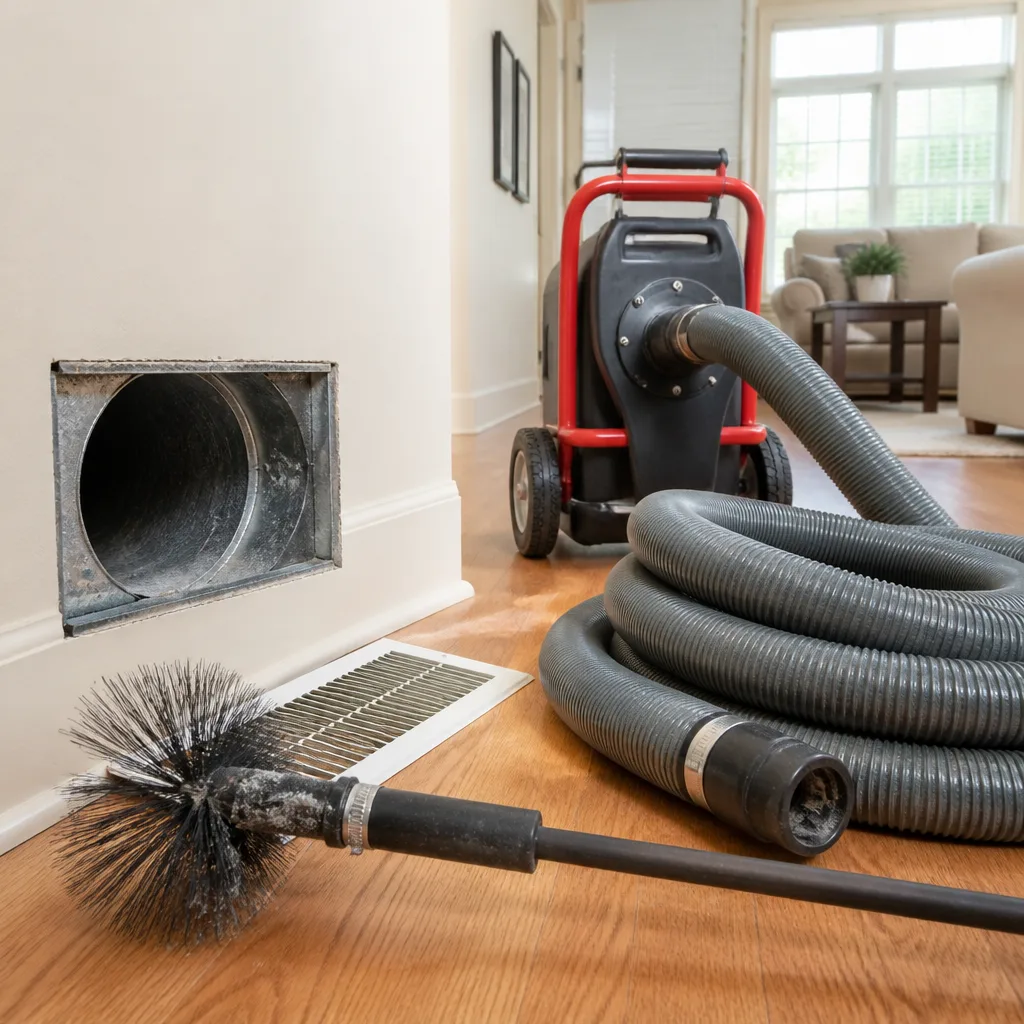 Whole-home duct cleaning
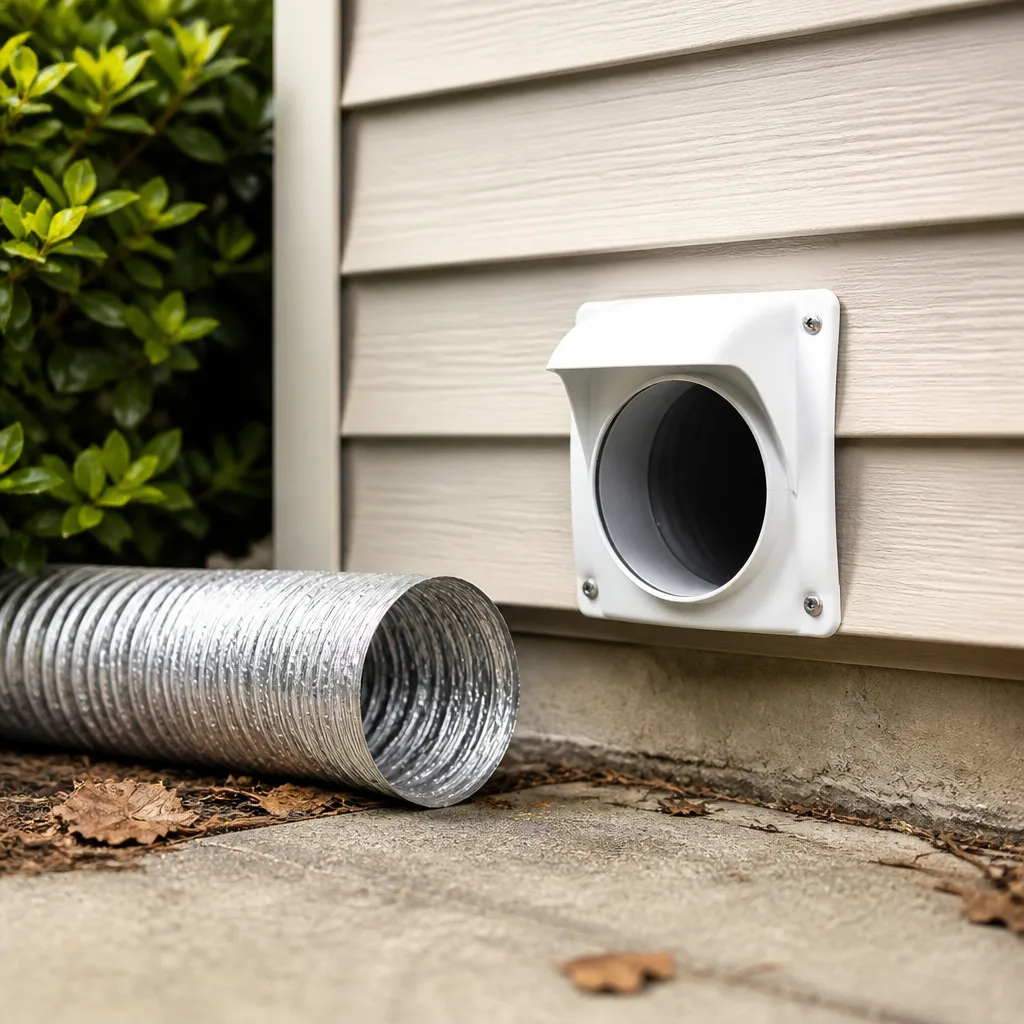 Dryer vent cleaning
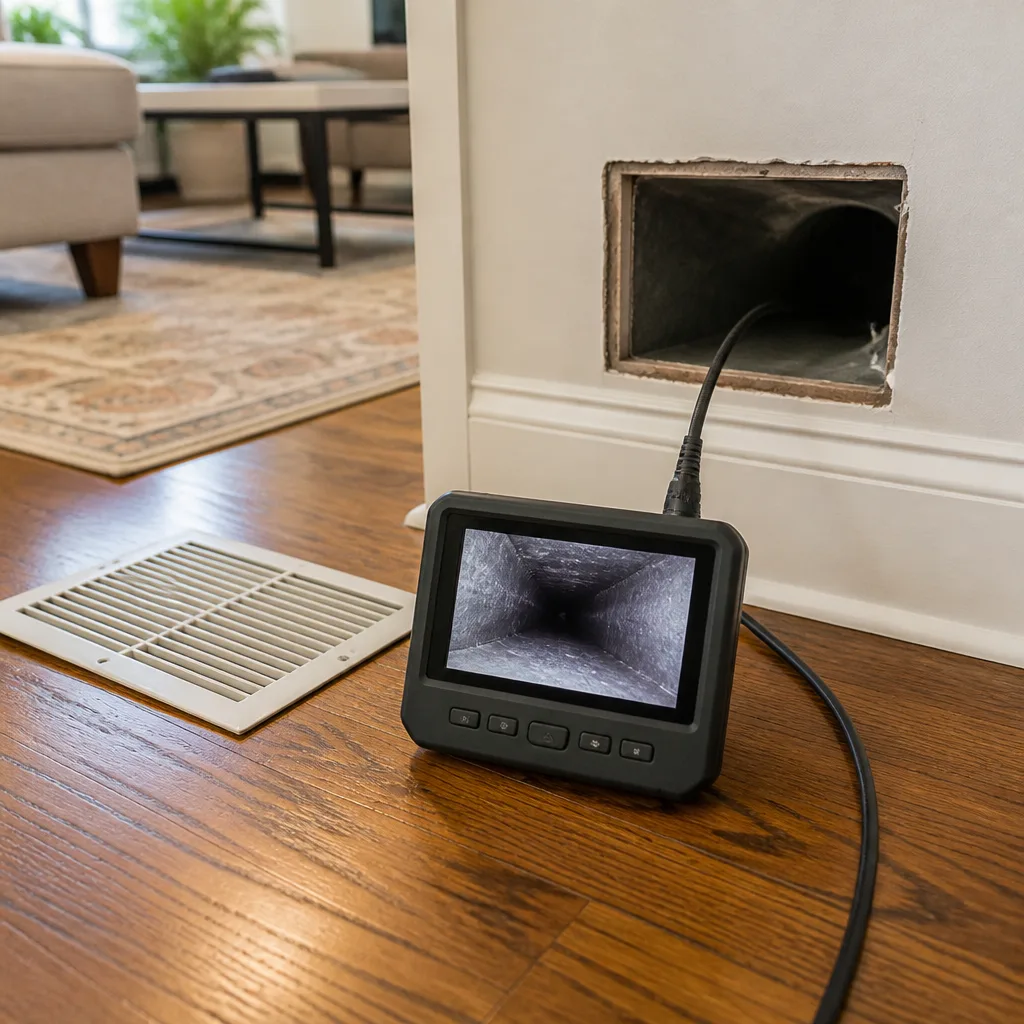 Camera inspection
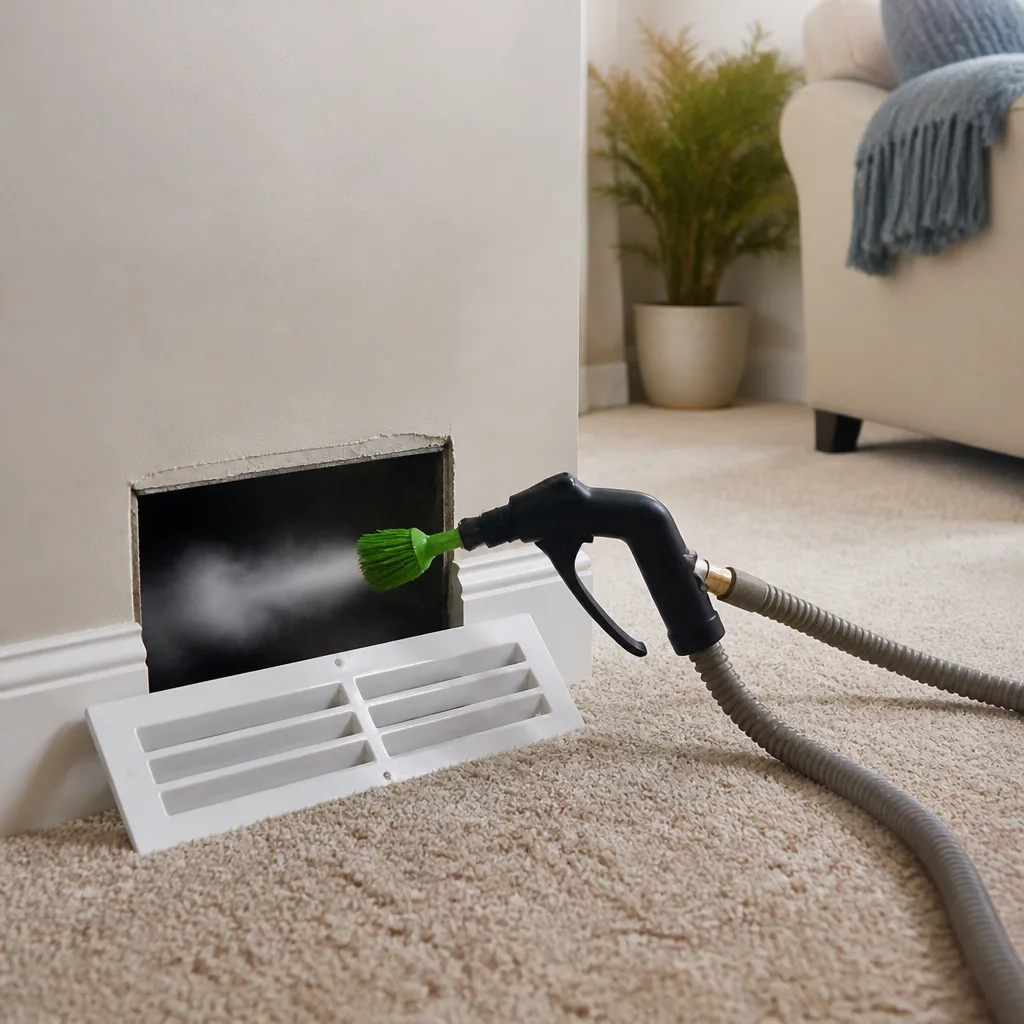 Sanitizing & deodorizing
Whole-system duct and dryer vent check with before-and-after photos - you see exactly what came out of your vents
That "$99 whole-house special" is a bait ad - the real number appears once they are in your hallway, or the "clean" is a shop-vac at the register. We photograph the inside of your ducts before and after instead.
Air Duct Cleaning Troubleshooting in Greensboro: Common Problems and How to Fix Them
If a duct cleaner runs their equipment and your musty smell comes back two weeks later, they almost certainly cleaned around the problem instead of through it. That’s the hardest lesson in this trade: most duct “problems” homeowners try to diagnose on their own – musty odors, uneven airflow, dusty registers – have three or four distinct root causes, and treating the wrong one wastes money and time. A smell that reads as “dirty ducts” could just as easily be mold in the plenum or a dead animal in a return run, and each one needs a completely different response. This guide walks through the symptom-to-cause diagnosis the way our technicians actually do it, before any cleaning equipment comes off the truck. You’ll learn what to check at your own registers in Greensboro, when cleaning is the answer and when repair is, and how to avoid paying twice for the same problem.
Quick Answer
Most air duct problems in Greensboro fall into four categories: cleanliness issues (dust, debris, microbial growth), airflow issues (leaks, collapsed flex duct, stuck dampers), odor issues (mold in the plenum, dead animals, off-gassing materials), and mechanical issues (disconnected joints, damaged boots, failing return paths). The fix depends entirely on which category you’re dealing with – cleaning solves only the first, repair solves the second and fourth, and odors often need diagnosis before any work begins. A proper technician identifies the cause first, then recommends the minimum effective service.
Styles & brands we work with
- Whole-home duct cleaning
- Dryer vent cleaning
- Camera inspection
- Sanitizing & deodorizing
Table of Contents
- Why Does My House Smell Musty After Duct Cleaning?
- Why Are Some Rooms Always Hotter or Colder Than Others?
- What Should You Check at Your Registers Before Calling Anyone?
- Why Does Dust Come Back So Fast After Cleaning?
- When Do You Need Cleaning vs. Repair vs. Replacement?
- Why Is Your Dryer Taking Two Cycles to Dry a Load?
- What Equipment Actually Makes a Difference?
- Common Mistakes to Avoid
Why Does My House Smell Musty After Duct Cleaning?
A musty smell that returns within two weeks of cleaning almost never means the cleaning was bad. It means the source was something cleaning couldn’t reach. In our experience, musty odors in Greensboro homes trace back to one of three places, and only one of them lives inside the ducts themselves.
The first possibility is ordinary biological growth on duct surfaces – the kind that cleaning removes. This is common in Greensboro’s humid summers, especially when a system runs intermittently and condensation forms on cold interior surfaces. The smell is faint, room-by-room inconsistent, and usually strongest right after the system kicks on.
The second possibility is mold in the air handler plenum or evaporator coil. The plenum is the metal box that sits between the air handler and the supply trunk. It’s often insulated on the inside, and that insulation is a moisture trap. If the plenum is wet, mold grows there and pushes spores into every duct downstream. Cleaning the ducts won’t help because the source is upstream of them.
The third possibility is a dead animal – usually a squirrel, mouse, or bird – somewhere in the return ductwork or a wall cavity the return passes through. That smell is sharper, more acrid, and localized. It gets worse in one part of the house, not all of it.
Distinguishing them takes a technician with a camera and a moisture meter, not a guess. Ask any company you call to explain how they’ll diagnose the smell before they clean – if they can’t, they’re guessing. We use Rotobrush and Nikro equipment because it lets us work the full run without tearing into the system, but the diagnosis comes first regardless of the tools.
Why Are Some Rooms Always Hotter or Colder Than Others?
Uneven room temperatures are more often an airflow or duct leakage issue than a cleanliness issue. Cleaning a duct system won’t fix a room that’s five degrees hotter than the rest of the house – in fact, if the ducts aren’t leaking and the dampers are balanced, cleanliness rarely has much to do with it.
Here’s how a technician actually checks which one it is:
- Static pressure test. A manometer measures pressure inside the supply plenum and return. High static pressure means the system is working harder than it should – often because of a crushed flex duct, undersized return, or a filter that’s too restrictive.
- Damper check. Every branch line typically has a manual damper near the trunk. Homeowners rarely know they exist. A technician feels for the damper handle, checks its position, and adjusts the branches feeding the problem room.
- Leak inspection. A disconnected flex duct joint, a boot that’s separated from the floor, or a gap at the plenum will dump conditioned air into an attic or crawlspace. In Greensboro’s older homes, this is common in attics where flex runs have sagged or been stepped on.
- Register airflow check. A simple airflow meter at each supply register tells you whether the room is getting air at all. If the nearest room is starved and the far room is fine, the problem is upstream. If both are weak, the problem is at the air handler.
Only after those four checks can anyone honestly say whether cleaning matters. If the ducts are clean and the room is still hot, cleaning was never the answer. Repair or rebalancing is.
What Should You Check at Your Registers Before Calling Anyone?
You can do a useful visual inspection at your registers in about fifteen minutes, and it will tell you a lot about what kind of problem you actually have. Do this before you call any duct cleaner in Greensboro – it will save you from being sold the wrong service.
Here’s the checklist we’d walk a homeowner through:
- Pull the register grille. Shine a flashlight into the boot and the first few feet of duct. If you see a light coat of dust on the metal, that’s normal. If you see visible debris, insulation fibers, or dark staining, that’s a real finding.
- Look for collapsed flex duct. Flex duct that’s kinked, pinched, or sagging on a long run restricts airflow significantly. If the duct looks crushed behind the register, the room will never get proper air until it’s fixed.
- Check for disconnected joints. Feel along the flexible duct where it meets the boot and the trunk. If it’s loose, you’re dumping air into the wall or attic. Sometimes the duct is visibly detached.
- Watch for moisture or staining. Brown staining on the duct or boot often means water intrusion somewhere upstream. That’s a repair issue, not a cleaning issue.
- Listen for whistling or whooshing. A whistling register often means high static pressure or a damper that’s nearly closed. Whooshing means the system is pushing too much air into one branch and starving others.
- Sniff near the return. If the return smells musty but the supplies don’t, the problem is on the return side, which points to filters, a leaky return chase, or contamination in the return trunk.
Write down what you find. A good technician will appreciate the notes and use them to direct the inspection – and a company that dismisses your findings without checking them is showing you something about how they work.
Why Does Dust Come Back So Fast After Cleaning?
Dust that reappears within a few weeks of a professional cleaning almost always points to a filter bypass or a return-side gap, not a failed cleaning job. In our experience, this is the single most misunderstood duct cleaning problem – and the one most likely to send a homeowner back to a company that will just clean the ducts again.
Here’s the diagnosis path:
- Check the filter fit. Pull the filter out of its slot and look at the gap around the edges. If you can see daylight or feel air moving past the filter frame, dust is bypassing the filter entirely and going straight into the air handler and ducts.
- Check the return chase. The return duct is often just a panned floor joist or a wall cavity in Greensboro homes. Those cavities aren’t sealed, and they can pull dust out of wall spaces and into the air stream.
- Check the blower compartment. If the air handler door gasket is worn or missing, dust gets pulled in around it.
- Check the boot-to-floor and boot-to-duct connections. Every gap in the supply side moves dust out.
- Look at the filter itself. A cheap fiberglass filter that’s meant to protect equipment, not people, will filter almost nothing. A proper pleated filter with a snug frame is a different result.
If any of those five checks turn up a problem, no amount of duct cleaning will keep the air clean until it’s corrected. That’s the moment when you want a company that does repair as well as cleaning, because the fix is on the equipment side, not the ducts.
When Do You Need Cleaning vs. Repair vs. Replacement?
The most expensive mistake in this trade is confusing cleaning, repair, and replacement – and paying for a cleaning when you needed a repair, or being sold the replace when cleaning would have done the job. Here’s the honest split.
Cleaning is the right answer when:
- The ducts are contaminated with accumulated dust, debris, or microbial growth.
- A system was installed or renovated and construction debris got into the runs.
- You’ve recently bought a home and don’t know the service history.
- A dryer vent is restricted with lint buildup.
Repair is the right answer when:
- Flex duct is kinked, collapsed, or disconnected from a boot or trunk.
- The plenum or metallic duct has holes, rust-through, or failed seams.
- A damper is stuck, missing, or broken.
- A register boot has come loose from the floor or wall.
- There’s moisture damage or visible mold that needs to be addressed before or alongside cleaning.
Replacement is the right answer when:
- The duct system is undersized for the equipment – a frequent problem in Greensboro homes that have had bigger HVAC systems installed without upgrading the ducts.
- Flex duct has deteriorated beyond repair across long runs (common in hot attics where the outer jacket has disintegrated).
- The whole system is ductboard and got wet catastrophically.
Most “replacement” recommendations in this industry are really repair recommendations in disguise, and most “cleaning” recommendations on systems that need repair end in a repeat service call a month later. Ask any company to walk you through which of the three they’re recommending and why.
Why Is Your Dryer Taking Two Cycles to Dry a Load?
A dryer taking two cycles isn’t a dryer problem – it’s almost always a vent restriction. Lint buildup in the exhaust run is the leading cause of residential dryer fires in the United States, and it’s the one duct-related safety issue we treat with the most gravity in Greensboro homes.
The signs of a restricted vent are consistent:
- Clothes come out warm but still damp after a full cycle.
- The dryer body gets unusually hot to the touch.
- The outside vent flap barely opens or doesn’t open at all.
- The laundry room feels humid during a cycle.
- Lint accumulates in the dryer’s lint trap faster than usual.
Dryer vent cleaning is a dedicated service, not a quick add-on after a duct cleaning. A proper job runs the full length of the vent, removes lint from the entire path, verifies the outside flap opens and closes freely, and confirms the run itself isn’t kinked or crushed behind the dryer. Flex transitions behind the dryer are a common squeeze point, and a crushed transition adds restriction even after cleaning.
If you can’t remember the last time the vent was cleaned, it’s worth doing. The consequence of an ignored vent isn’t a slower dry cycle – it’s a fire risk. We treat dryer vent cleaning with the same care as duct work because it deserves it. For a dedicated walkthrough of timing and process, our dryer vent cleaning page covers the details.
What Equipment Actually Makes a Difference?
Equipment matters more than most homeowners expect. Consumer shop vacuums and repurposed wet-dry units can pull dust out of a register but can’t do the work of cleaning a full duct system, and they can leave contamination behind that a proper job would remove.
Professional equipment should include:
- A purpose-built duct cleaning system. Rotobrush and Nikro systems are built for duct work specifically – whip-and-air technology that scrubs the full inner surface of a duct rather than just pulling air through it.
- HEPA-level negative pressure. This is what keeps dust from blowing back into the house while the ducts are being cleaned. A sealed vacuum system holds particles inside the unit instead of redistributing them.
- A camera for inspection. You should be able to see what was found inside the ducts, before and after.
- Finishing protection. Guardsman-backed finishing products extend the life of a cleaning by protecting duct surfaces from early re-contamination.
- An understanding of the air quality system. If your home uses a Honeywell, Aprilaire, or Abatement Technologies filtration or IAQ component, it needs to be worked around carefully – not bypassed or damaged during the cleaning.
When we clean a system, we clean it with professional-grade tools on every job, not just the ones that are easy to schedule. See the difference equipment makes by asking any company you call what they use and how they inspect the system before and after.
Common Mistakes to Avoid
- Booking a cleaning before anyone has diagnosed the smell. If the source is mold in the plenum or an animal in the return, cleaning the supply ducts doesn’t fix it – and you’ll pay twice. Ask who’s diagnosing and how.
- Treating uneven room temperatures as a duct cleaning problem. Greensboro homes with hot back bedrooms almost always have a leakage or damper issue, not a cleanliness issue. A cleaning won’t move a thermostat reading.
- Ignoring filter bypass. A poorly fitted filter is the most common cause of fast dust return after cleaning. If the technician doesn’t check it, you’re likely going to see the same dust in a month.
- Hiring on price alone. A quote that’s dramatically lower than the others is usually a different service entirely – a surface blowout without proper vacuum, camera verification, or finishing protection.
- Skipping the dryer vent. In Greensboro homes where the vent runs through an attic or up an exterior wall, lint accumulates out of sight. Treat it as a scheduled service, not an afterthought.
- Letting a cleaning crew leave damage behind. A loose boot or a crushed flex run is a repair issue that should be fixed by the same company rather than handed off. Ask upfront whether the company does repair.
- Not asking for before-and-after verification. Photos of your own ducts are the single most reliable way to know the work was done. If a company can’t show you them, that’s a red flag.
See the difference
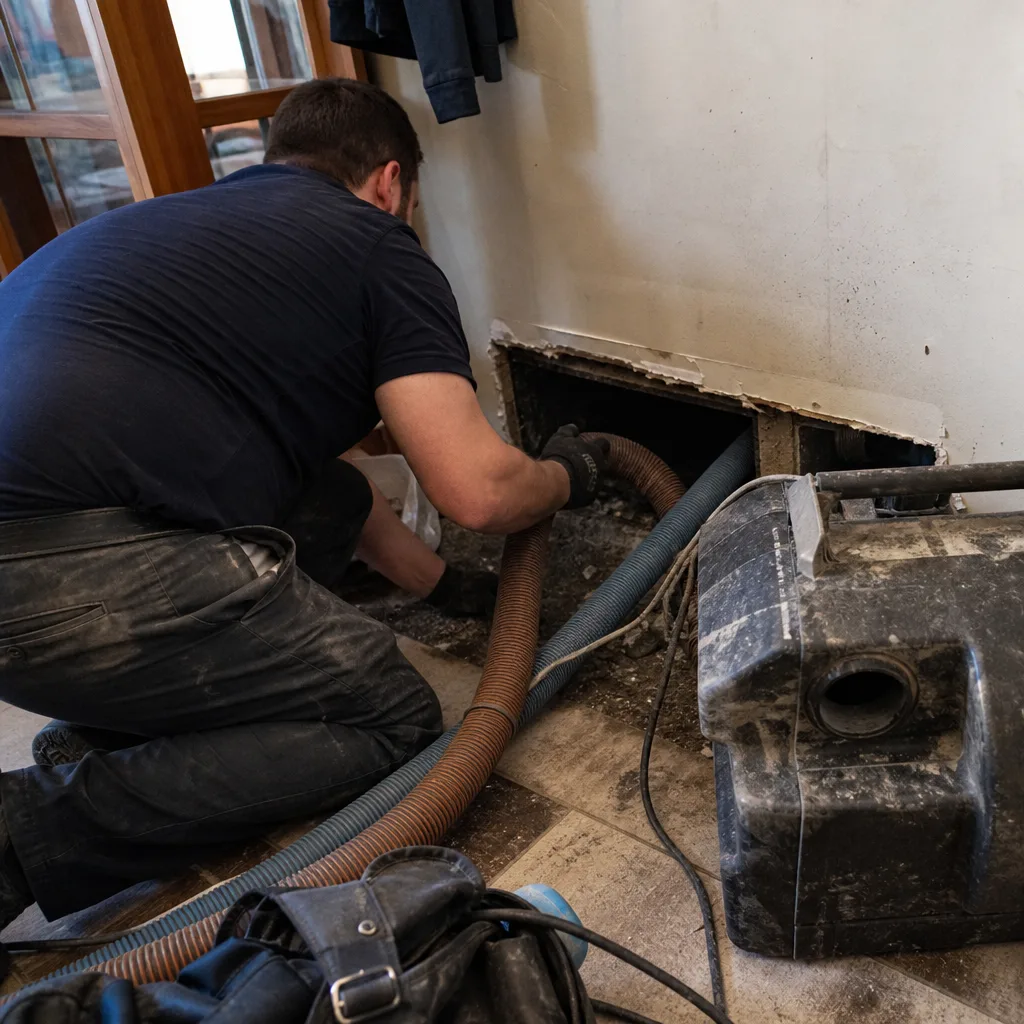 Before
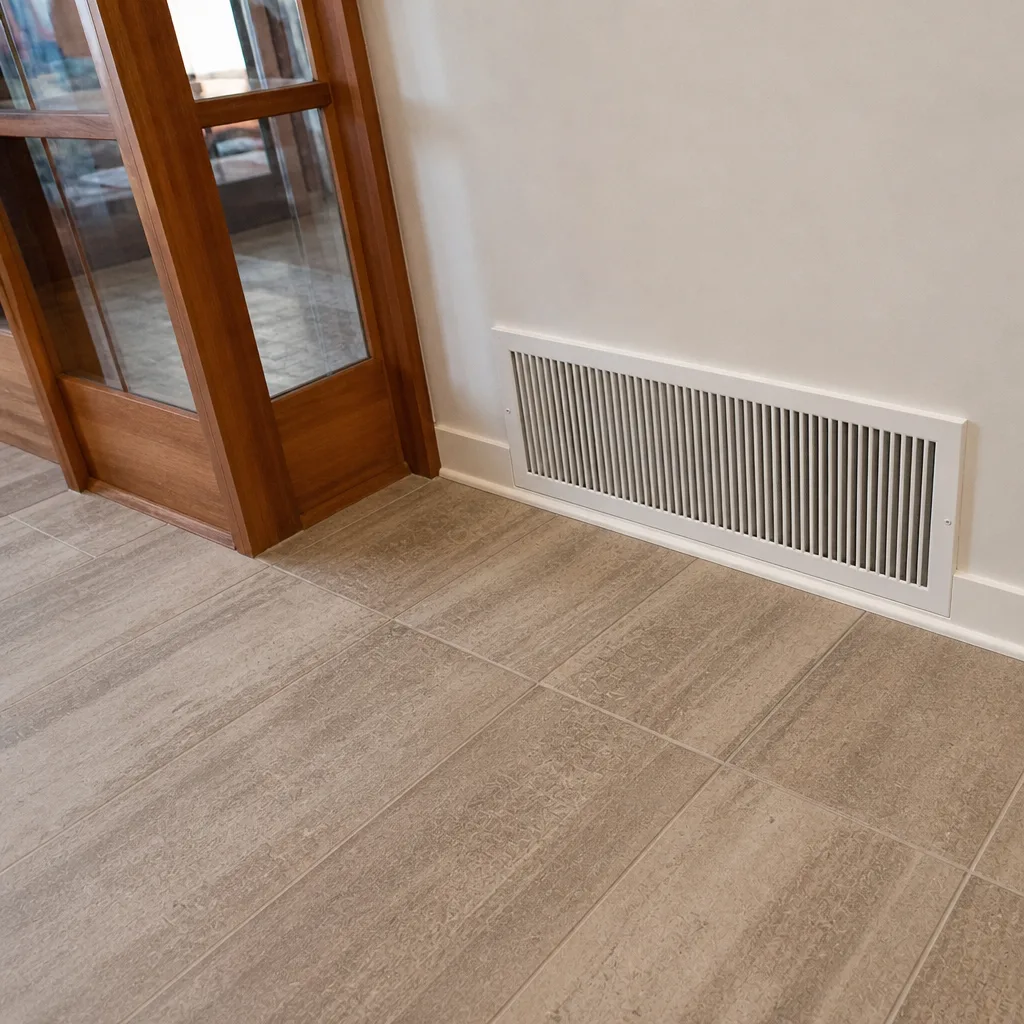 After
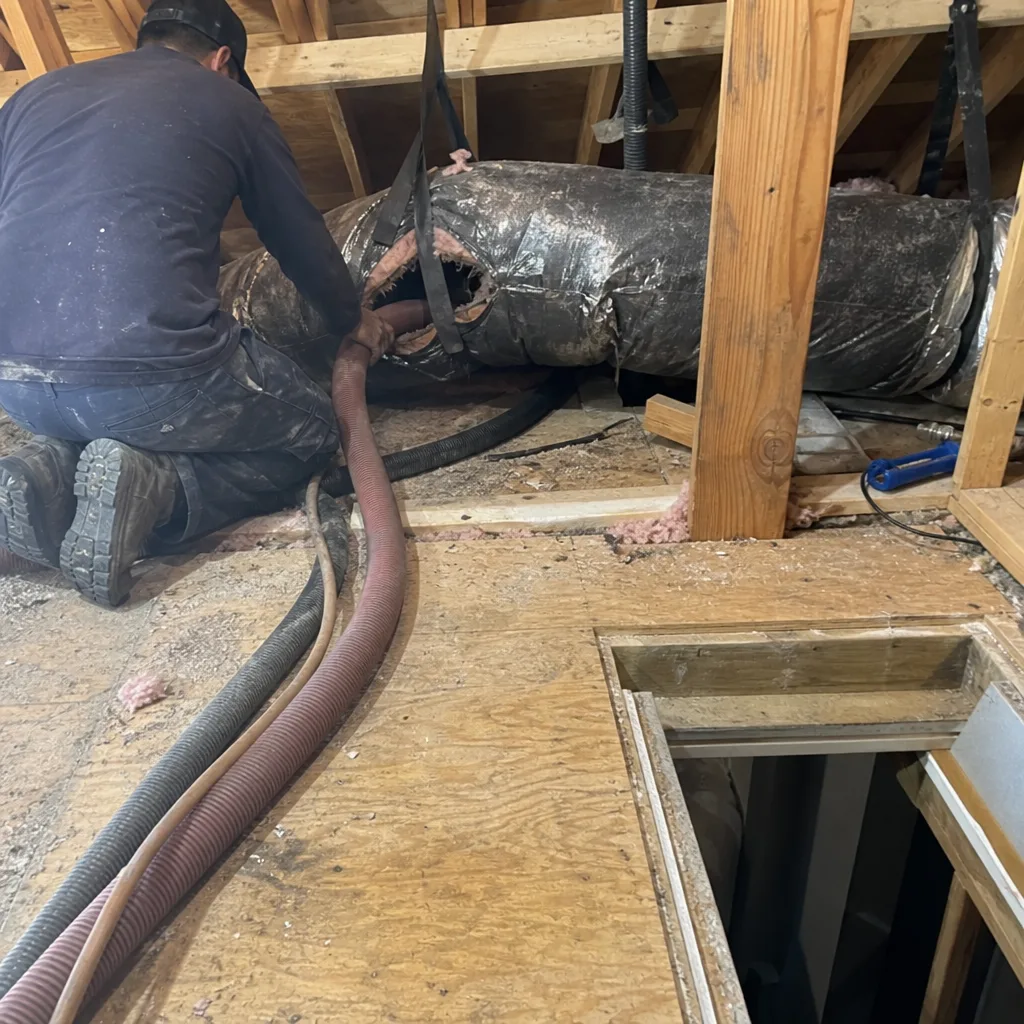 Before
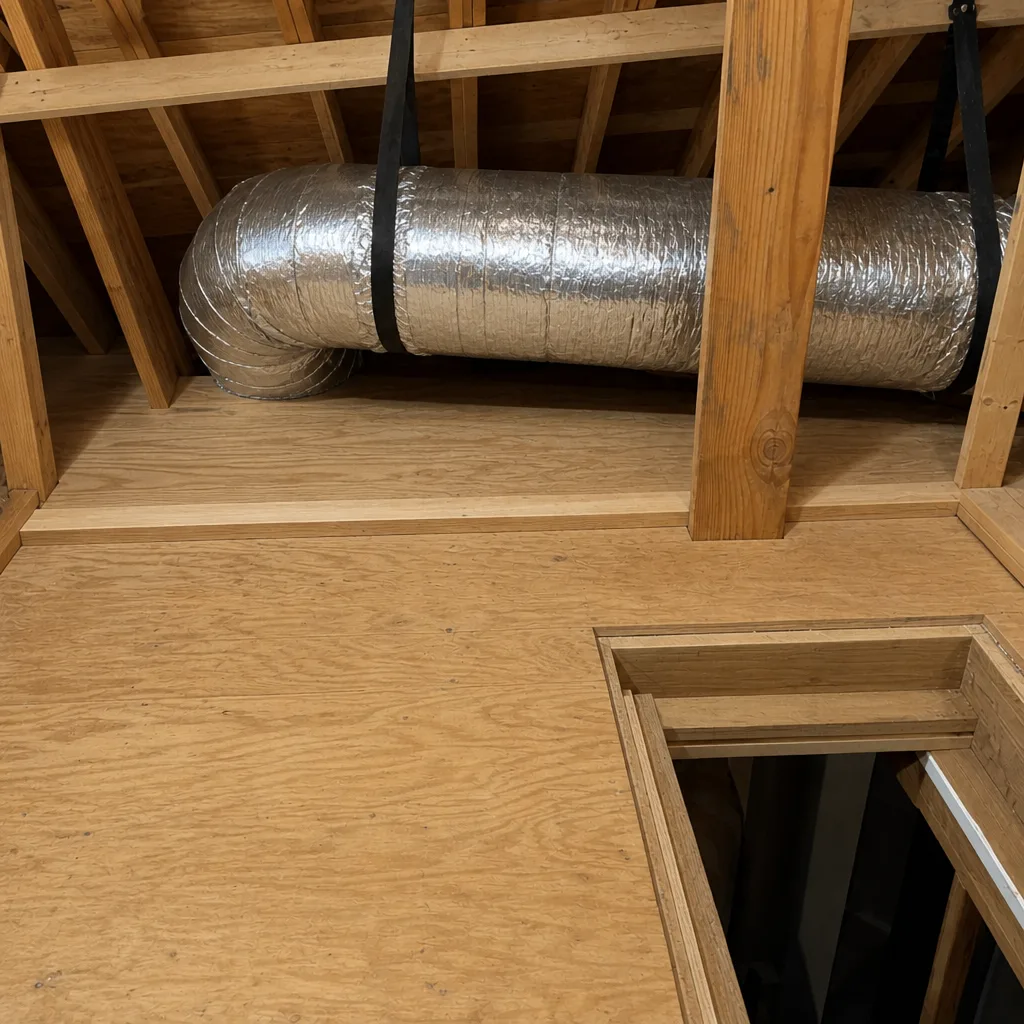 After
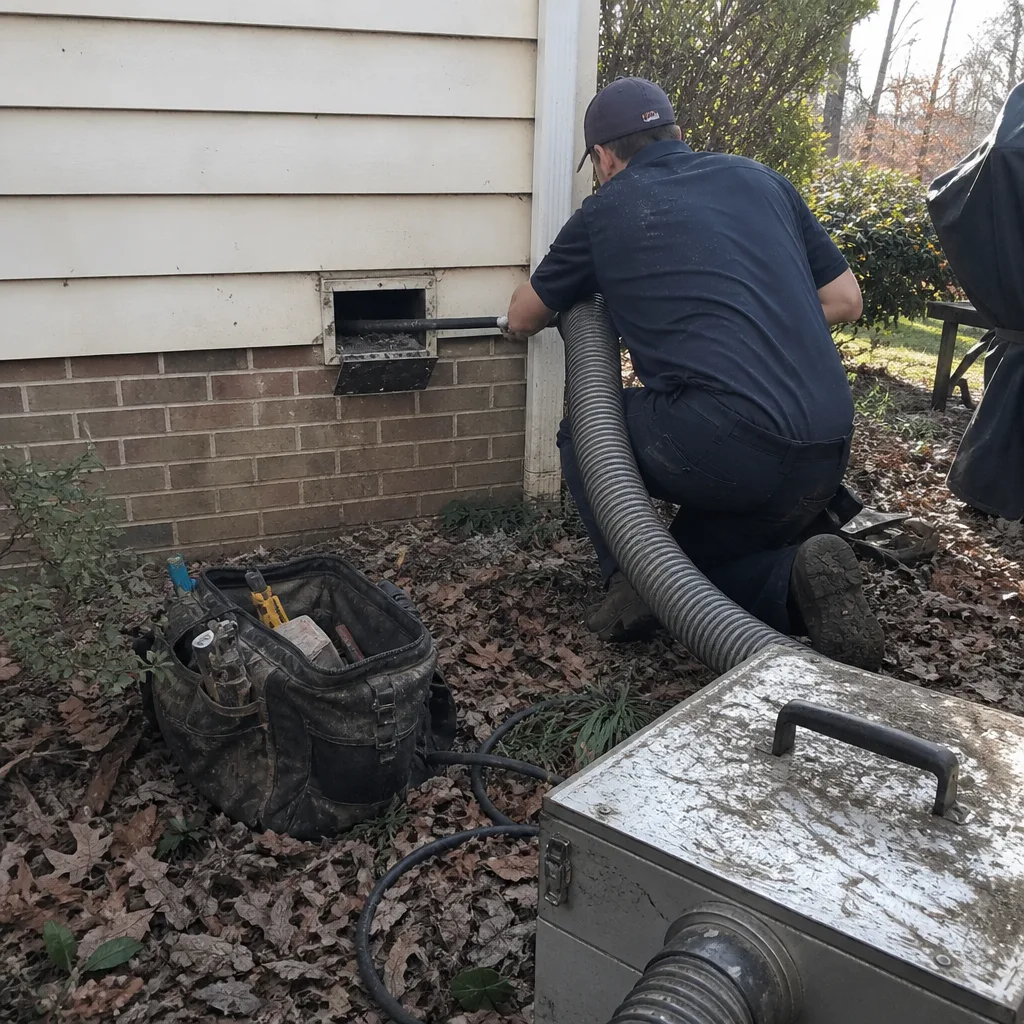 Before
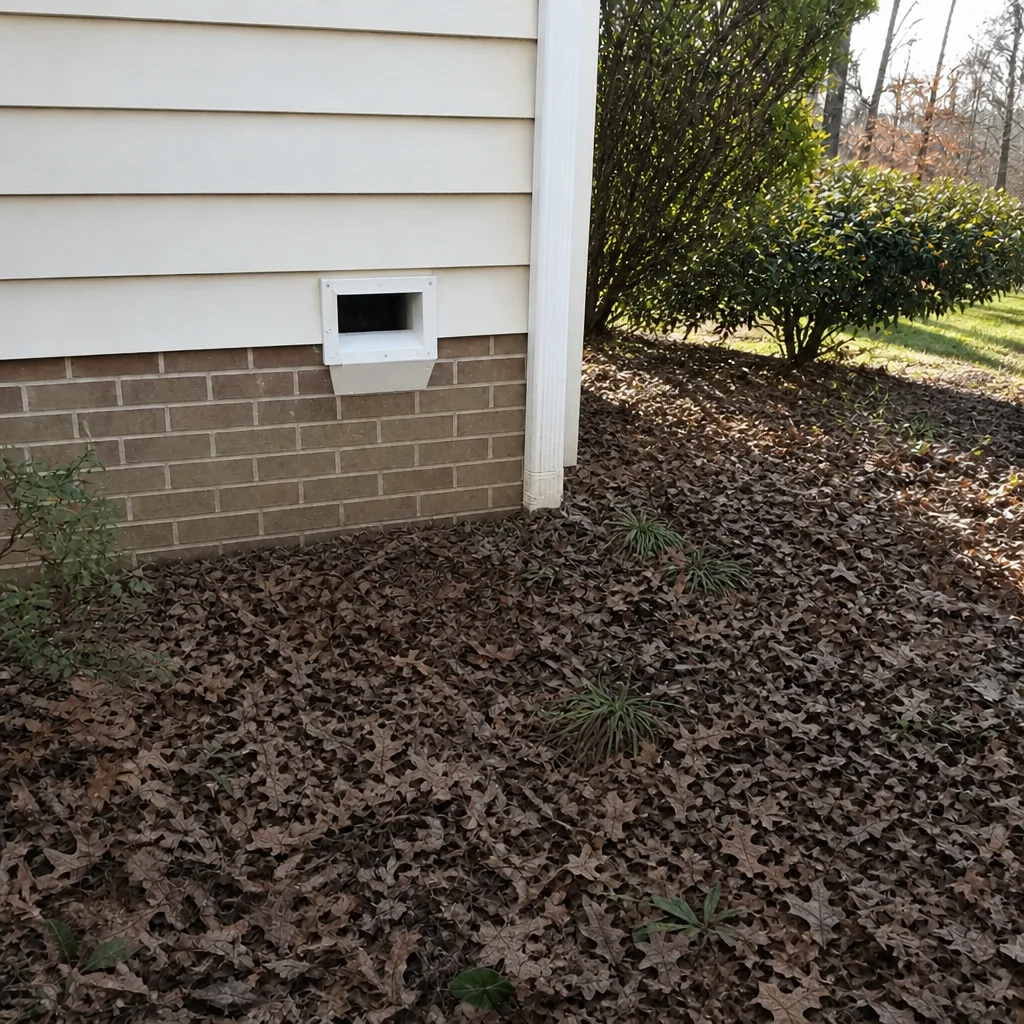 After
When to Call a Professional
Some things you can check yourself. Others need a trained technician with the right tools and the right eye. Call a professional if you’ve found visible debris or dark staining inside a register, if the smell is persistent even after a cleaning, if a room is dramatically hotter or colder than the rest of the house, if you see collapsed or disconnected flex duct behind a register, or if a dryer is taking more than one cycle to dry a load. In Greensboro, the humid summers make mold-in-plenum issues more common than in drier climates, so a smell that won’t clear is worth investigating properly rather than masking. Duct Cleaning Greensboro offers free estimates in Greensboro – call (833) 968-4577. We answer 24/7. Fast dispatch from 7am to 7pm, Sunday through Friday.
Frequently Asked Questions
Air duct cleaning is priced as a whole-system job, not per vent, and the written estimate sets the final price. A typical residential cleaning includes the supply runs, return runs, and register boots as a single system estimate so you know the total before any work starts. Call (833) 968-4577 for a free estimate.
Cheap quotes usually reflect a different service: a surface vacuum of visible register areas without a full-run scrub, no camera verification, no finishing protection, and often no negative pressure to keep dust inside the equipment. When the source of the problem is upstream of the ducts, a cheap cleaning doesn’t touch it. Ask any company to explain what equipment and steps are included. Call (833) 968-4577 for a free estimate.
Ask for before-and-after photos of your own ducts. A proper technician will show you what was found, what was removed, and what the inside of the run looked like when the job was finished. If a company can’t produce photos of your specific system, you have no way to verify the work. Call (833) 968-4577 for a free estimate.
Most Greensboro homes benefit from cleaning every few years, more often if there are pets, recent renovations, or allergy concerns in the household. Homes with a well-sealed system and a proper filter fit can go longer. The more useful question is whether the system is actually dirty – a camera inspection answers that. Call (833) 968-4577 for a free estimate.
Sometimes, but not always. A musty smell that comes from contamination inside the ducts will improve with a proper cleaning. If the source is mold in the plenum, a wet evaporator coil, or an animal in a return run, cleaning alone doesn’t reach the source and the smell will come back. Diagnosis comes first. Call (833) 968-4577 for a free estimate.
Yes. Dryer vent cleaning is a different job from duct cleaning and requires its own tools and a full run through the vent path. A restricted vent is a fire risk, not a maintenance note, and the run itself needs to be checked for kinks and crushed transitions behind the dryer. Call (833) 968-4577 for a free estimate.
The Bottom Line
Most duct problems trace to a root cause that cleaning alone won’t fix, and the wrong treatment is the most common source of repeat service calls. Diagnose before you clean: smell first, airflow second, dust return third. Check your registers, check your filter fit, and check your dryer vent. Take notes and share them with the technician. Hire on process, not on price – ask what equipment is used, whether the company does repair, and whether you’ll see before-and-after photos of your own ducts. Duct Cleaning Greensboro handles all three services – cleaning, repair, and dryer vent – so the diagnosis and the fix live in one place. We clean it. We repair it. We protect it. Call (833) 968-4577 for a free estimate.
For a broader overview of what a professional clean includes, see our air duct cleaning service page. If you’re trying to place this work in the context of your neighborhood, our Greensboro guide covers local climate and housing patterns that affect duct systems. And when you’re ready to compare approaches and book, our home base at Duct Cleaning Greensboro is a good next stop for duct cleaning in Greensboro.
Written by the team at Duct Cleaning Greensboro.